


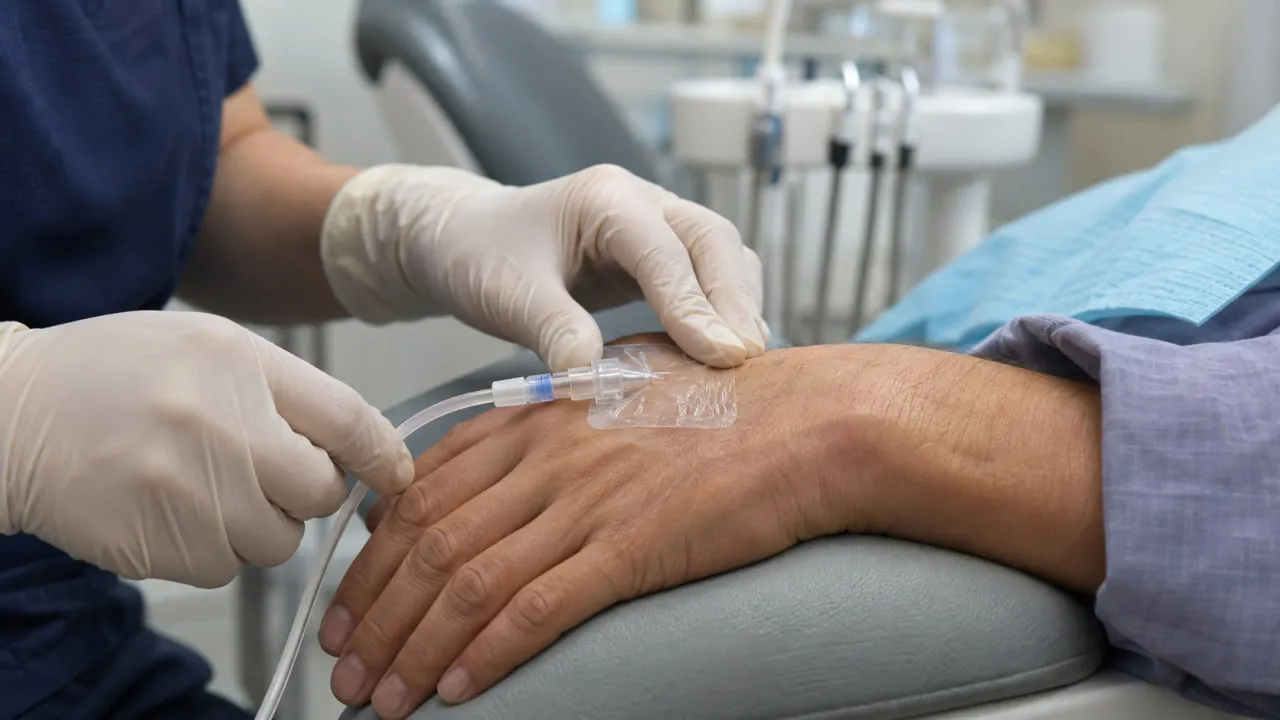
IV moderate sedation dentistry in Toronto may be considered when dental anxiety, a strong gag reflex or a longer procedure makes an ordinary appointment difficult to manage. Medication is given through a vein with the aim of helping you relax while you remain able to respond to spoken instructions. Unlike general anesthesia, moderate sedation is not intended to make you unconscious. You may feel drowsy and remember little afterward, but neither sleep nor memory loss is guaranteed. There are also practical things to plan for: fasting instructions, an IV in your hand or arm, and a responsible adult to accompany you home.
What Is IV Moderate Sedation?
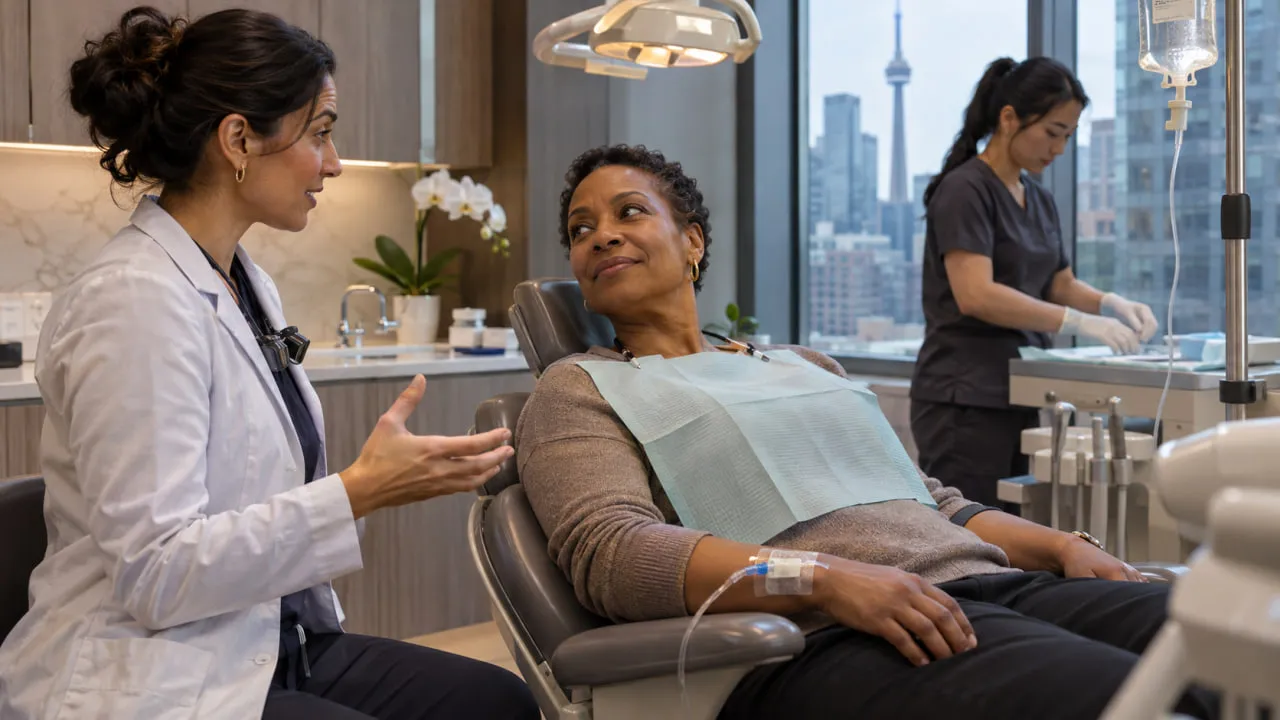
Moderate sedation is a medication-induced state in which you can still respond purposefully to spoken instructions, sometimes with a light touch on the shoulder. At the intended level, you continue breathing independently and generally do not need help keeping your airway open. You may feel sleepy or less aware of time, though experiences vary.
"IV" means intravenous. A flexible cannula is placed in a vein, allowing medication to be adjusted within an authorized protocol. IV describes delivery, not sedation depth. It may also be called conscious IV sedation.
Three points are worth knowing:
- Sedation does not replace local anesthesia. The dentist still numbs the treatment area when needed.
- Moderate sedation does not aim to make you unconscious.
- Memory varies. Reduced memory can occur, but some patients remember parts of the visit.
The phrase sleep dentistry is often used for this, but it is a consumer term, not a clinical level. Our broader guide to sedation options shows how the different approaches compare.
IV Sedation vs. Laughing Gas and Oral Sedation
The ability to adjust medication does not make IV sedation the right choice for everyone. Some visits can be managed with local anesthesia or a lighter sedation method.
For the two other methods, see our comparison of laughing gas vs. oral sedation.
Who Might Be a Candidate for IV Moderate Sedation?
People considering IV moderate sedation dentistry in Toronto often want to know whether it could help with a specific difficulty.
A dentist may discuss it when:
- Anxiety has prevented someone from completing treatment before
- A longer or more involved procedure is planned
- A strong gag reflex makes dental treatment difficult to tolerate
- Remaining still during a particular procedure is challenging
- Selected oral surgery, including certain wisdom tooth removals, is being considered
These reasons do not establish eligibility. Assessment also considers medical history, medications, airway health and planned treatment.
Who May Need a Different Sedation Plan?
Heart or lung conditions, sleep apnea or other airway concerns, certain medication combinations, pregnancy, and previous difficulties with sedation can call for additional evaluation.
In some situations, a physician's input or treatment in another clinical setting may be appropriate.
These factors require an individual risk assessment rather than a general yes-or-no answer.
Can Children Receive IV Moderate Sedation?
Ontario's dental standard restricts parenteral moderate sedation for children under 12 in out-of-hospital dental facilities. An exception applies to practitioners qualified to administer deep sedation or general anesthesia.
Older children and teenagers also require an individual medical and dental assessment.
The appropriate approach depends on the child's needs and the qualifications of the treating provider.
What Happens During an IV Moderate Sedation Appointment?
These are typical stages of IV moderate sedation dentistry in Toronto. Individual providers may follow different protocols consistent with the applicable standards.
- Pre-sedation consultation: The dentist reviews your medical history, medications, allergies and previous sedation experiences. You can discuss the planned treatment, possible risks and alternatives.
- Consent and preparation: You receive instructions about fasting, medications, transportation and aftercare. Informed consent is obtained before sedation.
- Arrival checks: The team reviews relevant changes to your health and confirms your escort arrangements. Baseline observations, such as blood pressure, are recorded.
- IV placement: A small cannula is placed into a vein, commonly in the hand or arm. Tell the team if needles make you anxious so they can explain the process.
- Sedation: Medication is administered and adjusted within the authorized protocol, with the intention that you remain responsive.
- Local anesthesia and dental treatment: The treatment area is numbed when needed. You may still notice pressure or movement.
- Recovery: You remain under supervision until you meet the clinical discharge criteria.
- Discharge: A responsible adult accompanies you home, and you receive written instructions for recovery.
Your actual appointment may involve additional steps depending on the procedure, your medical history and the provider's protocol.
How Is IV Moderate Sedation Monitored in Ontario?

The Royal College of Dental Surgeons of Ontario (RCDSO) regulates dental sedation, and its requirements apply to providers of IV moderate sedation dentistry in Toronto.
A dentist administering sedation must have the appropriate current authorization. A dental facility providing parenteral conscious sedation must also hold a current facility permit.
These authorizations and permits have annual renewal requirements.
The RCDSO Standard of Practice establishes requirements for patient assessment, consent, monitoring, trained personnel, emergency preparedness and recovery.
For parenteral moderate sedation, the Standard requires a team of at least three people in the treatment room, with specified professional training and life-support qualifications.
What Does the Dental Team Monitor?
During sedation, the team assesses several aspects of your condition:
- Oxygen saturation
- Pulse
- Blood pressure
- Breathing
- Responsiveness to spoken instructions or appropriate stimulation
Oxygen levels are monitored continuously, and other observations are recorded according to the Standard.
The team must also be prepared to recognize and respond if sedation becomes deeper than intended or complications develop.
These safeguards help manage risk, but they do not eliminate it.
How Can Patients Check Authorization?
Before selecting an IV sedation dentist in Toronto, ask who would administer the sedation and whether the provider is authorized for the intended method and level.
You can also ask whether the facility holds the required permit.
This information can be checked through the College's public register. The RCDSO provides access and further guidance on its Ontario dental sedation requirements page.
How Should You Prepare for IV Moderate Sedation?
Preparation for IV moderate sedation dentistry in Toronto begins before the treatment day.
Your provider will need an accurate medical history, including information about:
- Prescription and non-prescription medications
- Supplements
- Allergies
- Existing health conditions
- Previous experiences with sedation or anesthesia
- Any concerns about needles or the procedure
Follow the provider's instructions about clothing and personal items. Comfortable clothing with accessible sleeves may be helpful.
Eating and Drinking Before Sedation
Follow the treating provider's written fasting instructions.
The RCDSO Standard includes the following minimum fasting intervals:
- Eight hours after a heavy or fatty meal
- Six hours after a light meal
- Two hours after clear fluids
These are regulatory minimums, not instructions for choosing your own fasting schedule.
Your provider may require a more restrictive preparation plan based on the intended treatment or your individual circumstances.
If you have eaten or drunk something outside your instructions, tell the provider before sedation begins.
Medications
Tell the treating clinician about everything you take, including supplements and medications purchased without a prescription.
Some medications may need specific instructions around the appointment.
Do not stop, skip or change a prescribed medication unless the clinician responsible for your care tells you to do so.
Transportation

A responsible adult must accompany you home following IV moderate sedation.
Traveling home alone by taxi or ride-share is not a substitute for an escort.
Plan time away from work or school, and ask whether you will need someone available to help during your initial recovery at home.
What Should You Expect After IV Moderate Sedation?

After treatment, you remain under clinical supervision until you meet the discharge criteria.
You may feel drowsy, unsteady or slower to react for some time afterward. These effects can persist even when you feel reasonably alert.
Your recovery instructions will address both the sedation and any dental procedure performed during the appointment.
Driving, Work and Important Decisions
The RCDSO Standard instructs patients not to drive or operate hazardous machinery for at least 18 hours after applicable sedation.
Alcohol, other sedating substances and important decisions should also be avoided during recovery according to the instructions provided.
Your clinician may recommend longer restrictions.
Do not assume you can drive the following morning simply because you feel awake. Check the time restrictions and follow the written instructions for your procedure.
If the Procedure Includes Tooth Extraction
When a tooth is removed, the extraction site needs additional care.
Avoiding unnecessary disturbance of the early healing site is important. Our guide to dry socket prevention explains practical precautions following wisdom tooth removal.
Eating After an Extraction
If your appointment includes an extraction, follow your discharge instructions about when and what to eat or drink.
The appropriate choices depend on your recovery from sedation and the dental procedure.
Our article on what to eat after tooth extraction covers food choices during healing.
When to Seek Help
Contact the treating dental office if you develop concerning symptoms, including worsening pain or swelling, persistent nausea or vomiting, fever, or bleeding that does not settle as instructed.
Difficulty breathing, chest pain, severe confusion, fainting or other serious deterioration requires emergency medical attention. Call 911 or go to an emergency department.
Is IV Moderate Sedation Used for Wisdom Teeth Removal?
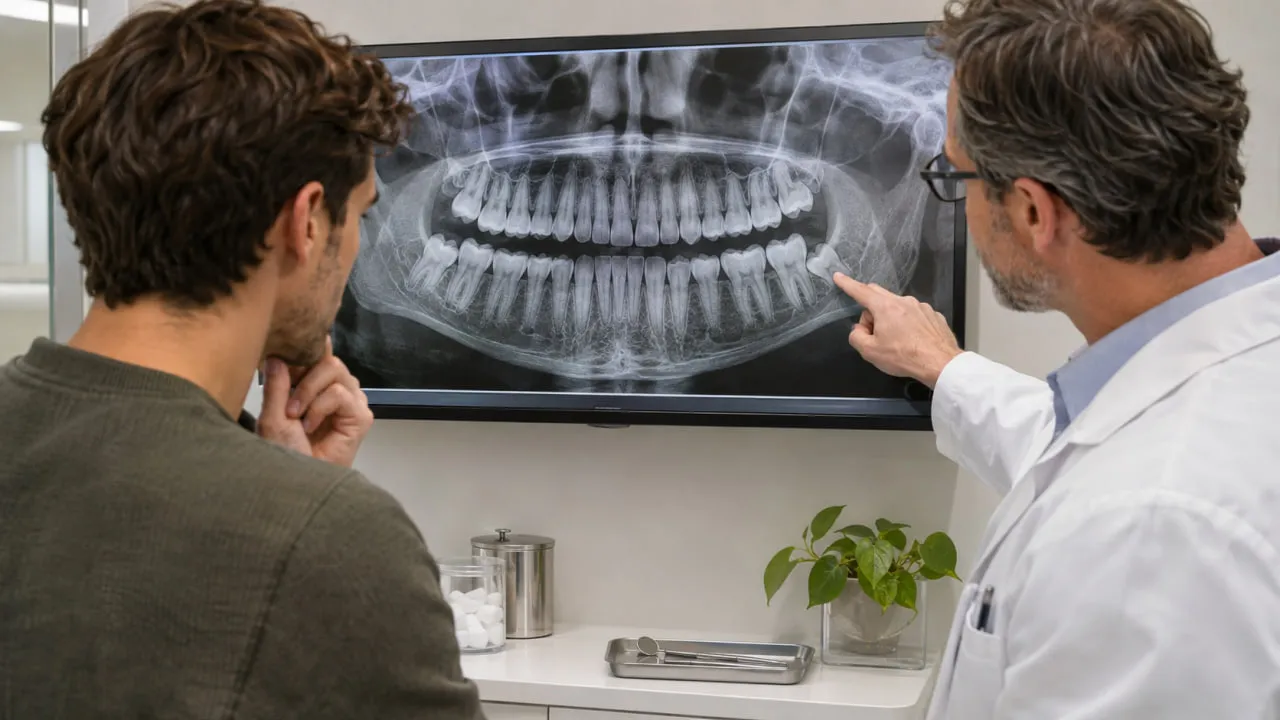
Wisdom tooth removal is one reason patients ask about IV moderate sedation dentistry in Toronto.
Sedation may be considered for suitable patients, particularly when anxiety is significant or the planned treatment is more involved.
However, many wisdom tooth extractions are performed using local anesthesia alone.
The need to remove a wisdom tooth and the choice of anesthesia or sedation are separate clinical decisions.
Wisdom Tooth Assessment
A dentist evaluates the tooth's position, surrounding tissues, symptoms and diagnostic imaging before recommending removal.
Sedation preferences do not determine whether an extraction is necessary.
Market Dental Centre's wisdom teeth removal page explains the assessment and treatment considerations.
Why Wisdom Teeth May Be Removed
Wisdom teeth do not automatically need to be removed because they are present or impacted.
A dentist may recommend extraction when clinical findings indicate problems such as infection, decay or damage involving nearby teeth.
For more information, read why wisdom teeth may need removal.
Other Oral Surgery Procedures
IV moderate sedation may also be discussed for selected oral surgery procedures.
Its suitability depends on the patient's health, the complexity of treatment and the qualified provider's assessment.
For general treatment information, see Market Dental Centre's oral surgery services.
How Much Does IV Moderate Sedation Dentistry in Toronto Cost?
There is no universal fee for IV moderate sedation.
The total depends on the sedation service, its duration, clinical requirements and the provider's fee structure.
A treatment estimate may include:
- The dental procedure
- Sedation services
- A consultation or assessment
- Other clinically indicated services
These are not necessarily separate charges in every case.
Before agreeing to treatment, ask for a written estimate that explains which services are included.
What If the Sedation Is for Wisdom Tooth Removal?
Tooth extraction and sedation may be priced separately.
The extraction fee depends on the tooth's position, root anatomy and whether a simple or surgical approach is required.
Our guide to wisdom tooth removal cost explains those factors in more detail.
Does Private Dental Insurance Cover IV Sedation?
Private insurance coverage depends on the specific policy.
Your insurer may consider:
- The sedation procedure code
- Clinical eligibility requirements
- Plan exclusions
- Eligible fees
- Deductibles and annual maximums
- Predetermination or approval requirements
A predetermination may help estimate reimbursement but does not guarantee payment.
Direct billing is also a claims process, not proof that sedation is covered. Our guide to dental direct billing explains that distinction.
Does CDCP Cover IV Sedation?

The Canadian Dental Care Plan (CDCP) may cover parenteral conscious sedation when it is provided alongside an eligible dental procedure and the program's criteria are met.
Preauthorization is required for this category of sedation.
Clinical eligibility and frequency limitations also apply.
For patients aged 12 or older, the federal guide identifies qualifying circumstances that include complex or extensive treatment needs or significant mental or physical impairment supported by the submitted clinical information.
Approval is not automatic.
An eligible patient may also have a co-payment or other applicable charges, depending on the program rules and services involved.
What Should You Ask Before Booking a Sedation Consultation?
Before proceeding, consider asking these questions:
- Is IV moderate sedation currently available for my proposed dental treatment?
- Who would administer it?
- Does that provider hold the required authorization?
- Does the treatment facility have a current permit?
- Am I a suitable candidate based on my medical history?
- Could another sedation or anesthesia approach be more appropriate?
- What preparation and fasting instructions would apply?
- Who must accompany me home?
- How long should I plan for recovery restrictions?
- What are the fees, and what should I confirm with my insurance provider?
You do not need to decide on a particular sedation method before speaking with a dentist.
Key Takeaways
- IV moderate sedation is intended to keep the patient responsive rather than unconscious.
- It is different from general anesthesia and does not replace local anesthesia.
- Suitability depends on an individual medical and dental assessment.
- Ontario regulates practitioner authorization, facility permits, monitoring and recovery.
- The amount remembered after sedation varies.
- Written preparation instructions and a responsible adult escort are important.
- Cost and insurance coverage depend on the proposed service and individual circumstances.
- Patients researching IV moderate sedation dentistry in Toronto should confirm provider authorization, facility arrangements and available services before booking.
Have Questions About IV Sedation in Downtown Toronto?
If you are exploring IV moderate sedation dentistry in Toronto, a useful first conversation can begin with the part of dental care you find difficult.
Explain your concerns, the treatment you may need, and any relevant health conditions. A dental assessment can help clarify which approaches may be appropriate and whether referral to another provider is needed.
Market Dental Centre is located at 149 Lower Jarvis Street in Downtown Toronto, near St. Lawrence Market.
Contact the office to ask which sedation or comfort options are currently available.
Call (416) 363-4115 or request an appointment online. An appointment request is not confirmed until the clinic follows up with an available time.
This article provides general educational information and does not replace an individual assessment or medical advice. Sedation suitability, preparation and recovery instructions must be determined by a qualified provider.