









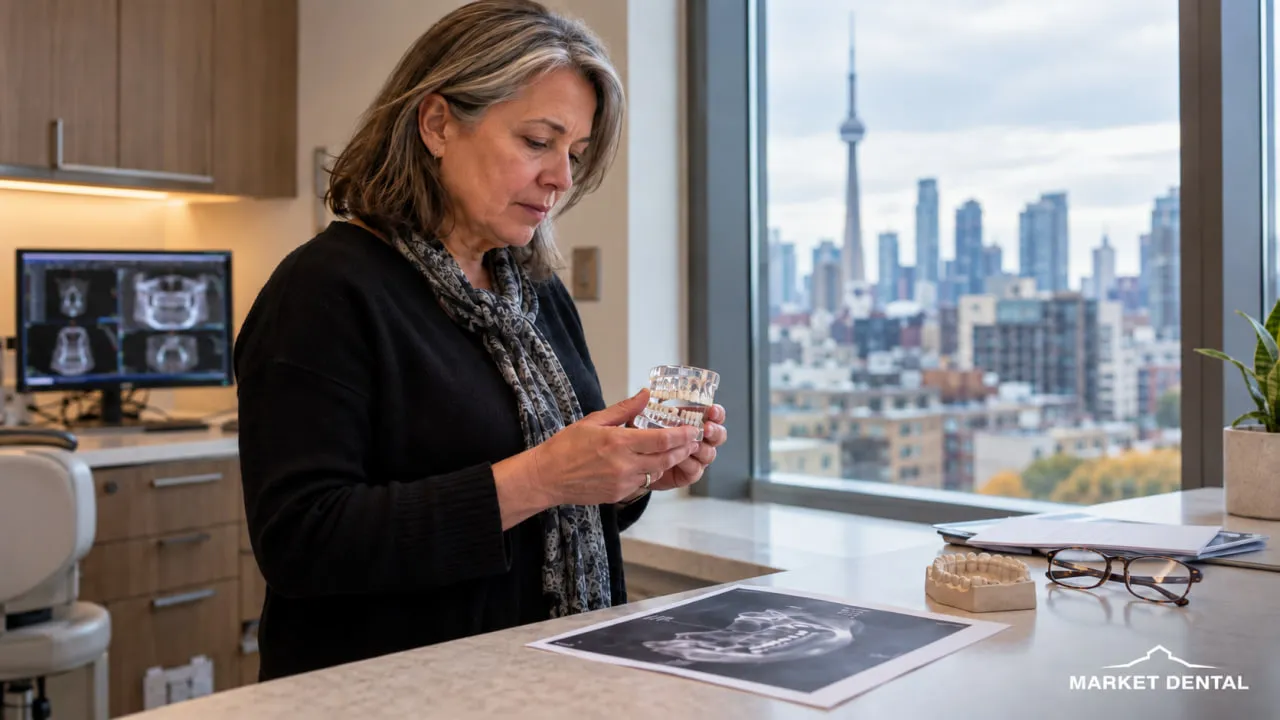
A dental implant bone graft may be recommended when the jaw does not have enough bone volume for an implant to be planned in the intended position. Hearing that can sound like a setback, especially if you expected implant treatment to be straightforward. It does not automatically mean you cannot have an implant, and it does not mean every case needs grafting. The next step is to understand the specific site: how much bone is available, what nearby anatomy matters, and whether grafting would improve the treatment plan. This guide explains how that decision is made, what the main grafting approaches involve, and what healing and insurance considerations may look like in Toronto.
Do You Need a Dental Implant Bone Graft Before Every Implant?
No. Many dental implants can be placed using the bone that is already present.
A graft may be considered when the planned implant site is too narrow, lacks enough height, has changed after tooth loss, or sits close to nearby anatomy that affects implant positioning. The decision is based on the individual site rather than a single universal measurement.
When a dental implant bone graft is recommended, treatment may follow one of several sequences:
- graft first, then place the implant after healing and reassessment
- place the implant and a smaller graft during the same appointment
- choose a different tooth-replacement plan if grafting is not the most appropriate option
The right sequence depends on the available bone, the size of the defect, implant stability and the overall treatment plan.
Why Jawbone Changes After a Tooth Is Lost

The alveolar ridge is the part of the jaw that surrounds and supports the roots of teeth. After a tooth is removed, that area naturally remodels because the tooth and its supporting tissues are no longer present.
The ridge may become narrower or lose some height. These changes are often more noticeable earlier after an extraction, but the amount and pattern vary between people and between sites in the same mouth.
Bone remodelling matters when the resulting ridge shape or volume makes later implant placement more complex.
Where Socket Preservation Fits
Socket preservation is one approach used around the time of an extraction. Graft material is placed in the empty socket with the goal of limiting some of the dimensional change that normally follows tooth removal.
It can help preserve ridge dimensions in selected cases, but it does not completely stop natural remodelling and does not guarantee that no additional grafting will be needed later.
How a Dentist Checks Bone Before Implant Placement
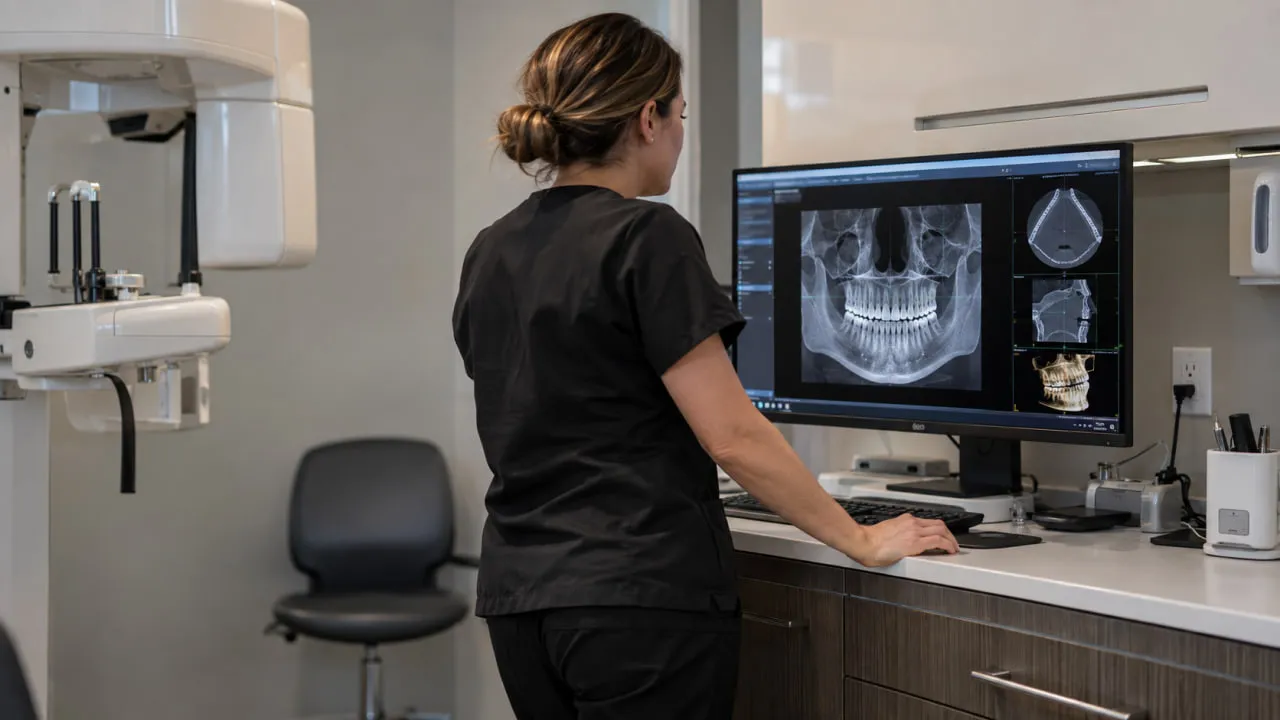
There is no single number that decides whether grafting is required. The dentist looks at whether enough healthy bone surrounds the position where the implant would ideally be placed.
Assessment may include:
- the location of the missing tooth
- how long the tooth has been missing
- ridge width and height
- gum and periodontal health
- neighbouring teeth
- the sinus above the upper back teeth
- the nerve and other anatomy in the lower jaw
- smoking and relevant medical history
- the position and size of the planned implant
A clinical examination and dental imaging are usually part of implant planning. Three-dimensional imaging such as CBCT may be used when clinically appropriate, but the type of imaging depends on the case.
Bone density can matter, but implant planning also depends on volume, shape and location. A site may still be too narrow for the planned implant position.
Why Bone Matters for Dental Implant Stability
An implant depends on bone at two different stages.
Primary Stability
Primary stability is the mechanical grip an implant has when it is placed. If the remaining ridge cannot provide appropriate initial stability in the planned position, grafting before implant placement may be considered.
Biological Stability and Osseointegration
After placement, bone heals in close contact with the implant surface. This process, called osseointegration, develops over time and varies with the site, available bone, procedure and individual healing factors.
Common Types of Bone Grafting Before Dental Implants
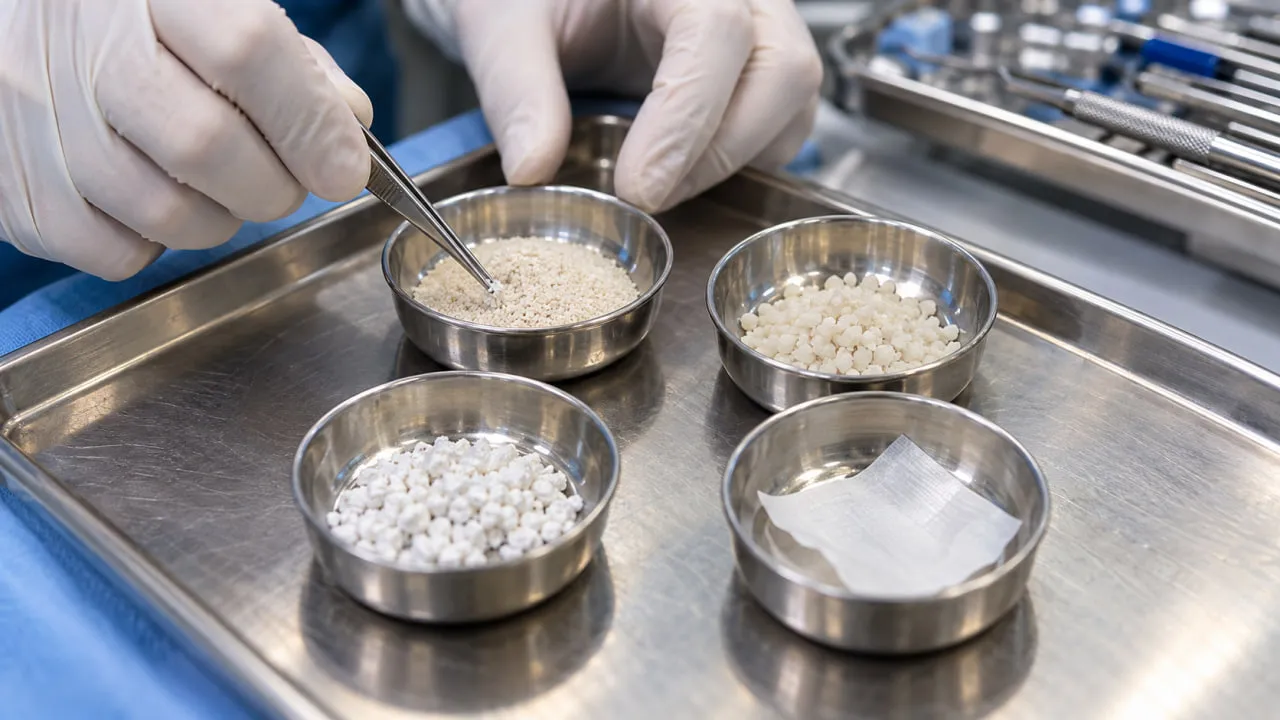
Bone grafting for dental implants ranges from small socket grafts to more involved ridge reconstruction. The choice depends on the location and extent of the deficiency.
Socket Preservation
Socket preservation is performed at the time a tooth is removed. Graft material is placed in the socket to help preserve the ridge for future treatment.
It can reduce some post-extraction ridge change but cannot promise that the site will have enough bone for a future implant without additional treatment.
Ridge Augmentation
Ridge augmentation may be considered when the jaw has become too narrow or has lost volume.
Graft material is added to the deficient area. In some cases, a barrier membrane is also used to protect the grafted area while healing takes place. This approach may be described as guided bone regeneration.
Sinus Augmentation
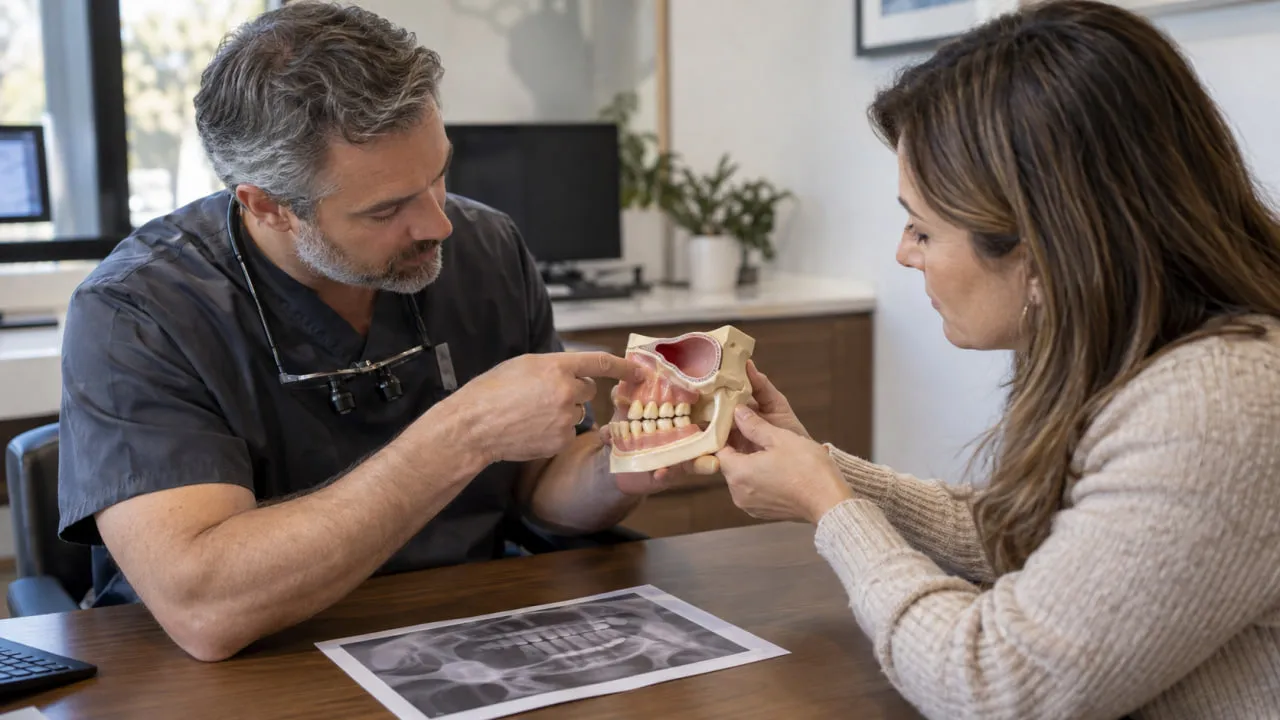
The maxillary sinus lies above the upper back teeth. If there is limited bone height beneath the sinus, sinus augmentation, often called a sinus lift, may be considered as part of implant planning.
The sinus lining is carefully elevated and graft material is placed beneath it to create additional bone volume. Not every upper molar or premolar implant requires this procedure.
More Extensive Grafting
Larger defects can require more involved augmentation or referral, depending on the anatomy, complexity and treating dentist's scope of practice. Market Dental Centre's oral surgery page provides general information about surgical dental care, but the provider and setting for a specific graft should be confirmed during treatment planning.
Dental Bone Graft Materials: Where Does the Graft Come From?
Several categories of graft material are used in dentistry. Most provide a framework that supports new bone formation while the site heals.
Material selection depends on the defect, treatment plan, material properties, health history, clinician judgement and patient preferences.
How Safe Is Human Donor Bone?
Canada regulates human tissues used for transplantation through safety requirements that include donor screening and testing, processing, storage and distribution. Health Canada's tissue safety guidance explains this framework.
These safeguards are designed to reduce and manage risk, not eliminate it. If the material source matters to you, raise that question before treatment is planned.
Can a Dental Implant Bone Graft and Implant Be Done at the Same Appointment?
Sometimes.
If there is enough existing bone to position the implant and obtain appropriate primary stability, a smaller defect may sometimes be grafted at the same appointment.
A larger deficiency may require a staged plan: graft first, allow healing, reassess the site, and place the implant later if the site is suitable.
The decision depends on factors such as:
- the amount of bone already present
- the size and position of the defect
- the planned implant position
- the type of graft
- whether appropriate implant stability can be achieved
A combined procedure may reduce surgical stages in selected cases, but it cannot be assumed before assessment.
What Does a Dental Bone Graft Procedure Feel Like?
Local anaesthetic is commonly used for dental bone-grafting procedures. When the area is adequately numb, patients may notice pressure, movement or vibration rather than sharp surgical pain.
After the procedure, temporary soreness, swelling or tenderness can occur. The amount varies with the site, the size of the graft and the person.
If dental anxiety is a concern, ask what comfort or sedation approaches may be appropriate and actually available for your procedure. Market Dental Centre's guide to dental anxiety and sedation options explains the general differences between common approaches without implying that every option is suitable for bone grafting.
How Long Does a Bone Graft Take to Heal Before an Implant?

Bone graft healing usually takes months rather than days, but there is no universal timeline.
The gums begin healing earlier. Underneath them, the grafted area continues to remodel and mature over a longer period.
Timing can be influenced by:
- graft size and location
- the type of procedure
- the material used
- existing bone
- smoking
- medical conditions
- individual healing response
- whether the implant was placed at the same appointment
A smaller graft may be ready for the next stage sooner than a larger augmentation, but calendar time alone does not determine readiness. The treating dentist reassesses the site before proceeding.
What Are the Risks and Limitations of Dental Bone Grafting?
A dental implant bone graft is a surgical procedure, so complications are possible even when treatment is carefully planned.
Potential issues can include:
- infection
- swelling or bruising
- the wound opening during healing
- exposure or loss of graft material
- incomplete graft integration
- the need for additional grafting
- sinus-related complications when sinus augmentation is involved
- effects involving nearby anatomy
Smoking, certain medical conditions, medications, site anatomy and aftercare can influence healing.
Grafting also does not guarantee that enough bone will form for an implant. If the site remains unsuitable, another implant strategy or a non-implant option may be discussed.
Dental Bone Graft Cost and Insurance in Ontario
The cost of grafting varies because there is no single dental bone graft procedure.
Fees can depend on the graft site, complexity, amount and type of material, whether a membrane is used, whether another procedure is performed at the same appointment and what follow-up is required.
The Ontario Dental Association Suggested Fee Guide is a reference. Ontario dentists are not required to charge the fees in the Guide, and dental plans may use their own rules or a different year's fee guide when calculating benefits.
Private, employer and student dental plans also vary. A predetermination can help estimate what a plan may pay, but it is not a guarantee of final reimbursement. Market Dental Centre can assist with claim submission and direct billing according to plan terms.
The current Canadian Dental Care Plan Dental Benefits Guide lists bone grafts, implants and implant-related procedures among its exclusions. Market Dental Centre accepts the CDCP for eligible covered care, but that does not make an excluded graft procedure eligible.
For broader coverage questions, see our guide to dental implant insurance.
Questions to Ask Before Bone Grafting

Before agreeing to a graft, useful questions include:
- Why do you think grafting is needed at this site?
- What type of graft and material are you considering?
- Could the implant be placed at the same appointment?
- What could change the healing timeline?
- Who would perform each stage, and what fees or insurance estimates can be reviewed first?
If you are comparing the budget for the full treatment rather than the graft alone, our guide to dental implant costs in Toronto covers that separate question.
Key Takeaways
- Not every dental implant requires bone grafting.
- The jaw ridge naturally changes after a tooth is removed, but the amount varies.
- A dentist evaluates bone volume, anatomy and implant position before deciding whether grafting may help.
- Socket preservation, ridge augmentation and sinus augmentation address different clinical situations.
- Autograft, allograft, xenograft and synthetic materials have different sources and characteristics.
- A graft and implant can sometimes be placed at the same appointment, while other cases need staged treatment.
- Healing commonly takes several months, but the timeline depends on the site and procedure.
- Insurance coverage is plan-specific, and the current CDCP excludes bone grafts and implant-related procedures.
Told You May Need a Dental Implant Bone Graft?
Being told that you may not have enough bone for an implant is a reason to assess the site, not a reason to assume treatment is either possible or impossible.
A dentist can review the missing-tooth area, available bone, relevant imaging, health history and tooth-replacement options, then explain whether grafting should be part of the plan and whether treatment would be simultaneous or staged.
Market Dental Centre is a general dental practice at 149 Lower Jarvis Street in Downtown Toronto, near St. Lawrence Market.
Call (416) 363-4115 or request an appointment to discuss an implant assessment.

.webp)


