








Comparing laughing gas vs oral sedation usually means you already know you want some help managing dental anxiety. The useful question is what each option changes before, during and after the appointment. Nitrous oxide is inhaled and can be adjusted while you breathe it. Oral sedation is taken by mouth and cannot be fine-tuned as quickly once it has been given. That difference affects preparation, awareness, recovery, transportation and the rest of your day. Neither option is automatically better. The right approach depends on the treatment being planned, your health history, the intended level of sedation and how you respond.
Laughing Gas vs Oral Sedation: The Short Answer
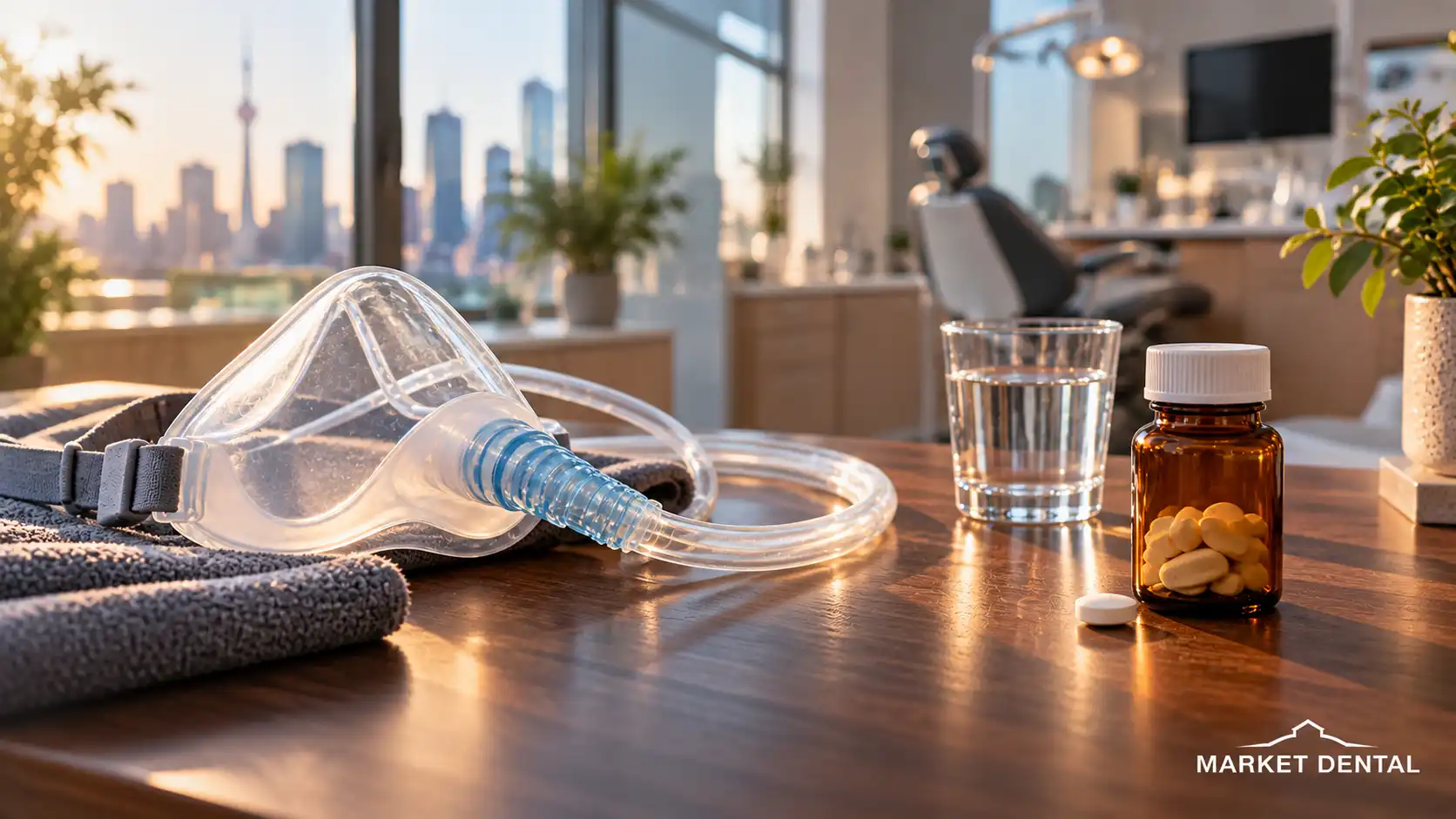
Nitrous oxide, commonly called laughing gas, is inhaled with oxygen and is typically used for minimal sedation. It can be adjusted during treatment, and its effects generally wear off more quickly once administration stops.
Oral sedation uses sedative medication taken by mouth. In Ontario, it may be used for minimal or moderate sedation depending on the drug, dose and intended level. Once the medication has been taken, the effect is less immediately adjustable, and recovery usually involves more transportation and post-appointment restrictions.
The choice is not simply about which option feels “stronger.” Clinical fit and practical planning matter more.
Before the Appointment, Preparation Can Be Very Different
Preparation depends on both the sedation method and the planned depth. This is especially important with oral sedation because Ontario requirements differ between oral minimal and oral moderate sedation.
Eating and drinking instructions are not one universal rule
For nitrous oxide/oxygen and oral minimal sedation, the current RCDSO standard says patients should be instructed not to eat or drink for two hours before the appointment.
Oral moderate sedation uses longer fasting rules: eight hours after a meal containing meat, fried or fatty foods; six hours after a light meal; and two hours after clear fluids.
Follow the directions provided for your specific appointment, including advice about regular medications. Do not stop or change prescribed medication unless the treating dentist or physician tells you to.
Oral sedation is not simply a pill to take whenever you choose

A common online description is “take a pill at home before the dentist.” Ontario guidance is more specific.
For oral moderate sedation, the RCDSO says the sedative should normally be administered in the dental office with enough time allowed for absorption. Pre-arrival dosing is reserved for limited circumstances and comes with additional screening, instructions and transportation requirements.
Do not take a sedative before leaving home unless the treating dentist has specifically instructed you to do so.
During Treatment, Adjustability Is a Major Difference
The clearest in-chair difference is how readily the sedative effect can be changed after it begins.
Nitrous oxide can be adjusted while you breathe it
Nitrous oxide is delivered with oxygen through a small nasal hood. With minimal sedation, you remain conscious, breathe on your own and can respond to questions or instructions.
Because the gas is inhaled continuously, the concentration can be adjusted or stopped during treatment. Comfortable nasal breathing matters, so a cold, congestion or another breathing concern is worth mentioning before the visit.
Some people notice warmth, tingling or light-headedness; others simply feel less tense. Experiences vary.
Oral sedation is less immediately adjustable after administration
Oral sedative medication needs time to absorb, and the effect varies with the drug, dose, other medications and individual response.
Once an oral sedative has been taken, it cannot be fine-tuned minute by minute in the same way inhaled nitrous oxide can. That is one reason the intended sedation level matters. Oral minimal sedation and oral moderate sedation are not interchangeable labels.
Sedation does not replace local anaesthetic
Sedation can reduce anxiety and change how you experience the appointment, but it does not numb the tooth or gums. When numbing is needed, local anaesthetic, often called freezing, is still used.
If you have had difficulty getting numb before, mention it. For a broader explanation of sedation, freezing and other anxiety-management approaches, see our guide to dental anxiety sedation options.
Memory Is Less Predictable Than Many Sedation Comparisons Suggest

Nitrous oxide is not generally used to create amnesia, so patients should not assume they will forget a laughing gas appointment.
Oral sedatives may reduce memory for some people, but the degree of recall varies with the medication, dose, sedation level and individual response. One person may remember very little; another may remember much more.
If reduced recall matters to you, ask what is realistic for the plan being considered. Complete amnesia should not be treated as a guaranteed effect of oral sedation.
Laughing Gas vs Oral Sedation After the Appointment
Recovery is where laughing gas vs oral sedation often feels most different in everyday life. Nitrous oxide generally has a shorter recovery profile, while oral sedation requires more planning around transportation and post-appointment activity.
Nitrous recovery can be quick, but driving is not automatic
After treatment, nitrous oxide is stopped and oxygen is administered for a period. The RCDSO requires the dentist to assess and record recovery and remain in the facility until the patient is fit for discharge.
Nitrous oxide/oxygen is the only sedation modality for which the dentist may use discretion about unaccompanied discharge. Even then, only a fully recovered patient can be considered. If residual symptoms remain, a responsible adult is required.
That is not an automatic “yes” to driving. Follow the discharge instructions you are given.
Oral sedation requires an escort and longer restrictions

For oral minimal sedation, the RCDSO requires discharge to the care of a responsible adult. Patients are instructed not to drive, operate hazardous machinery or make important decisions, and to avoid alcohol and other sedating drugs for at least 18 hours, or longer if drowsiness or dizziness continues.
Similar post-sedation restrictions apply to oral moderate sedation.
A taxi can be part of the trip home, but the responsible adult still needs to accompany you. Arrange that person before the appointment.
Before, During and After: A Practical Comparison
This table compares laughing gas vs oral sedation across the parts of the appointment day that matter most.
Which Situations May Lead a Dentist to Discuss One Option Over the Other?
No single factor settles laughing gas vs oral sedation. The dentist considers the procedure, anxiety level, intended sedation depth, health history, current medications and practical issues together.
When rapid adjustability and shorter recovery matter
Nitrous oxide may be discussed for a patient who needs anxiety support but wants the sedative effect to be adjustable throughout a shorter appointment. Its relatively short recovery profile can also matter when transportation or scheduling is a concern.
Consider a hypothetical Downtown Toronto office worker with mild anxiety who is having a small dental filling. A rapidly adjustable option may fit that appointment, but leaving alone or returning to work still depends on recovery and the dentist’s advice.
When oral sedation may enter the discussion
Oral sedation may be considered when anxiety is more significant or longer appointments have been hard to tolerate.
The intended level may be minimal or moderate, and the trade-off is more preparation, an escort and longer post-appointment restrictions. Severe anxiety alone does not decide the choice.
Medical history and medications can change the plan
Before sedation, the dentist needs an up-to-date medical history and medication list.
Health conditions, airway or breathing concerns, previous experiences with sedation or anesthesia, and medications with sedating effects can all influence the plan.
Bring a complete medication list, including over-the-counter products and supplements. The dentist may modify the approach or recommend a referral if needed.
Ontario Sedation Rules Make the Planned Level Important

Ontario does not treat every form of dental sedation the same. The RCDSO requires dentists to hold the appropriate authorization. Nitrous oxide/oxygen and oral minimal sedation fall under minimal-sedation authorizations, while oral moderate sedation adds requirements, including a corresponding facility permit and more intensive monitoring.
The RCDSO Standard of Practice for sedation and general anesthesia also covers medical-history review, preparation, monitoring, recovery and discharge.
A useful question is: “What level of sedation are you planning for me?” The answer changes much more than how relaxed you may feel during treatment.
Cost and Dental Insurance Are Separate From Clinical Fit
Clinical suitability and insurance coverage are separate questions.
Private, employer and student plans vary. A predetermination may estimate benefits but does not guarantee payment. Direct billing changes the claim process, not the insurance contract.
The Ontario Dental Association Suggested Fee Guide is a reference. Dentists are not required to charge the suggested amounts, and insurers may use different fee-guide years or plan rules.
Market Dental Centre provides direct-billing and claim support. See how direct billing and insurance reimbursement work before assuming a sedation service will be covered.
Questions to Ask Before a Sedation Appointment in Downtown Toronto
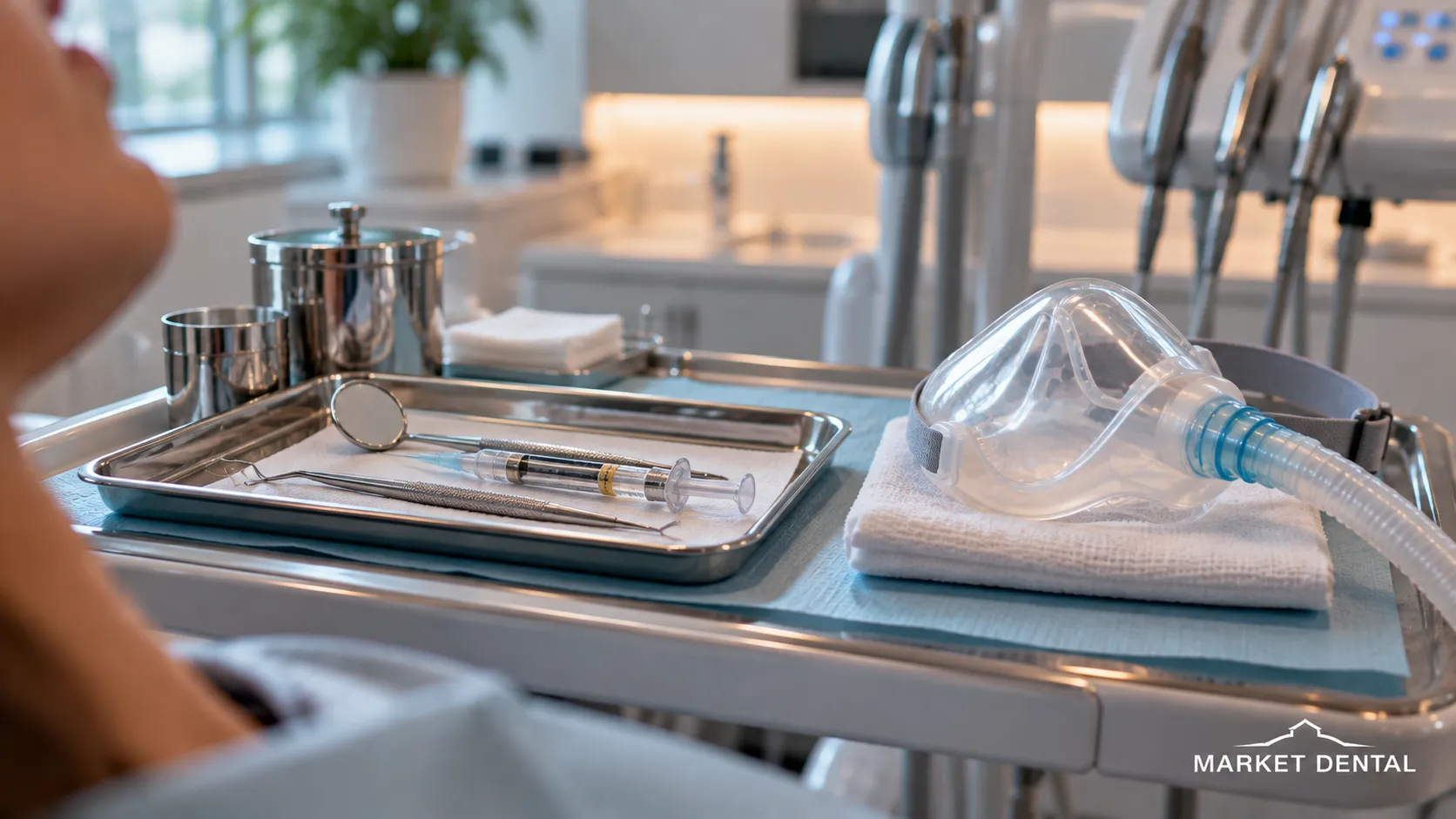
A useful laughing gas vs oral sedation discussion should answer these questions before treatment:
- Which level of sedation are you recommending, and why?
- What should I eat or drink before this specific appointment?
- Should I take my regular medications as usual?
- Do I need someone to bring me to the clinic, take me home, or both?
- When can I safely drive, work or make important decisions again?
- Does the procedure itself, such as a filling or wisdom teeth removal, change the sedation plan?
Market Dental Centre is at 149 Lower Jarvis Street in Downtown Toronto, near St. Lawrence Market. If you work nearby, including in the Financial District, plan transportation and recovery time before the appointment.
Key Takeaways
- Nitrous oxide is inhaled and can be adjusted during treatment; oral sedation is taken by mouth and is less immediately adjustable.
- Oral sedation in Ontario may be minimal or moderate, and the preparation and monitoring requirements are not identical.
- Eating and drinking instructions depend on the method and intended sedation level.
- Neither option replaces local anaesthetic when a tooth or area needs to be numb.
- Reduced memory can occur with oral sedation, but complete amnesia cannot be promised.
- Nitrous oxide generally has a shorter recovery profile, but leaving alone or driving still depends on recovery assessment and instructions.
- Oral sedation requires a responsible adult and comes with longer post-sedation restrictions.
- The appropriate option depends on an individual clinical assessment, not on which method sounds stronger.
Not Sure Which Sedation Approach Fits Your Appointment?
If you are still comparing laughing gas vs oral sedation for an upcoming visit, tell the Market Dental Centre team what concerns you most, such as staying aware, arranging transportation, remembering the appointment or getting through a longer procedure.
The dental team can review the treatment being considered and discuss which comfort or sedation options are appropriate and currently available.
Market Dental Centre is located at 149 Lower Jarvis Street in Downtown Toronto, near St. Lawrence Market. Call (416) 363-4115 or request an appointment online.

.webp)


