










Dry socket prevention after wisdom teeth removal can feel complicated when every change in the extraction site looks suspicious. You may be a few days into recovery, unable to see the blood clot, noticing pale tissue, or wondering whether one drink or meal disturbed the area. Dry socket cannot always be prevented, but gentle care and following the instructions given for your extraction can lower the risk. The most useful clue during recovery is usually not the color of the socket. It is the direction your pain is moving. For Toronto patients, soreness that gradually becomes easier is generally reassuring. Pain that settles and then becomes noticeably worse deserves a dental assessment.
Quick answer: Protect the healing site, avoid smoking or tobacco, avoid unnecessary suction and forceful rinsing early on, and clean your mouth according to your post-operative instructions. These steps can reduce risk, but they cannot guarantee prevention. Do not diagnose the socket by color alone; worsening pain is a more useful reason to call.
Dry Socket Prevention After Wisdom Teeth Removal Starts With Protecting Early Healing
The goal is to let the extraction site begin healing without unnecessary disturbance.
After a wisdom tooth is removed, blood collects in the socket and forms a clot. That clot covers the underlying tissues and becomes part of the early framework for repair. Over time, healing tissue gradually replaces it as the socket closes.
What Dry Socket Actually Is
Dry socket, or alveolar osteitis, is a painful post-extraction complication in which the protective clot does not form adequately, is lost, or breaks down before enough healing has taken place.
The exact mechanism is not always clear. Smoking, a difficult extraction, local clot breakdown, and other factors can contribute. Someone can follow their instructions carefully and still develop dry socket.
The American Association of Oral and Maxillofacial Surgeons' dry socket guidance notes that the condition occurs more often around wisdom tooth extractions and recommends following post-operative instructions, avoiding tobacco, and protecting the early extraction site.
Dry socket is uncommon after routine extractions but occurs more often after surgical removal of lower wisdom teeth. Exact rates vary across studies and procedures, so a single percentage is not useful for predicting one person's risk.
Dry Socket vs Normal Healing: Follow the Pain Trend, Not Just the Calendar

The direction of pain over several days is usually more useful than trying to match yourself to one exact post-operative day.
Normal Post-Extraction Pain Usually Trends Down
Normal soreness can be significant, especially after a difficult extraction, but the overall pattern should generally begin moving in the right direction. Swelling and jaw stiffness may also take several days to settle.
Pain does not have to disappear quickly to be normal. What is more reassuring is that it is becoming easier rather than suddenly intensifying.
Imagine two people on the third day after an extraction. One still feels stiff but is a little more comfortable than yesterday. The other felt better yesterday but now has a deep ache spreading toward the ear. The second pattern is more concerning and deserves a call to the treating office.
Dry Socket Pain Usually Becomes More Severe
Dry socket often causes severe or increasing pain within the first few days after an extraction, sometimes after the area initially seemed to be settling.
The pain may radiate toward the ear, temple, jaw, or neck on the same side. Some people also notice an unpleasant taste, bad breath, or an empty-looking socket.
No single symptom confirms dry socket. A dental examination is needed, which is why dry socket prevention after wisdom teeth removal also includes knowing when a change in symptoms deserves attention.
Infection Is Not the Same as Dry Socket
Dry socket is not the same as a spreading bacterial infection. The two can produce different patterns and may require different clinical care.
Fever, pus, feeling increasingly unwell, or swelling that continues to worsen can suggest infection or another complication rather than dry socket alone.
For broader urgent dental concerns, see Market Dental Centre's emergency dentistry information.
Rapidly spreading facial or neck swelling or difficulty breathing or swallowing requires urgent medical attention. Call 911 or go to the nearest hospital emergency department.
Normal Healing or Possible Dry Socket? Use the Trend as a Guide
This table can help you decide when to call. It cannot diagnose the socket.
White or Gray Material in the Socket Is Not Automatically Exposed Bone

Pale material in an extraction socket can be part of normal healing. Fibrin and granulation tissue can appear white, cream, yellowish, or gray as the wound changes.
Food debris can also alter the appearance. Looking alone cannot reliably distinguish normal repair tissue from trapped food, exposed bone, or infection.
A pale socket with gradually improving symptoms is generally more reassuring than a socket accompanied by sharply worsening pain. The symptoms and clinical examination matter more than color.
Do Not Touch or Test the Socket
Do not press the area, scrape it, probe it with a cotton swab or toothpick, or try to find out whether a pale area feels hard.
Repeated bright-light mirror checks can add anxiety without providing a reliable answer. If something seems trapped, use only the cleaning method included in your post-operative instructions or ask the dental office what to do.
You Cannot Reliably Confirm Clot Loss by Looking
The clot does not remain a neat dark-red plug throughout recovery. Its appearance changes quickly, and pale repair tissue may cover the area.
Not seeing a clot does not prove that it has been lost. New, severe, or spreading pain is a more useful reason to contact the office that treated you.
Five Habits That Matter Most for Dry Socket Prevention After Wisdom Teeth Removal
The best prevention plan is straightforward: follow the instructions for your procedure and avoid unnecessary disturbance while the area is healing.
1. Follow the Instructions Given for Your Extraction
Post-operative advice varies because extractions vary. A straightforward upper wisdom tooth removal and a difficult lower surgical extraction may not have identical restrictions.
Your written instructions should take priority over online timelines. If a general guide conflicts with what the dentist who treated you recommended, contact that office for clarification.
Tell the clinician about medications you take, including oral contraceptives. Do not stop a prescribed medication on your own.
2. Avoid Smoking and Tobacco During Healing

Smoking is a recognized risk factor for dry socket and can interfere with normal wound healing.
Avoid smoking during healing and follow the tobacco-free timeframe provided for your extraction. If stopping is difficult, discuss that with a healthcare professional rather than improvising around the surgical site.
Direct evidence connecting vaping specifically with dry socket is less established than the evidence for smoking. Vaping still introduces suction and inhaled substances around a fresh wound, so follow the same cautious approach unless your clinician tells you otherwise.
3. Avoid Unnecessary Suction and Forceful Rinsing Early On
Straws, forceful spitting, vigorous swishing, and repeatedly sucking at the wound can unnecessarily disturb an early healing site.
Professional sources use different straw-avoidance timeframes, which is why your procedure-specific instructions are more useful than a universal number.
When brushing early in recovery, avoid aggressive spitting. Let excess water or toothpaste leave your mouth gently.
4. Keep Your Mouth Clean, but Be Gentle Around the Wound
Oral hygiene still matters after an extraction.
General Canadian Dental Association guidance advises avoiding rinsing during the first 24 hours after minor oral surgery, followed by gentle warm-water rinsing afterward. Your treating dentist's instructions should take priority for your specific procedure.
Continue cleaning the rest of your teeth while staying away from the wound as instructed.
If your dentist recommends an antiseptic rinse or gel, use it exactly as directed rather than adding one to your routine on your own.
5. Keep Food Simple Without Turning Recovery Into a Meal Plan

Soft, easy-to-chew foods can reduce irritation while the area is tender. Avoid digging food from the socket, and let very hot foods or drinks cool during early recovery.
This article deliberately does not repeat a full recovery menu. Market Dental Centre's guide to what to eat after a tooth extraction covers food choices and the gradual return to normal eating in detail.
The First Few Days Matter, but Recovery Is Not a Countdown
Dry socket usually develops within the first few days after extraction, and the risk falls as healing progresses. There is no single day when the risk suddenly becomes zero.
Early soreness, swelling, and jaw stiffness vary with the procedure. A straightforward extraction may settle faster than a difficult lower wisdom tooth removal. In either case, the overall direction should generally move toward improvement.
Dry socket prevention after wisdom teeth removal is therefore less about counting days and more about protecting early healing and noticing a change in the pain pattern.
For background on the procedure itself, see Market Dental Centre's wisdom teeth removal information.
What Does a Dentist Do if Dry Socket Is Suspected?
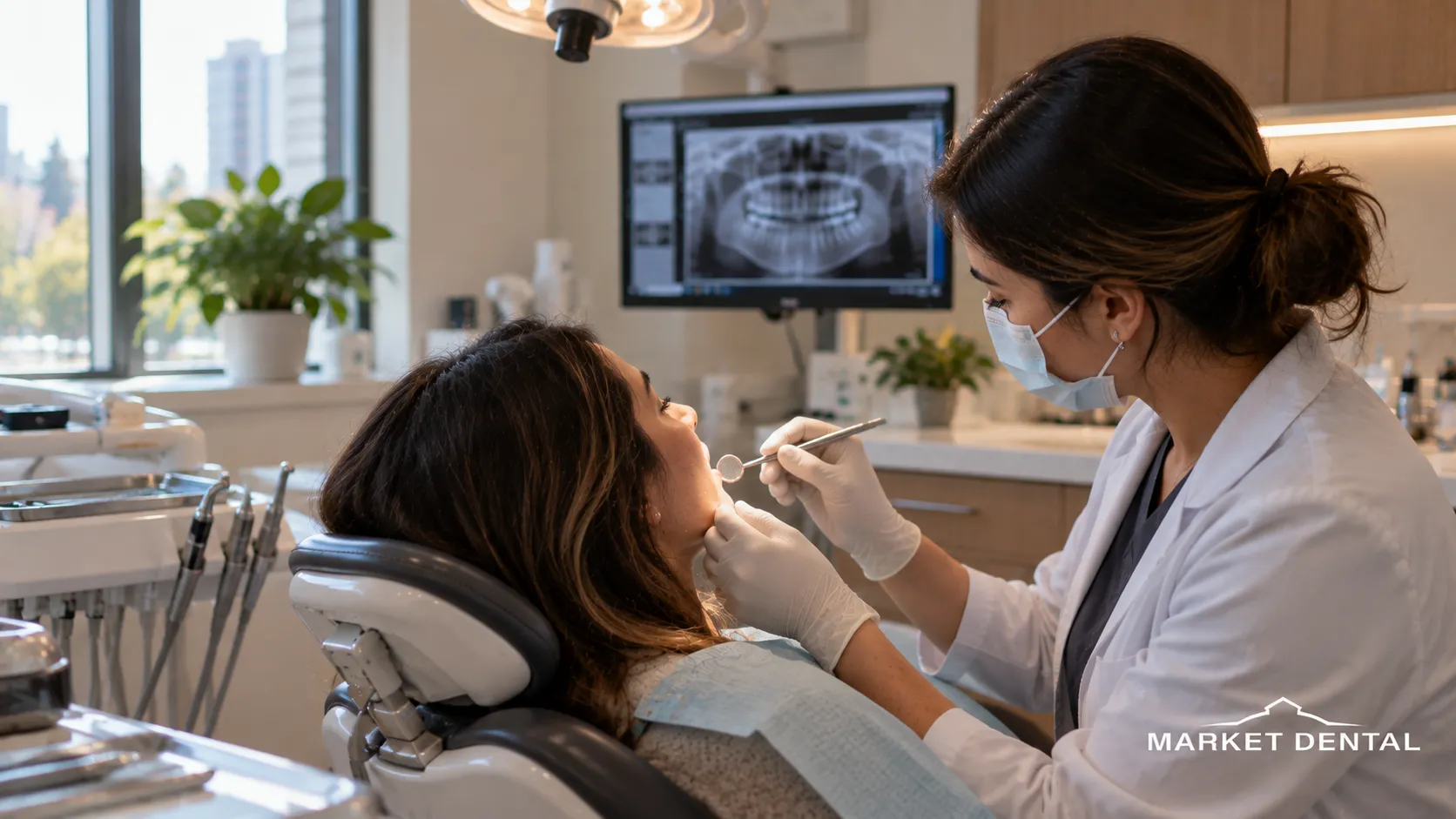
A dentist first needs to determine what is causing the pain. Treatment then focuses on reducing irritation and managing discomfort while healing continues.
The dentist may examine the extraction site, ask when the pain began and how it changed, and use imaging when another cause needs to be investigated. Depending on the findings, care may include gentle irrigation, appropriate pain management, or a medicated dressing.
Some patients feel noticeably better after treatment, but the response varies. No dressing or office procedure can promise relief within a specific number of minutes.
Where Antibiotics Fit In
Antibiotics are not automatically needed for dry socket itself.
A dentist may consider antibiotics when the examination suggests a bacterial infection or another clinical reason for prescribing them. A painful socket alone does not prove that an infection is present.
When to Call About Wisdom Tooth Pain in Downtown Toronto

Call the treating dental office when pain is becoming substantially worse instead of gradually better, radiates strongly toward the ear or neck, becomes difficult to control, or occurs with unexpected swelling, fever, or other concerning symptoms.
The office that performed the extraction is often the best first contact because it knows the procedure and the instructions you were given. If you cannot reach that office, or you had the extraction elsewhere and are now in Toronto, a general dentist can assess the area.
Market Dental Centre is a general dental practice at 149 Lower Jarvis Street in Downtown Toronto, Ontario, near St. Lawrence Market. Patients in Toronto can call (416) 363-4115 and describe how the pain has changed.
A general dental assessment can help determine whether the extraction site appears to be healing normally or needs further care.
For heavy bleeding that does not slow with firm pressure, contact a dental professional promptly. Severe uncontrolled bleeding requires urgent medical care.
Key Takeaways
- No approach to dry socket prevention after wisdom teeth removal can guarantee that it will not occur.
- Follow the post-operative instructions for your own extraction instead of relying on one universal timeline.
- The direction of pain is usually more useful than the color of the socket.
- Smoking is a recognized dry-socket risk factor.
- Avoid vigorous rinsing, unnecessary suction, and repeated disturbance of the extraction site during early healing.
- White or gray tissue can be part of normal healing; do not probe or scrape it.
- Worsening pain deserves dental assessment, while fever or increasing swelling may indicate another complication.
- Difficulty breathing or swallowing or rapidly spreading facial or neck swelling requires urgent medical care.
Pain Getting Worse Instead of Better? Have the Socket Checked
For dry socket prevention after wisdom teeth removal, the goal is not to inspect the wound until it looks “right.” Protect the area, follow the instructions you were given, and pay attention to the direction of your recovery.
Contact the office that performed your extraction if pain is worsening, spreading, or no longer following the recovery pattern you were told to expect.
If you are in Toronto and need a dental assessment, Market Dental Centre is at 149 Lower Jarvis Street in Downtown Toronto, Ontario, near St. Lawrence Market.
Call (416) 363-4115 or request an appointment.
For rapidly spreading facial or neck swelling or difficulty breathing or swallowing, call 911 or go to the nearest hospital emergency department.

.webp)


