





TMJ Treatment in Downtown Toronto for Jaw Pain and TMD
Maybe your jaw aches after meals, or it has started clicking and you are wondering whether that matters. A click on its own is often harmless. Jaw pain and stiffness have more than one possible cause. The jaw joint or chewing muscles may be involved, as in temporomandibular disorders (TMD). Dental problems can also cause similar discomfort. A dental assessment can help clarify what is happening. Market Dental Centre is a general dental practice in Downtown Toronto, near St. Lawrence Market. Our dentists can talk through what you have noticed and examine your teeth and jaw. The findings can help determine whether monitoring, further assessment, or care from another health professional is appropriate. You can call or request an appointment to discuss your symptoms and ask about next steps.

What Is TMD and How Does It Affect Your Jaw?

Your lower jaw moves whenever you speak, chew or yawn. Two joints and the muscles around them make these everyday movements possible.
TMJ names the joint; TMD names the disorders.
TMJ vs. TMD: TMJ stands for temporomandibular joint. You have one just in front of each ear, connecting your lower jaw to your skull. TMD stands for temporomandibular disorders, a group of conditions involving these joints, the muscles used for chewing, and nearby tissues. People often say “TMJ” when they mean a jaw problem, but the terms are different. Having an occasional jaw sound does not, by itself, mean you have TMD.
How the joint, disc and muscles work together: Each joint combines a hinge-like motion with a sliding motion. As you begin to open your mouth, the rounded end of the lower jaw rotates; opening wider also involves forward movement. A small disc of firm, flexible tissue sits between the joint surfaces and helps distribute pressure as the jaw moves.
The masseter, along the side of the jaw, and the temporalis, near the temples, are among the muscles that help you chew and move your jaw. TMD can involve the joint, the muscles, or both. Even when clicking is noticeable, the sound alone cannot tell you whether the disc has changed position or whether the joint is damaged.
What Can Contribute to TMJ Pain?
TMD has no single universal cause. Several factors can play a part, and for many people the reason for symptoms remains unclear.

Clenching, Grinding and Muscle Tension
Frequent jaw clenching keeps the chewing muscles working when they would normally rest, which can leave them sore or tired. Bruxism describes this kind of repeated clenching or grinding, whether awake or asleep.
Bruxism and TMD can occur together, but one does not necessarily cause the other. Stress, muscle tension and habits such as constant gum chewing may worsen discomfort for some people without being the original cause.

Injury, Arthritis and Other Factors
A blow to the jaw or another injury to the face can contribute to some TMD presentations. Arthritis, including osteoarthritis and inflammatory forms such as rheumatoid arthritis, can also affect the jaw joints, although it explains only some cases.
Many people develop symptoms with no injury, joint condition or obvious trigger at all.
What About Bite Alignment?
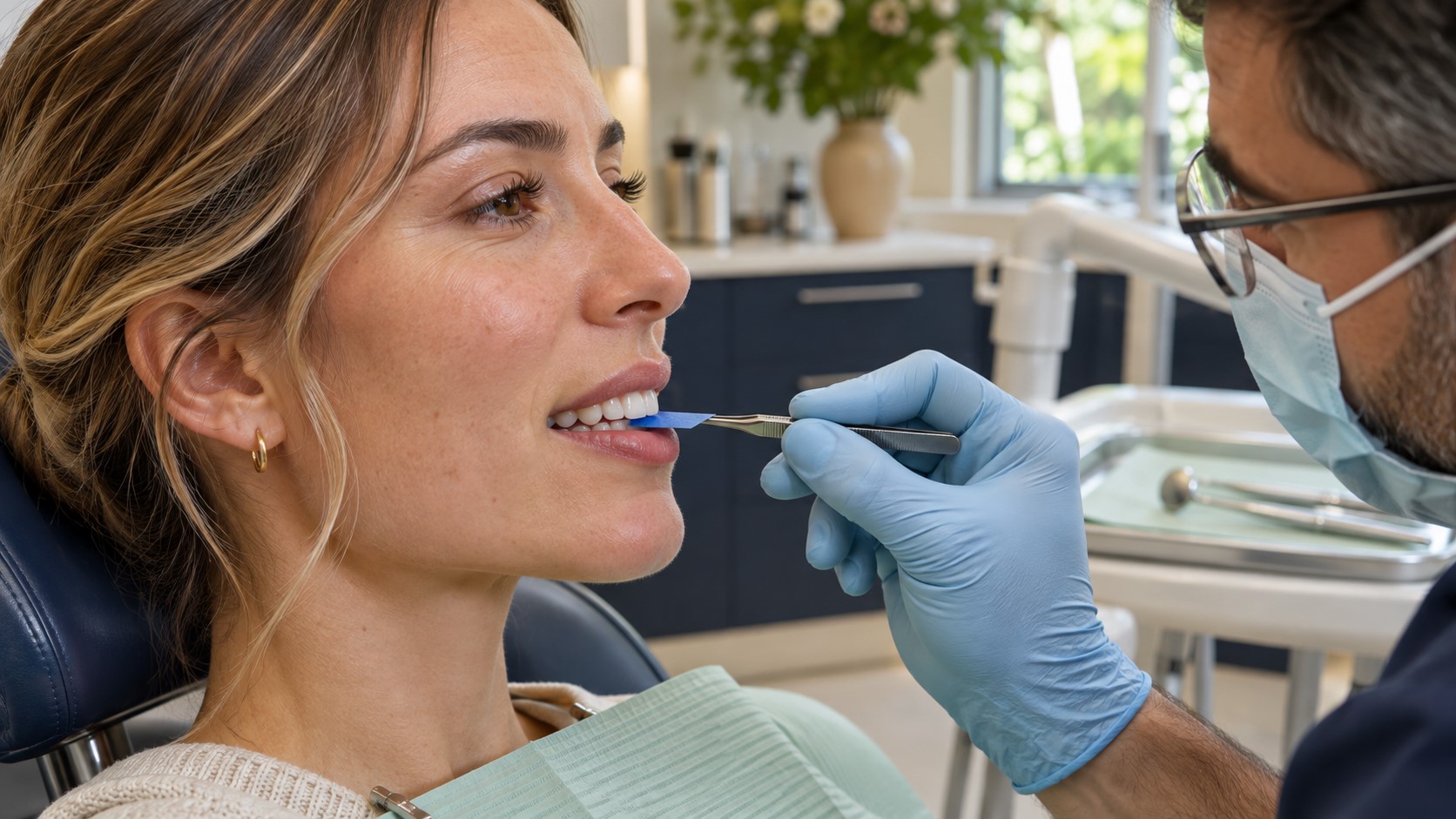
A dentist may check how your upper and lower teeth meet during an examination. Even so, bite alignment is not a proven general cause of TMD, and crooked teeth or an overbite do not automatically explain jaw pain.
Changing the bite is not an established routine treatment for TMD. If you have separate bite alignment concerns, they can be assessed on their own merits.
Signs of TMD: Jaw Pain, Clicking and Limited Movement
Jaw pain, sounds and changes in movement can occur with TMD, but they are not specific to it. A tooth problem, ear condition or another cause can feel similar. The pattern and impact of symptoms matter more than any single sign.

What Affects the Cost of TMJ Care?
No fixed price
Depends on the assessment
There is no fixed price for TMJ care. Fees depend on what an assessment finds and whether any further care is appropriate.
TMJ care costs vary with the type of examination and whether additional imaging, an oral appliance or follow-up is needed. Not everyone with jaw symptoms requires those services. The Ontario Dental Association publishes a Suggested Fee Guide, which dentists may use as a reference rather than a mandatory fee schedule. Once the proposed care is clear, ask for an estimate before deciding.
Private Insurance and Direct Billing
Depends on your policy
Direct billing where applicable
Private coverage depends on your policy and the service billed. TMJ therapy or appliances may be excluded, and deductibles, annual limits or reimbursement percentages can affect what you pay. See our dental insurance information for details on claims.
Market Dental Centre offers direct billing where applicable, but direct billing does not guarantee coverage. You are responsible for any portion your insurer does not pay. Confirm your benefits directly with your insurer.
Does the CDCP Cover TMJ Therapy or Night Guards?
No
Excluded under current CDCP rules
The Canadian Dental Care Plan Dental Benefits Guide effective April 1, 2026 excludes TMJ therapy and appliances, bruxism appliances such as night guards, and mouth guards.
Acceptance of eligible CDCP patients at a dental practice does not change those exclusions. Dental examinations have separate eligibility criteria and frequency limits, and coverage for an eligible examination does not extend to excluded TMJ treatment.
What Happens During a TMJ Assessment?
A TMJ assessment starts with the history of your symptoms and an examination. It may identify a dental cause or suggest that another type of evaluation is needed.
1. What Your Dentist Will Ask About
Your dentist may ask where pain occurs, when it began and what affects it. They may also ask about chewing, episodes of locking, changes in how far you can open, past injuries, clenching and previous care.
Your medical and dental history helps put these details in context, particularly when headaches or other symptoms have more than one possible explanation.
2. How the Jaw and Teeth May Be Examined
The dentist may observe jaw movement as you open, close and move from side to side, noting pain or restriction. They may gently check the joints and chewing muscles for tenderness and listen for joint sounds.
A dental examination can also identify a cracked tooth, decay or a restoration that needs attention. These findings help distinguish jaw-related discomfort from dental problems; clicking alone cannot confirm disc displacement.
3. When Imaging May Be Needed
Imaging is not always needed. Findings from your history and examination help determine whether a test would add useful information.
Dental X-rays can show teeth and certain bone structures, but not the joint disc. MRI may be considered when evaluating soft tissue would affect clinical decisions.
4. When a Referral May Be Needed
If symptoms suggest an ear condition, headache disorder or a complex jaw problem, the dentist may recommend further evaluation or referral to an appropriate healthcare professional.
Conservative TMJ Treatment Options and Their Limitations
Start With Simple, Reversible Care
Not every jaw symptom needs active treatment, and some ease with time or simple changes. When discomfort continues, conservative, reversible care is generally the starting point. Early care aims to reduce discomfort, not reposition the joint.
This may mean softer foods temporarily, avoiding wide opening, limiting gum chewing, and noticing daytime clenching. Heat or cold helps some people, and jaw exercises are best guided by a clinician. The National Institute of Dental and Craniofacial Research describes these conservative approaches to TMD in more detail. If these steps are not enough, further evaluation makes sense.
Could a Night Guard or Splint Help?
A night guard mainly protects teeth from wear linked to grinding or clenching. A stabilization splint may be considered for selected TMD presentations after an examination, but the two are not always interchangeable. If you are considering custom night guards for tooth protection, your dentist can review suitability, fit and your response.
Evidence for TMD pain relief is limited. An appliance should not be expected to cure TMD or reliably reposition a joint disc, and it should not permanently change your bite. Stop wearing any appliance that increases pain or seems to change your bite, and contact your dentist rather than adjusting it yourself.
When Physiotherapy or Other Care Is Considered
Physiotherapist-guided jaw exercises, strategies for persistent clenching, or a medical assessment for symptoms that may not start in the jaw can be useful. Such care may involve other healthcare professionals.
If symptoms persist, reassessment matters, and specialist evaluation may help in complex cases. Surgery is not the automatic next step.
Why Invisalign and Bite Rebuilding Are Not TMJ Treatments
Invisalign clear aligners are designed to straighten teeth for orthodontic reasons. Current evidence does not support orthodontic treatment as a routine way to manage TMD pain. Crowding or spacing concerns can still be evaluated separately.
Fillings, crowns and other restorative dental care can be appropriate for decay, a cracked tooth or a broken restoration. They should not be used to rebuild the bite as TMD treatment, since that means permanent changes to your teeth without established TMD benefit.
When Jaw Symptoms Need Prompt Attention
Painless sounds alone usually do not need treatment. Some situations, however, are worth acting on sooner.
Rapidly worsening facial swelling also warrants urgent medical assessment. Sudden hearing loss requires urgent medical attention, even without jaw pain.

Discuss Jaw Pain at Market Dental Centre

Market Dental Centre is a general dental practice at 149 Lower Jarvis Street in Downtown Toronto, near St. Lawrence Market. For people who live or work nearby, the clinic offers a local place to raise questions about jaw discomfort alongside other dental concerns.
A dental examination may help identify problems involving a tooth or restoration that can feel like jaw pain. Describing when the discomfort occurs, what makes it worse, and any episodes of locking can help your dentist understand what needs closer attention. Bring details of any appliance or treatment you have tried if relevant.
Not every jaw concern calls for treatment. In some cases, monitoring may be reasonable; in others, further assessment by a physician or another dental professional may be appropriate. The aim is to understand what the findings mean before making decisions about care. You can discuss any recommended next steps and their potential costs before agreeing to treatment.
Frequently Asked Questions About TMJ and Jaw Pain
Still unsure after reading? Bring the question to your assessment.
Is Jaw Clicking Without Pain a Reason for Concern?
Can TMD Cause Headaches or Pain Near the Ears?
Should I See a Dentist or a Physician for Jaw Pain?
Who Is More Likely to Develop TMD?
How Long Can TMD Symptoms Last?
Will I Need Surgery for a TMJ Disorder?
Can TMD Affect One Side or Both Sides of the Jaw?
Have Questions About Your Jaw Pain?
You may know something feels different about your jaw without knowing whether a tooth, a muscle or the joint is involved. You do not need to work out the cause or choose a treatment before contacting a dentist. A dental assessment may help clarify what deserves attention and whether monitoring or further evaluation is appropriate. Market Dental Centre is a general dental practice in Downtown Toronto, near St. Lawrence Market. You can call or request an appointment to discuss your jaw symptoms, including when they began and what has changed. The conversation is about understanding your concerns and possible next steps, not committing to a procedure.
Request a Jaw Pain Assessment
We’ll follow up to confirm a time and answer your questions.
Please do not include sensitive medical information. This form is for appointment requests only.
