





Custom Dentures in Downtown Toronto: Complete, Partial & Implant Solutions
Missing teeth can change more than the way a smile looks. They may affect which foods feel manageable, how clearly you speak and how comfortable an older denture feels if its fit has changed. Market Dental Centre provides custom dentures in Downtown Toronto for people replacing several teeth, a full arch or an existing denture. The right design depends on the teeth that remain, the gums and supporting ridge, how the bite comes together and the patient's day-to-day priorities. Complete dentures replace all teeth in an arch. Partial dentures fill spaces while working around remaining natural teeth. For suitable patients, implant-retained dentures use dental implants to provide additional retention for a removable denture. If a denture has started to move, rub or interfere with eating or speaking, it can be assessed too. The next step is an evaluation at our general dental practice near St. Lawrence Market, not a commitment to a particular denture design.

What Should Custom Dentures Get Right?

When people compare dentures in Toronto, the replacement teeth often get most of the attention. A denture also rests on gum tissue and the supporting ridge beneath it, so the shape and condition of those tissues influence denture fit. Custom dentures are shaped around that foundation to distribute pressure more evenly and support everyday function.
The replacement teeth are only one part of a tooth replacement plan.
A removable denture can still move at times, but poor fit can make movement, rubbing and pressure spots more likely.
Bite matters just as much. If the upper and lower teeth do not meet evenly, the denture can tip or rock, making chewing less efficient and sometimes affecting speech. Where natural teeth remain, the replacement teeth also need to work with them rather than against them.
Appearance comes from the same planning. Tooth position, proportion and shade influence how the replacement teeth relate to the rest of the face. Missing teeth and changes in supporting tissues can also affect the lips and lower face, so custom dentures may be planned with facial support, speech and function in mind, not appearance alone.
Which Denture Option May Fit Your Needs?
These are three common starting points, and each can lead to a different treatment discussion. Some people will recognize more than one of these situations. An examination helps narrow the options.
If You Still Have Several Natural Teeth
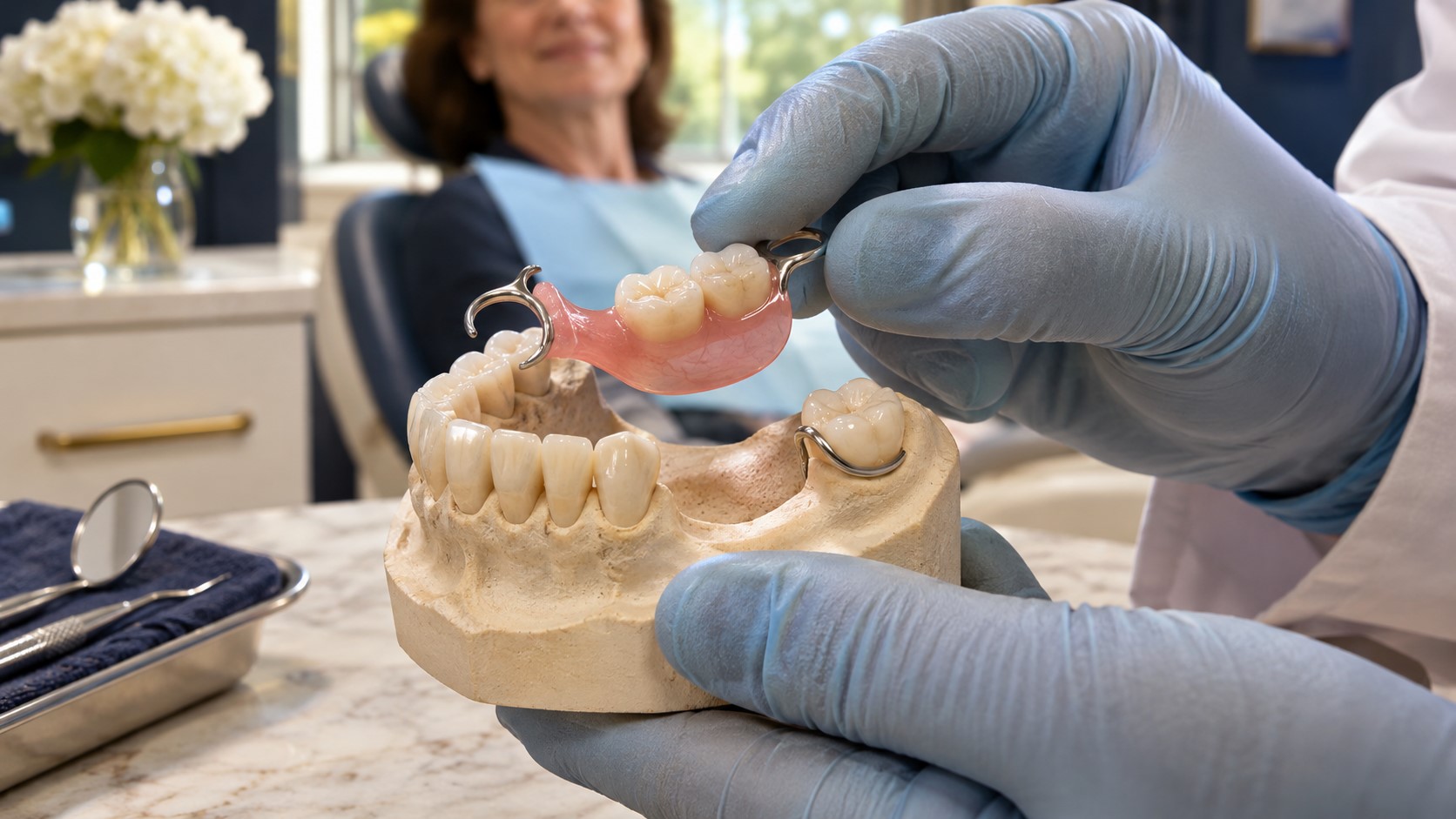
Gaps between natural teeth may lead to a discussion of partial dentures, a removable form of tooth replacement that works around the teeth you keep.
A fixed bridge or dental implants may also be considered. The choice depends on where the gaps are, the condition of the remaining teeth and gums, and the overall treatment plan.

If a Full Denture Feels Loose
The changes may be gradual: the denture lifts when you laugh, you rely more on denture adhesive, or difficulty chewing starts limiting what feels manageable.
Loose dentures are first assessed for fit, wear and changes in the supporting tissues. An adjustment, reline or replacement may help. For suitable patients, implant-supported dentures can also be considered when additional retention is needed.
If Most or All Remaining Teeth May Need to Be Removed
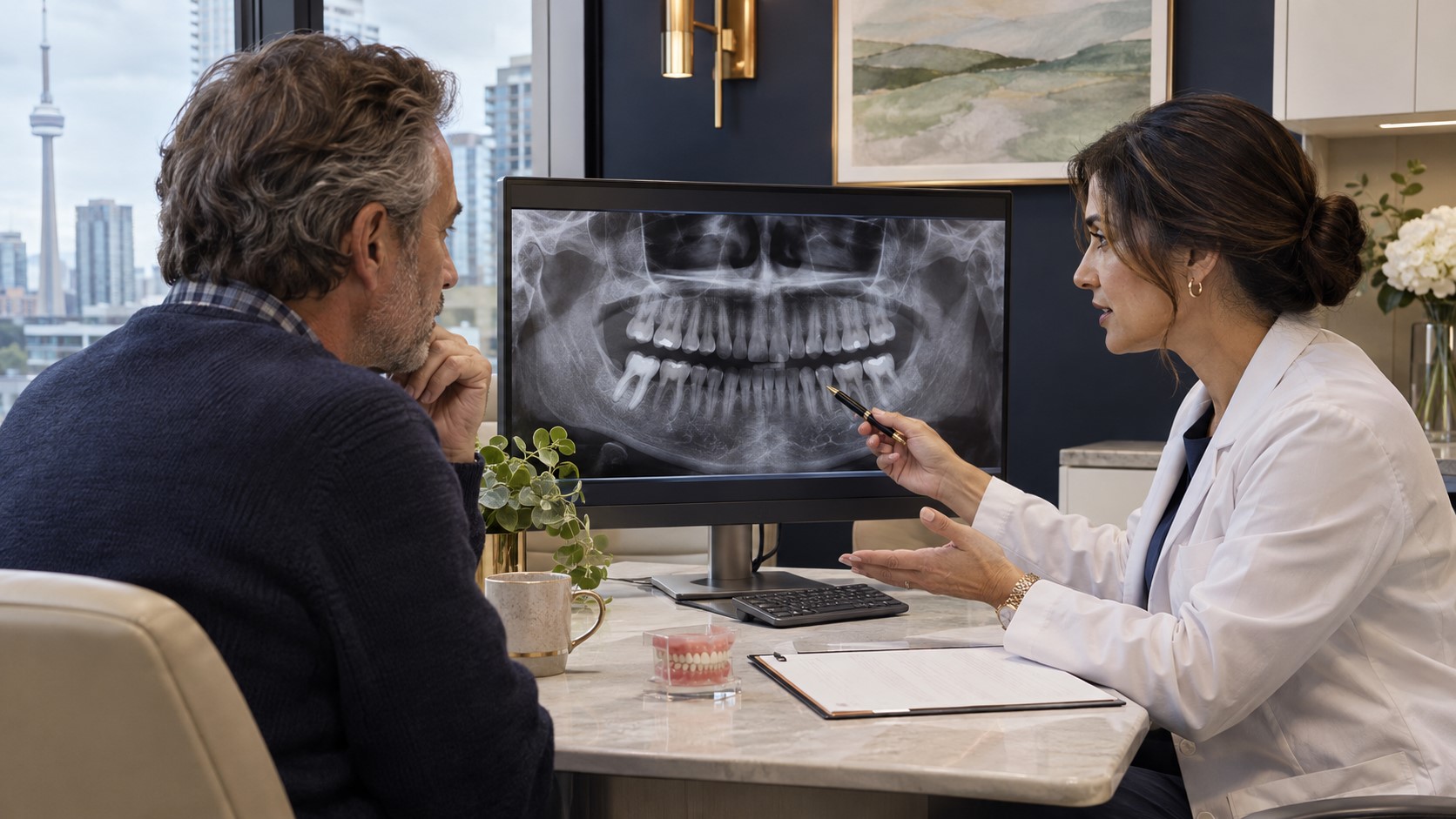
If several teeth have a poor prognosis and extraction is being considered, it helps to plan tooth replacement before treatment begins.
Immediate dentures are one possible approach that may be discussed in appropriate cases, with the extraction plan, healing period and future denture needs considered together.
Types of Dentures and Tooth Replacement Options
People comparing complete or partial dentures in Toronto are often trying to answer a practical question: which design fits the number and location of teeth I have left? The main categories differ in how they are supported, how they are removed and what they require from the surrounding teeth and tissues.

How Much Do Dentures Cost in Toronto?
Depends on the denture
Estimate after an assessment
Denture cost in Toronto depends first on what is being made and the care involved. Fees are set by individual dental offices; the Ontario Dental Association Suggested Fee Guide is a reference, not a mandatory price list or a guarantee of insurance reimbursement.
The fee may reflect complete or partial dentures, their design and treatment complexity; the appointments required and any dental laboratory fees, which may be listed separately from professional fees; repairing, relining or replacing an existing denture; and implant treatment when it forms a separate part of the overall plan. After an assessment, the clinic can provide a treatment estimate.
Dental Insurance and Direct Billing
Direct billing available
Where applicable
Dental insurance plans set their own deductibles, co-insurance, annual maximums and frequency limits. Market Dental Centre offers direct insurance billing where applicable, which allows eligible claims to be submitted to the insurer on the patient's behalf.
A predetermination can help estimate expected reimbursement before treatment, but it does not guarantee payment. The clinic can help you review how available coverage may apply.
Canadian Dental Care Plan (CDCP)
CDCP patients accepted
Program rules apply
Market Dental Centre accepts eligible CDCP patients. Denture coverage can include eligible complete and partial dentures and certain denture-related services.
Coverage is subject to current program criteria, frequency limits and preauthorization where required. A patient contribution may still apply.
How the Custom Denture Process Works
Custom dentures are typically planned and made in stages, and the exact sequence varies by case. Implant-retained dentures may also require separate implant-related steps.
1. Examination and Treatment Planning
Planning starts with a comprehensive dental examination of the gums, oral tissues and supporting ridges, along with any natural teeth that remain.
The bite is assessed, and an existing denture, if present, can be checked for wear and fit. Treatment goals also help guide the denture design.
2. Impressions, Records and Bite Planning
Dental impressions capture the shape of the gums, ridges and remaining teeth. Some cases involve more than one set of impressions as the records are refined.
A bite registration records how the upper and lower jaws relate when they come together, including the vertical dimension of occlusion. Tooth position, size and shade may also be reviewed during this stage.
3. Try-In and Review
In many conventional denture cases, a wax try-in may be used before final processing. Replacement teeth are arranged in wax so the dentist and patient can review the bite, tooth position, appearance and aspects of speech.
Adjustments can often be made more easily at this stage, although the finished denture may still feel different.
4. Final Fitting and Follow-Up
At the denture fitting, the completed appliance is checked for fit, bite, pressure areas and function.
Once custom dentures are being worn in daily life, areas of rubbing or tenderness may become noticeable and can be assessed at follow-up visits. Small adjustments are sometimes part of the settling-in process.
Related Patient Guides
Adapting to Your New Dentures
Eating With New Dentures
A denture that feels settled in the dental chair meets a different test at home: a full day of meals, conversation and everyday movement. Eating with dentures takes practice, and some difficulty chewing firmer or sticky foods can happen early on.
Softer foods are a practical place to begin. Cut firmer foods into smaller pieces, chew slowly and try to distribute chewing across both sides when possible. More challenging foods can be added gradually as control improves.
Speaking With Dentures
Speaking with dentures may feel unfamiliar at first because the tongue and lips are working around a different shape. Reading aloud or repeating words that feel awkward can help with practice.
Some people also notice increased saliva while the mouth adjusts to the appliance, which often settles over time. During the first days and weeks, the lips, cheeks and tongue are getting used to something new, even with well-planned custom dentures.
Fit and Sore Spots
Daily use of new dentures can reveal pressure or rubbing areas that were not obvious at the fitting.
A spot that repeatedly becomes sore, does not heal, or a denture that moves enough to interfere with eating or speaking should be checked. Do not grind, bend or otherwise adjust the appliance yourself.
When to Have Your Dentures Checked
Some unfamiliarity is expected while adapting. Ongoing pain, persistent sore spots or instability deserve an assessment rather than simply more time.
Keeping a short note of where and when discomfort occurs can make a follow-up visit more useful. Bring the denture to the appointment, and avoid relying on adhesive or home remedies to mask a fit problem in the meantime.
Caring for Your Dentures: Fit Changes, Relines & Maintenance
A denture can look unchanged and still fit differently because the mouth beneath it continues to change. Denture maintenance involves caring for both the appliance and the tissues supporting it.
Denture relining adds or replaces material on the tissue-facing surface to improve fit when appropriate. Rebasing replaces most or all of the denture base while retaining the existing denture teeth. Replacement timing depends on wear, damage, fit and changes in the mouth rather than age alone.

Why Choose Market Dental Centre for Dentures in Downtown Toronto?
A few practical details can matter just as much as the treatment itself when denture care involves more than one appointment.
A Downtown location for ongoing denture care. Custom dentures often involve several appointments and may need follow-up adjustments over time. Market Dental Centre is at 149 Lower Jarvis Street near St. Lawrence Market in Old Town Toronto, making it a practical option for people who live nearby or work in the Financial District.
More than one tooth replacement option. As a general dental practice, Market Dental Centre offers dentures alongside dental implants, bridges and extractions. Remaining teeth can be assessed and different tooth replacement approaches discussed before a treatment plan is finalized. Implants or a bridge will not suit every situation, but dentures are not the only option that may be considered.
Help with insurance and CDCP. Direct insurance billing is available where applicable, and eligible CDCP patients are accepted. The office can help submit applicable claims while coverage remains subject to the individual plan or program.
Frequently Asked Questions About Dentures
Still unsure after reading? Bring the question to your assessment.
Can I Sleep With My Dentures In at Night?
Why Do Lower Dentures Sometimes Feel Looser Than Upper Dentures?
How Long Do Custom Dentures Last?
Does the Canadian Dental Care Plan (CDCP) Cover Dentures?
Can I Eat Foods Like Steak or Apples With Dentures?
What Should I Do If My Denture Cracks or Loses a Tooth?
How Long Does It Take to Get New Dentures?
Ready to Discuss Dentures in Downtown Toronto?
You do not need to choose a denture type before you call. You may have an older denture that has started to slip, several gaps affecting how you chew, or questions about tooth replacement for yourself or a family member. An assessment looks at your remaining teeth, supporting tissues, bite and the fit of any denture you already wear. From there, the available options, including custom dentures, can be discussed based on what your mouth needs. For dentures in Downtown Toronto, Market Dental Centre is at 149 Lower Jarvis Street near St. Lawrence Market. Call to ask about current appointment availability.
Request a Denture Consultation
We’ll follow up to confirm a time and answer your questions.
Please do not include sensitive medical information. This form is for appointment requests only.
