








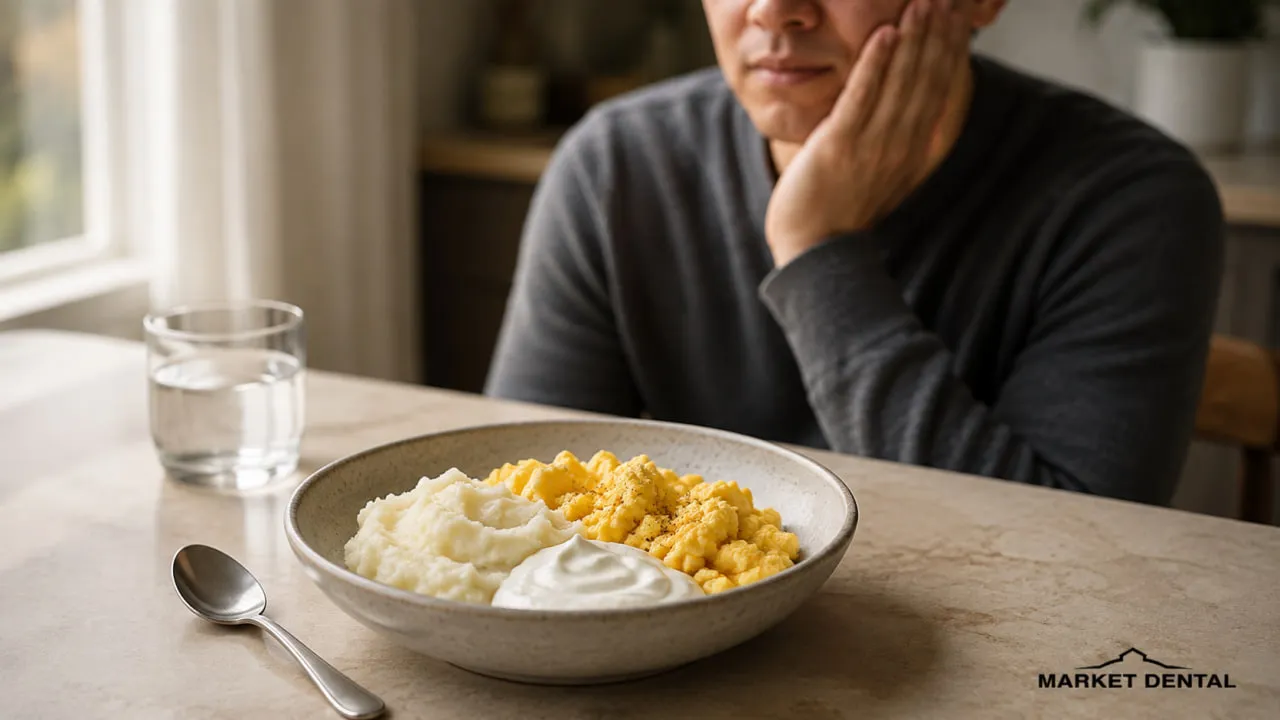
Knowing what to eat after tooth extraction can be surprisingly stressful when you're hungry, sore, and worried about disturbing the area. Certain foods, suction from a straw, and unnecessary pressure around the socket can interfere with early healing and may increase the chance of problems such as dry socket. You still need enough fluid, protein, and calories to feel well and support normal tissue repair, so the goal is not to avoid food. It is to choose it carefully. This guide gives Toronto patients a practical day-by-day diet, foods to avoid, simple ways to protect the socket, and clear warning signs that mean it is time to contact a dentist.
Why Your Diet Matters After a Tooth Extraction

For the first few days, eating is less about following a rigid menu and more about protecting a wound that is still settling down.
Three things matter most: keeping the blood clot as undisturbed as possible, getting enough nutrition, and avoiding foods that make an already tender area work harder than it needs to.
Protecting the Blood Clot
After a tooth is removed, a blood clot forms in the socket. It acts as an early protective layer over the tissues underneath while healing begins.
That clot can be vulnerable during the early recovery period. Vigorous rinsing, suction and unnecessary trauma around the wound are worth avoiding. The Canadian Dental Association advises patients not to rinse during the first 24 hours and not to suck on the surgical area.
That does not mean one accidental bite automatically causes a complication. It means being gentle gives the area a better environment to heal.
Giving Your Body Enough Nutrition
Chewing may not be appealing on day one, but eating almost nothing is not a useful recovery strategy either.
Protein, adequate calories, hydration and a varied soft-food diet can support normal tissue repair. Nutrients such as vitamin C and zinc also play roles in normal healing, but no single food or supplement can make an extraction site heal faster on its own.
The practical goal is simpler: choose foods you can comfortably eat without putting unnecessary pressure on the surgical area.
Reducing Pain and Irritation
A crisp piece of toast may sound harmless until it presses against a fresh extraction site.
Hard and chewy foods require more jaw work. Sharp crumbs can irritate tender tissue, and very hot foods or drinks may contribute to renewed bleeding during early recovery. The Canadian Dental Association specifically advises letting hot drinks and soup cool after oral surgery.
Soft textures solve most of those problems at once. They are easier to chew, easier to swallow and usually more comfortable when your jaw is sore.
What to Eat After Tooth Extraction: Day-by-Day Timeline
There is no universal menu that every patient has to follow.
A straightforward extraction may settle faster than a surgical extraction or an impacted wisdom tooth removal. Even two people who have the same procedure can feel very different a few days later.
Use this tooth extraction recovery diet timeline as a practical guide rather than a deadline. If your dentist gave you different instructions, follow those.
Days 1–2: Start With Smooth, Easy-to-Eat Foods
During the first 24 to 48 hours, many people find smooth or very soft foods easiest.
You do not necessarily have to live on liquids. If you can comfortably manage soft food without chewing near the extraction site, that may be perfectly reasonable.
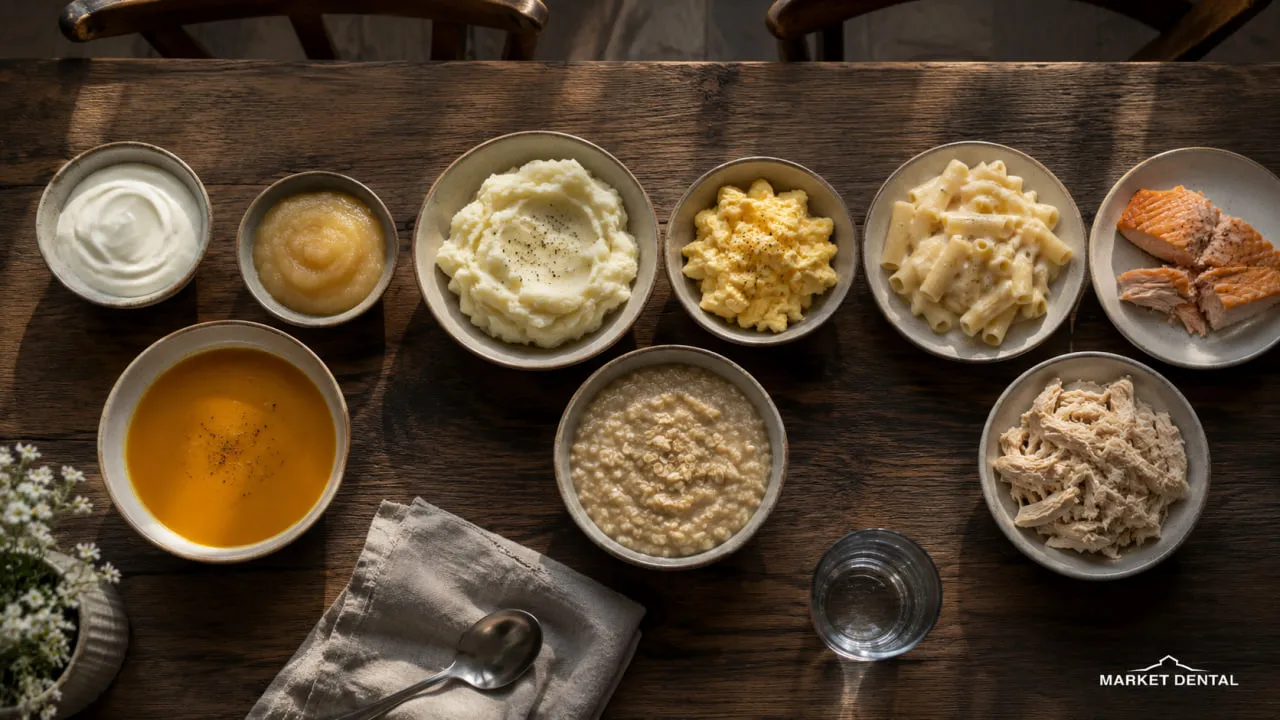
Some of the easiest foods to eat after tooth extraction include:
- Greek yogurt or plain yogurt
- Applesauce
- Smooth fruit purée
- Pudding or custard
- Gelatin
- Smooth ice cream, gelato or sorbet without nuts, seeds or hard pieces
- Smooth, lukewarm vegetable or other broth
- A well-blended smoothie eaten with a spoon rather than through a straw
These are useful soft foods after dental surgery because they need little or no chewing.
Keep temperature in mind too. Cool, room-temperature or lukewarm food usually feels better than something steaming hot.
Market Dental Centre's own post-surgical care guidance recommends a soft diet for the first 48 hours in most cases, chewing on the opposite side and avoiding hard, sticky foods and foods that break into small pieces.
Days 3–5: Add Foods That Need Minimal Chewing
By day three, some people are ready for a little more texture. Others are not.
If swelling and tenderness are improving, try foods such as:
- Mashed potatoes
- Mashed sweet potato
- Scrambled eggs
- Soft omelettes
- Avocado or guacamole
- Oatmeal
- Cream of wheat or porridge
- Cottage cheese
- Other soft cheeses
- Well-cooked, mashed carrots
- Soft squash
A plate of scrambled eggs does not suddenly become "safe" because the calendar says day three. Comfort is the better test.
If chewing pulls on the area or makes it ache, go back to something softer and try again later.
Days 6–14: Gradually Bring Back More Texture
As the area becomes less tender, meals usually start to look more normal.
Options may include:
- Flaky baked or steamed salmon or cod
- Soft pasta
- Macaroni and cheese
- Risotto
- Dhal
- Well-cooked beans or lentils
- Shredded chicken
- Soft meatballs
- Meatloaf
- Soft rice when comfortable
Small grains deserve a little extra attention. Rice or quinoa can collect around a healing socket, particularly while there is still a noticeable opening.
That does not make them automatically unsafe. Wait until the area is comfortable with more texture, follow the cleaning instructions your dentist gave you, and do not dig around the socket if something feels stuck.
When Can I Eat Normal Food After Tooth Extraction?
For many people, a gradual return toward a regular diet happens over roughly one to two weeks.
It is not a countdown.
A simple extraction may allow an earlier return to normal meals. A surgical extraction or wisdom tooth procedure can take longer, and jaw stiffness alone may make chewy food unattractive for several days. The Canadian Dental Association notes that jaw soreness or difficulty opening the mouth can last 7 to 10 days after some oral surgery procedures.
Look at the direction your recovery is moving.
If chewing is becoming easier, swelling is settling and the area is less tender, you can gradually test more texture. If a food hurts, waiting another day or two is usually more sensible than forcing it.
Safe Foods vs. Foods to Avoid After a Tooth Extraction
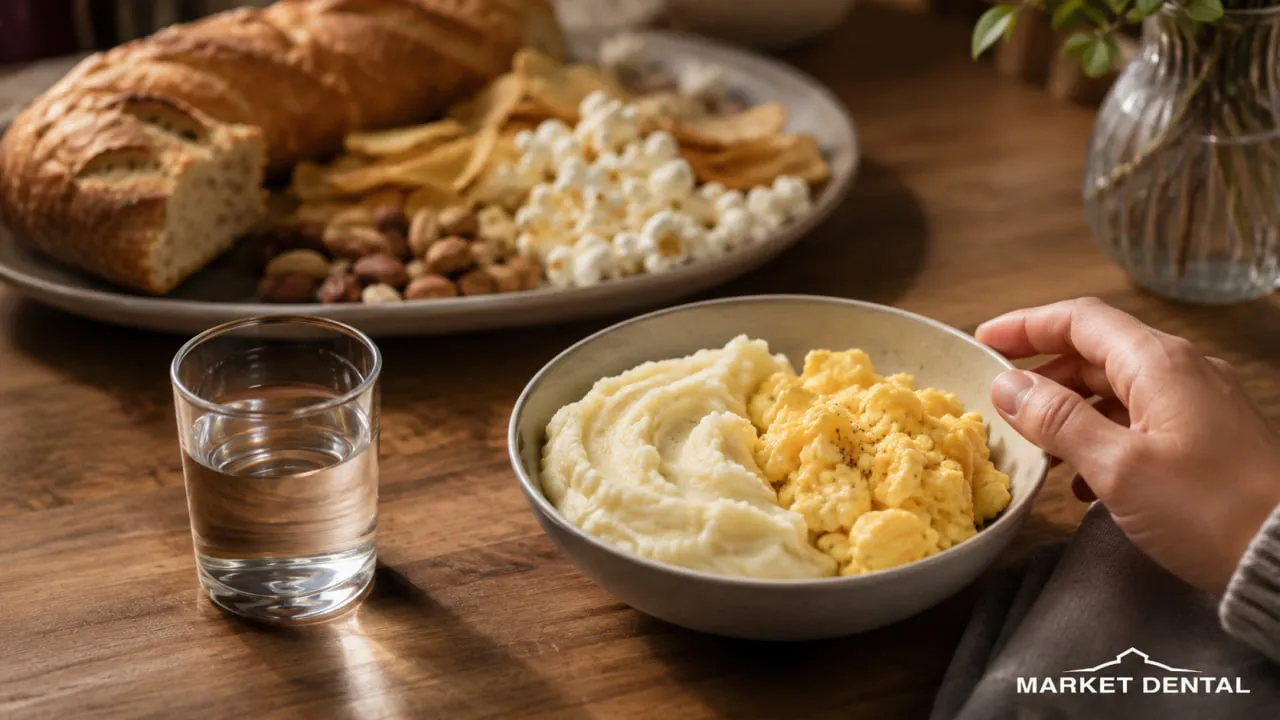
For a quick view of what to eat after tooth extraction, this table separates easier early-recovery choices from foods that are more likely to irritate the area.
Most items in the right-hand column are not permanently off the menu. They simply make less sense while the socket is fresh and sensitive.
What Not to Eat After Tooth Extraction
Certain foods and habits deserve more caution than others.
Skip Straws and Other Strong Suction
A straw seems convenient when you do not want to chew, but the sucking motion is exactly why dentists commonly tell patients to avoid one during early healing.
The same principle applies to sucking directly on the extraction site.
How long should you avoid straws? Follow the timeframe your treating dentist gave you. A fixed rule for every extraction is less useful than instructions based on the procedure you actually had.
Hold Off on Crunchy, Hard and Chewy Foods
Popcorn, chips, hard crackers, nuts, seeds, jerky and tough meat all have two disadvantages early on: they require more chewing and they can break into pieces that irritate the area.
This is particularly annoying when food gets close to the socket.
You do not need to panic if a crumb lands nearby. Just do not poke at the site with your fingers, toothpicks or utensils trying to retrieve it.
Be Careful With Very Hot or Spicy Foods
Let the soup cool.
Very hot food and drinks can increase blood flow to the area and may contribute to renewed bleeding early after oral surgery.
Spicy food presents a different problem. It can simply sting tender tissue. If your mouth is already sore, there is little benefit in testing its tolerance for chilli on day two.
Avoid Alcohol During Early Healing
Alcohol and dental surgery are not a good combination, particularly if you are taking prescribed pain medication or other drugs that can interact with it.
The Canadian Dental Association's oral surgery aftercare guidance states: "Avoid alcohol and tobacco for the first 2 weeks after surgery."
If you have been prescribed medication, follow your dentist's, pharmacist's and medication-label instructions.
Smoking and Vaping Can Make Recovery Harder
Smoking is associated with a higher risk of dry socket after tooth extraction. A systematic review found substantially higher odds of alveolar osteitis among smokers than non-smokers.
Tobacco can also interfere with normal healing, which is why the CDA recommends avoiding it after oral surgery.
Evidence on vaping after extraction is less established than the evidence on cigarette smoking. Still, heat, inhaled chemicals and suction around a fresh surgical site are good reasons to avoid it during early recovery and follow your dentist's instructions.
What About Carbonated Drinks?
Carbonation is not the main issue to focus on after an extraction.
The clearer priorities are avoiding suction, very hot drinks and anything that irritates the surgical site. If your dentist specifically asked you to avoid carbonated drinks during your recovery, follow that instruction.
Water remains the simplest option for staying hydrated.
How to Avoid Dry Socket When Eating
Dry socket, also called alveolar osteitis, can occur when the protective clot in an extraction socket does not remain intact during early healing. The result can be significant pain and delayed healing, and the area usually needs assessment by a dentist.
It can be very painful, but dry socket by itself is not usually the same type of medical emergency as rapidly spreading swelling or difficulty breathing.
A few simple habits can reduce unnecessary irritation:
- Chew on the opposite side when practical.
- Start with foods that require little chewing.
- Keep sharp or hard foods away from the socket.
- Sip water from a cup.
- Avoid straws for the period your dentist recommends.
- Do not rinse vigorously during the first 24 hours.
- After 24 hours, gentle warm-water or salt-water rinsing may be recommended.
- Let rinse water leave your mouth gently rather than forcefully spitting if that matches your dentist's instructions.
- Do not touch or probe the socket with your fingers, toothpicks or utensils.
The CDA recommends avoiding rinsing for the first 24 hours, then beginning gentle warm-water rinsing afterward; salt may be added if advised by the dentist or oral surgeon.
A Quick Example: One Possible Recovery Week
Imagine someone who has a lower molar removed on Friday afternoon.
Friday evening is simple: yogurt, applesauce and smooth soup. No straw. By Sunday or Monday, the tenderness has improved enough for scrambled eggs and mashed potatoes.
Midweek, oatmeal and cottage cheese feel easy. Later in the week, soft pasta or flaky fish may work well.
That is one plausible recovery pattern, not a schedule everyone has to meet. If Tuesday arrives and you're still much happier with mashed potato than pasta, there is no prize for rushing.
Normal Healing vs. Warning Signs: When to Call Your Toronto Dentist
Some soreness after an extraction is expected. What matters is the pattern.
Normal healing should generally move toward improvement rather than steadily worsening symptoms. The CDA notes that pain may be greatest in the first 24 to 48 hours and that some soreness can continue for several days.
Use pain medication only as directed by your dentist, pharmacist or the product label. Do not increase the dose simply because the area is uncomfortable.
If pain is getting worse when you expected it to be settling, call instead of trying to diagnose the problem yourself.
For concerns that may need faster assessment, Market Dental Centre's emergency dental care page provides information about urgent dental problems.
Seek urgent medical or dental care if swelling spreads rapidly into the face or neck, you have difficulty breathing or swallowing, or you feel significantly unwell. Those symptoms need prompt professional attention.
Why Choose Market Dental Centre for Extraction and Follow-Up Care?

Market Dental Centre is located at 149 Lower Jarvis Street in Downtown Toronto, Ontario, near St. Lawrence Market and Old Town Toronto. The practice states that it has served the community since 1981.
The clinic provides oral surgery services, including wisdom tooth extraction, and also has a dedicated wisdom tooth removal.
Before an extraction, the appointment is your chance to ask questions that actually matter to you: What can you eat that evening? How should you clean the area? How long should you avoid certain activities? What symptoms would make the dentist want to see you again?
Afterward, the same applies. If your recovery is not matching the instructions you were given, it is reasonable to check.
Key Takeaways
The safest answer to what to eat after tooth extraction is not a rigid menu. It is a gradual return to texture while protecting the healing site.
- Start with smooth or very soft food while chewing is uncomfortable.
- Add soft solids as tenderness improves.
- Many patients move closer to their usual diet over one to two weeks, but recovery varies.
- Avoid straws, vigorous rinsing and hard or sharp foods during early healing.
- Small grains may be easier to manage once the socket is less tender.
- Your own dentist's instructions take priority over a general online timeline.
- Worsening pain, persistent bleeding, fever or increasing swelling are good reasons to call your dentist.
Not Sure If Your Extraction Is Healing Normally?

There is a big difference between being a little sore and feeling that something is going in the wrong direction. You do not have to figure that out alone.
If you are preparing for an extraction, unsure what you can eat, or noticing pain or swelling that is not improving as expected, contact Market Dental Centre for an assessment.
The clinic is located at 149 Lower Jarvis Street in Downtown Toronto, Ontario, near St. Lawrence Market. Request an appointment or call 416-363-4115 to discuss the next step.

.webp)


