



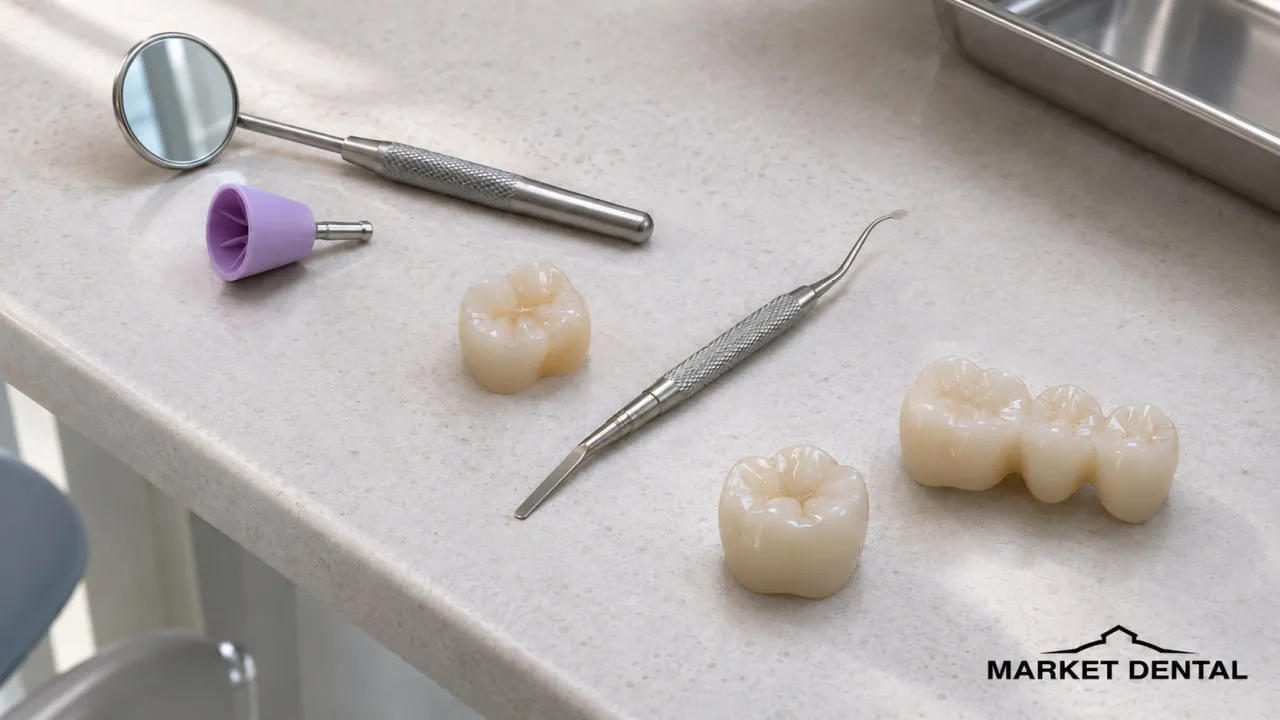
Dental insurance coverage in Ontario often includes dental exams, cleanings, fillings, and other treatments, but what your plan pays depends on its specific terms. Many private plans divide dental care into preventive, basic, and major services, with different reimbursement rules for each category. However, these categories are not standardized across every insurer.
A treatment can be clinically recommended and still be only partly covered. Deductibles, annual maximums, frequency limits, and the fees recognized by your insurer can all affect the amount you pay. Knowing how these rules work makes it easier to review a treatment estimate, understand your benefits, and ask the right questions before your appointment.
Dental Insurance Coverage in Ontario: The Short Answer
Private dental insurance may help pay for routine examinations, cleanings, X-rays, fillings, and certain other treatments. Coverage for crowns, bridges, dentures, implants, and orthodontics depends on the plan.
Even when a procedure is eligible, your insurer may not reimburse the full dental office fee.
The amount paid depends on your contract, including its deductibles, co-insurance, annual maximums, frequency restrictions, and eligible fees.
Does OHIP Cover Dental Care in Ontario?
OHIP generally does not cover routine dental services performed in a dentist's office. This includes regular checkups, cleanings, fillings, and most other office-based dental treatments.
Certain dental surgeries performed in hospitals may qualify for OHIP coverage. These are typically procedures that require hospital care because of their complexity or a related medical condition.
For example, selected jaw fracture repairs and other medically necessary hospital-based dental procedures may be insured under specific conditions.
Separate federal and Ontario dental programs also provide assistance to eligible residents. These programs have their own eligibility requirements and are not the same as routine OHIP coverage.
How Are Private Dental Insurance Plans Organized in Ontario?

Dental benefits may come through an employer, a union or other group arrangement, a college or university student plan, or an individually purchased policy.
Regardless of how you obtain coverage, the plan contract determines which services qualify for reimbursement.
The Ontario Dental Association's dental benefits guide explains an important distinction: your dental treatment plan is based on your health needs, while your insurance plan determines which costs are eligible for payment.
Many insurance policies group services into three categories. These groupings are useful for understanding benefits, but individual insurers may organize treatment differently.
These examples are not universal classifications. Root canals, gum treatment, oral surgery, and orthodontics may appear in different categories or have separate benefit rules.
Always confirm the classification in your own policy rather than assuming a treatment belongs to a particular tier.
What Does Preventive Dental Insurance Usually Cover?

Preventive coverage commonly applies to services intended to assess and maintain oral health.
Depending on your plan, eligible services may include:
- Routine and recall examinations
- Dental cleaning and scaling
- Selected diagnostic X-rays
- Fluoride treatments
- Dental sealants in some plans
The main detail to check is how frequently each service can be reimbursed.
For example, a dental plan may cover a recall examination only once within a specified interval. If your dentist recommends another examination sooner, the visit may still be appropriate, even if the insurer does not reimburse it.
Cleaning benefits may also be limited by the number of scaling units or a defined benefit period.
Preventive dental insurance coverage in Ontario is therefore not necessarily unlimited, even when the plan includes routine dental visits.
For details about examination fees and related services, see our guide to dental exam costs in Toronto.
What Does Basic Dental Insurance Usually Cover?
Basic dental benefits often include selected treatments used to restore damaged teeth or manage common dental problems.
Examples may include:
- Dental fillings
- Certain tooth extractions
- Selected emergency procedures
- Other restorative treatments listed by the insurer
However, a plan may classify root canal therapy, gum treatment, or surgical extractions separately.
The filling material can also affect reimbursement.
For instance, some policies use an alternate-benefit provision. This means the insurer may calculate payment for a tooth-colored filling using the eligible fee for another material, such as amalgam.
That does not mean the alternate material is necessarily the right clinical choice. Your dentist recommends treatment based on the tooth's condition, while the insurer calculates reimbursement according to the policy.
Our article on dental filling costs in Toronto explains how tooth location, restoration size, and insurance rules may affect the estimate.
What Does Major Dental Insurance Usually Cover?
Major dental benefits may help with more extensive restorative treatment, but coverage varies considerably.
Services sometimes included in this category are:
- Dental crowns
- Dental bridges
- Complete dentures
- Partial dentures
- Other complex restorative procedures
Some plans do not include major dental benefits. Others provide coverage subject to additional conditions.
You may encounter a separate annual maximum, a waiting period, a lower reimbursement percentage, or a requirement to submit treatment details before proceeding.
Dental implants, orthodontics, sedation, and oral surgery should not automatically be treated as major services. They may have their own categories, exclusions, or approval requirements.
For patients reviewing dental insurance coverage in Ontario, the useful question is not simply whether a plan includes major care. It is whether the specific treatment being recommended qualifies under that contract.
Why Might Your Dental Insurance Pay Less Than Expected?

Dental insurance coverage in Ontario is affected by several provisions that determine the final reimbursement.
A plan may include a procedure but still pay less than the amount charged by the dental office.
Understanding the following terms can help explain the difference.
Annual Maximum
An annual maximum is the most your insurer will pay toward covered services during a defined benefit period.
Some plans reset each calendar year. Others use a policy anniversary or another benefit-year schedule.
If you have already used part of your allowance, the remaining benefits may be lower than expected.
Orthodontics and certain other services may have separate limits.
Deductible
A deductible is an amount you may need to pay before the plan begins reimbursing certain services.
It might apply per person, per family, or according to specific benefit categories.
Not every dental plan has a deductible, and some exclude selected preventive services from this requirement.
Co-Insurance
Co-insurance is the percentage of an eligible expense that you are responsible for under the plan.
For example, a policy might reimburse a specified percentage of an eligible procedure fee, leaving the remaining percentage to the patient.
The percentages may differ between preventive, basic, and major services.
Your co-insurance amount may not be the only cost you owe if the insurer's eligible fee is lower than the dentist's actual fee.
Frequency Limits
Frequency limits determine how often the insurer will reimburse a particular service.
An examination, cleaning, or X-ray might be covered only once within a specified period.
Your dentist may recommend care at a different interval based on your oral health.
The clinical recommendation and the insurance reimbursement schedule are separate considerations.
Waiting Periods
A waiting period is a period after enrollment during which certain benefits are not yet available.
Some plans apply waiting periods to selected restorative, major, or orthodontic services. Other plans may not have them.
If you recently changed jobs, joined a new plan, or switched insurers, review the effective dates for the treatments you may need.
Our guide to dental insurance waiting periods explains when these restrictions may apply and whether they can sometimes be waived.
The Insurer's Eligible Fee
Your insurer may recognize a different amount from the fee charged by the dental office.
Some policies use an earlier version of the Ontario Dental Association Suggested Fee Guide. Others use their own benefit schedules.
The ODA guide is a reference, not a mandatory fee schedule. Dentists determine their own professional fees.
When the insurer's eligible fee is lower than the dentist's fee, you may need to pay the difference in addition to the deductible and co-insurance.
Example: How Your Portion of a Dental Bill Is Calculated
A hypothetical example can help show how these rules work together.
The following amounts are fictional. They are not Market Dental Centre prices or standard Ontario insurance benefits.
Assume a plan reimburses 80% of the eligible amount after a remaining deductible, and the annual maximum has not been reached.
The patient's $72 consists of:
- $20 deductible
- $32 co-insurance
- $20 difference between the office fee and the insurer's eligible fee
Total patient portion: $72.
The insurer pays $128, bringing the combined payment to the $200 office fee.
This is one simplified calculation. Actual insurance contracts may apply deductibles, alternate benefits, coordination rules, and other limits differently.
Can You Use Two Private Dental Insurance Plans?
Yes, some patients are covered under more than one private dental plan.
For example, you might have benefits through your employer and also be eligible under a spouse's workplace plan.
This is where coordination of benefits applies.
The plans follow coordination rules to determine which insurer considers the claim first and whether the second plan may reimburse an additional eligible amount.
The order can depend on who holds the policies and whether the claim is for an adult or dependent child.
Having two plans does not automatically mean every dental expense is fully covered.
Before treatment, ask both administrators which plan is primary, what information is needed for the secondary claim, and whether reimbursement limits apply.
How to Check Your Dental Insurance Before Treatment
The most useful way to confirm dental insurance coverage in Ontario is to compare your plan details with the specific procedure being recommended.
Follow these steps:
- Find your benefits booklet. Check your insurer's member portal or workplace benefits documents.
- Identify the proposed treatment. Ask the dental office for the procedure description and code, if available.
- Check the benefit category. Find out whether the service is classified as preventive, basic, major, or another category.
- Confirm the reimbursement rules. Ask about the eligible fee and percentage payable.
- Review your remaining benefits. Check deductibles, annual maximums, and frequency limits.
- Ask about alternate benefits. Confirm whether the insurer uses another eligible procedure to calculate payment.
- Check the fee-guide year. Your insurer may not use the current ODA guide.
- Ask about predetermination. Find out whether a review before treatment is available or recommended.
- Keep a record. Save the response or write down the date and information provided.
- Request a treatment estimate. Compare the proposed office fee with the expected insurance contribution.
Market Dental Centre's dental insurance information page explains the clinic's approach to helping patients with insurance questions.
Does Predetermination Guarantee Payment?
No. A predetermination is an estimate of what an insurer expects to reimburse for proposed treatment based on the information available.
It can help clarify possible benefits before care begins.
However, final payment may differ if the treatment changes, a benefit limit is reached, eligibility changes, or another policy condition applies.
It is a useful planning step, not guaranteed approval or payment.
How Does Market Dental Centre Help With Dental Insurance Claims?
Market Dental Centre can help patients understand the administrative side of using dental benefits.
Depending on the insurer and the arrangement, the team may submit claims on your behalf, assist with insurance-related questions, or provide paperwork for you to submit.
The dental office may not have access to every detail of your contract. For plan-specific questions, the insurer or benefits administrator remains an important source.
Your dentist determines the treatment that is appropriate for your dental health.
Your insurer determines what the plan will reimburse.
You remain responsible for the amount not covered by your benefits.
Is Direct Billing the Same as Insurance Coverage?
No. Direct billing refers to the claims and payment process, not to the insurer's decision about whether treatment is eligible.
Depending on the policy, the insurer may pay the dental office directly or reimburse you after the claim is processed.
Direct billing does not remove a deductible, change an exclusion, or guarantee reimbursement.
Learn more about how dental direct billing works before relying on a particular payment arrangement.
What If You Do Not Have Private Dental Coverage?

Private dental insurance is not the only potential source of assistance with dental costs.
Federal and Ontario programs may provide eligible dental services under separate requirements.
Canadian Dental Care Plan
The Canadian Dental Care Plan (CDCP) is a federal program for eligible Canadian residents.
It is different from an employer or individually purchased dental insurance policy.
Under current federal rules, access to qualifying private dental coverage through work, family, a pension, or a professional or student organization generally makes a person ineligible for CDCP, even when that private coverage has not been used. A limited pension-related exception exists.
Income, tax-filing, and residency requirements also apply.
For details about eligibility, co-payments, and covered services, see our guide to how the CDCP works.
Ontario Dental Programs
Ontario also provides dental assistance through several programs, including:
- Healthy Smiles Ontario
- Ontario Seniors Dental Care Program
- Ontario Works
- Ontario Disability Support Program
Eligibility and covered services differ.
Some provincial social dental programs may coordinate with CDCP. However, you should not assume that every clinic participates in every program.
Confirm both your eligibility and the provider's participation before arranging treatment.
Seeing a Dentist Without Insurance
You do not need private dental insurance to request a dental appointment.
If you are paying directly, ask the dental office about its fees and what services are included in a proposed estimate.
The clinic may also help you understand which administrative questions to ask before proceeding.
Our guide to seeing a dentist without insurance covers additional considerations for patients managing dental costs themselves.
What Should You Have Ready Before Contacting the Dental Office?
Having your insurance information available can make it easier to discuss benefits and anticipated costs.
You may find it helpful to prepare:
- Insurance card or digital member information
- Policy, plan, or group number
- Dependent coverage details, if relevant
- A treatment plan you have already received
- Notes from a recent conversation with the insurer
- Information about remaining annual benefits
- Any predetermination or explanation of benefits statement
- Questions about fees your plan may not cover
These are suggestions, not a list of mandatory documents for every appointment.
Key Takeaways
- Dental insurance coverage in Ontario depends on the individual policy, not a universal provincial standard.
- Preventive, basic, and major are common benefit groupings, but insurers can classify services differently.
- Annual maximums, deductibles, co-insurance, and frequency limits affect how much a plan pays.
- The insurer's eligible fee may differ from the dentist's fee.
- Having two private plans does not guarantee full reimbursement.
- Predetermination can help clarify expected benefits but is not a payment guarantee.
- Direct billing changes the payment process, not the coverage terms.
- Reviewing your benefits before treatment can help you understand the expected patient portion.
Have Questions About Your Dental Coverage Before an Appointment?
Insurance terms can be difficult to interpret, particularly when your benefits booklet and treatment estimate use different descriptions.
You can contact Market Dental Centre to ask how the clinic handles claims and what information may be useful before your visit.
If treatment is recommended, an assessment can help clarify your clinical options and the proposed fees. Your insurer can then explain how your individual coverage may apply.
Market Dental Centre is located at 149 Lower Jarvis Street in Downtown Toronto, near St. Lawrence Market.
Call (416) 363-4115 or request an appointment to discuss your dental needs.
This article provides general information about dental benefits in Ontario. Coverage, eligibility, and reimbursement depend on your individual plan. Confirm the details with your insurer or plan administrator before relying on a benefit estimate.