



Dental Implants in Toronto
A missing tooth can change more than the appearance of your smile. You may notice a difference when eating, speaking, or simply feeling comfortable in everyday situations. Dental implants are one of the tooth replacement options that may help address these concerns. An implant can support a crown, bridge, or another implant-supported restoration. The right approach depends on the number and location of missing teeth, your oral health, and what the dentist finds during an examination. At Market Dental Centre, you can ask questions, explore the available tooth replacement options, and understand what the next steps could involve. The clinic is located at 149 Lower Jarvis Street in Downtown Toronto, near St. Lawrence Market.
Why Choose Market Dental Centre for Dental Implants?

Choosing where to discuss dental implants is an important part of the decision-making process.
At Market Dental Centre, your appointment gives you an opportunity to ask questions, have the missing-tooth area examined, and understand which tooth replacement approaches may be relevant to your oral health and goals.
The clinic provides dental implant services for people replacing one or more missing teeth and is located at 149 Lower Jarvis Street in Downtown Toronto, near St. Lawrence Market. You can request an appointment through the website to discuss your concerns, review possible options, and learn what the next steps may involve.
What Are Dental Implants?
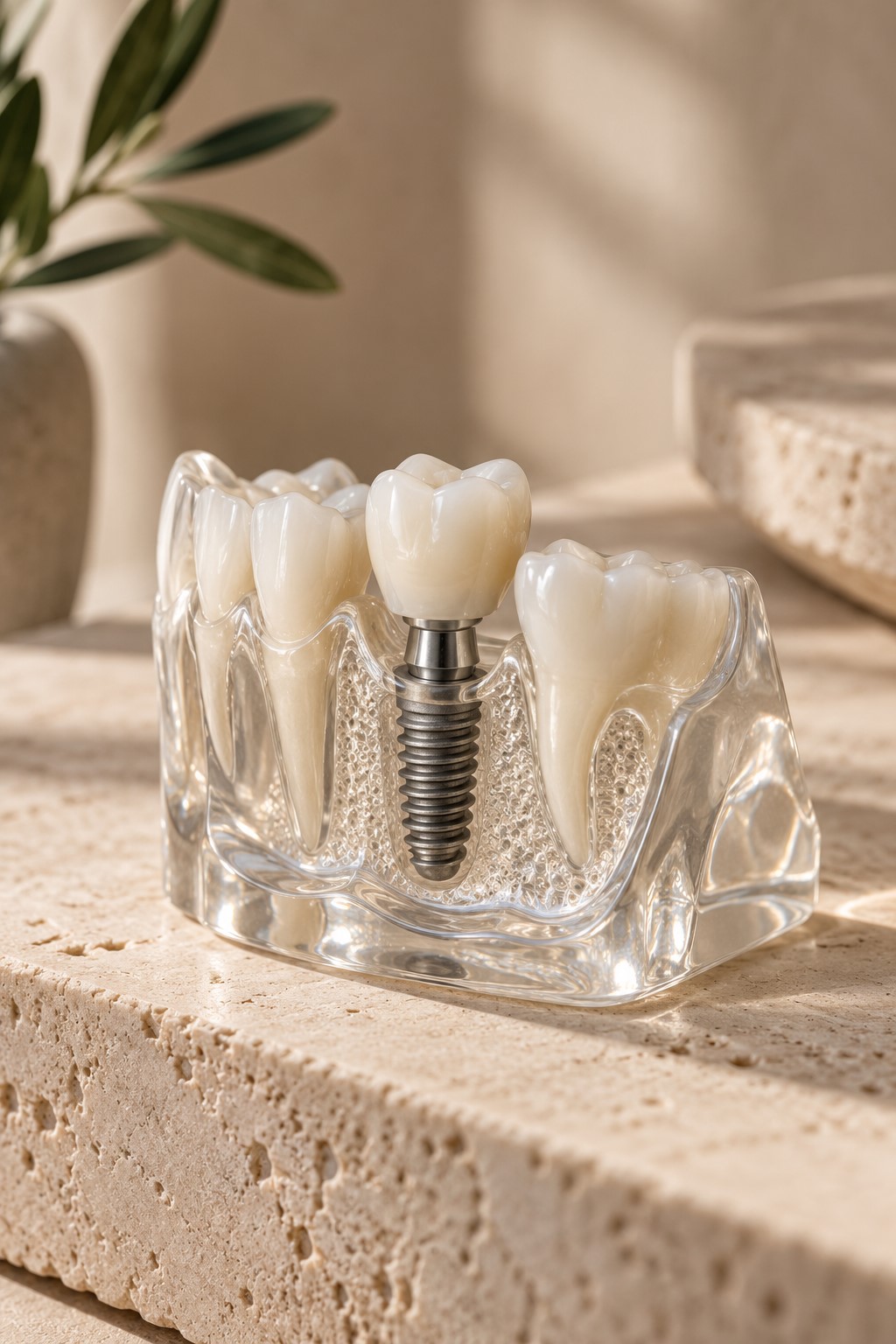
A dental implant is a tooth replacement option that uses an artificial root to support a dental restoration. Unlike a removable denture that rests on the gums or a traditional bridge that may rely on neighboring teeth, an implant fixture is placed in the jawbone to support a replacement tooth or teeth after healing. A dental implant restoration commonly includes three main components.
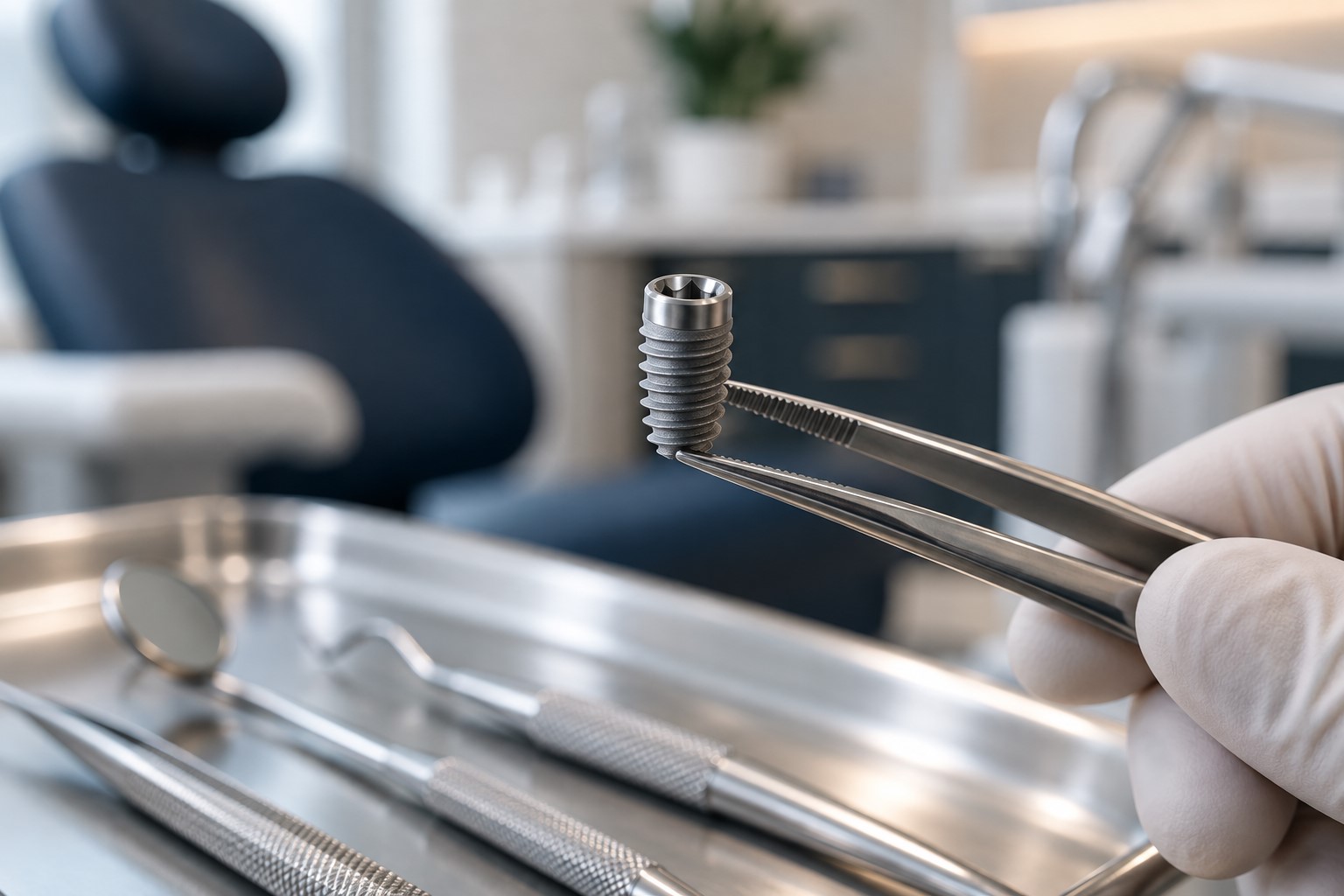
Implant Fixture
The implant fixture, sometimes called an implant post, is the component placed in the jawbone. It functions as an artificial tooth root and provides a foundation for the restoration that will be attached later.
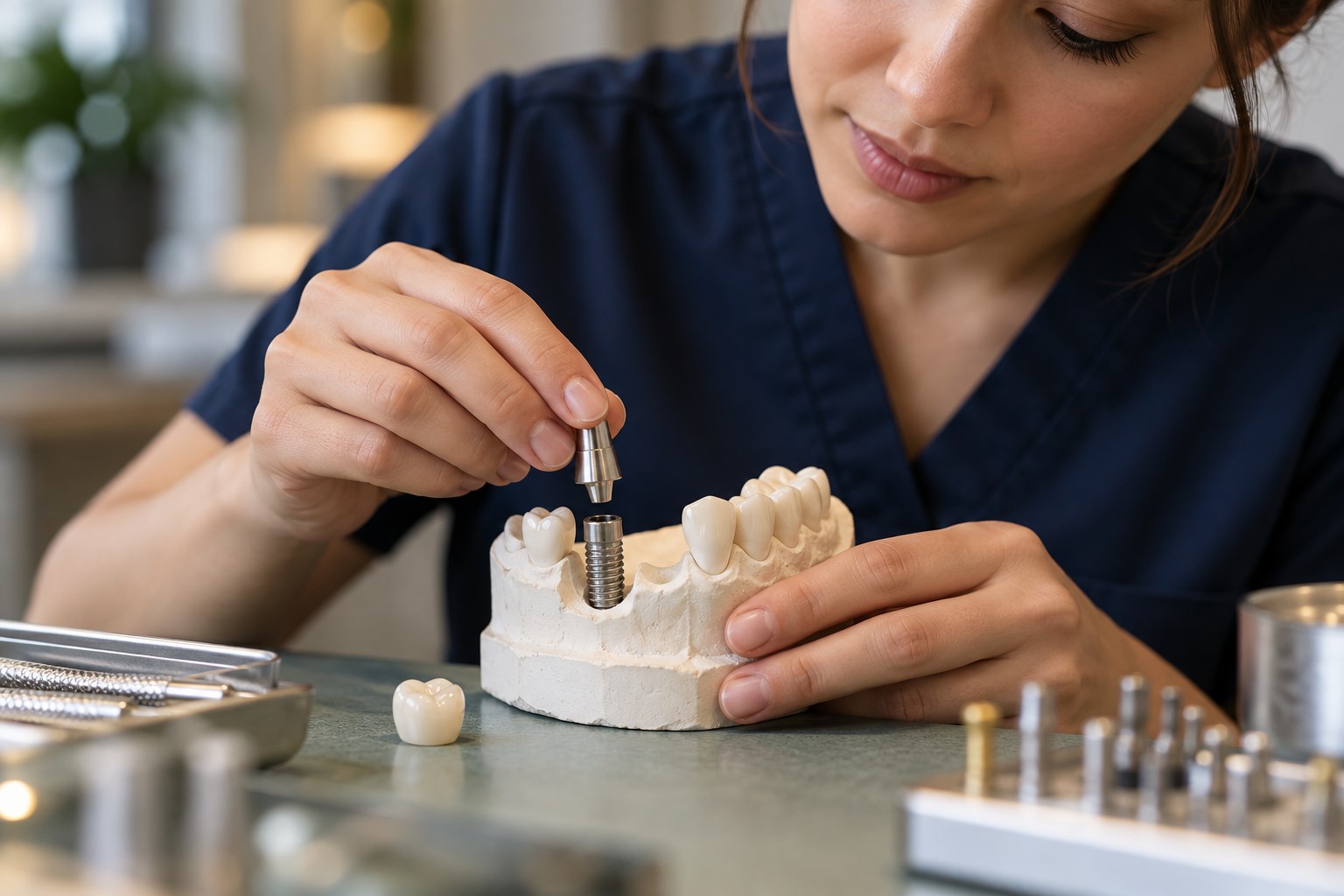
Abutment
In treatments where an abutment is used, it connects the implant fixture to the final restoration. The exact timing and type of connection depend on the individual treatment plan.

Dental Crown or Final Restoration
The final restoration is the visible part of the tooth replacement. Depending on the treatment plan, it may be a single implant crown, an implant-supported bridge, or another type of implant-supported restoration.
Dental implants may be used to replace:
- One missing tooth
- Multiple missing teeth
- Several teeth with an implant-supported bridge
- Many or all teeth with selected implant-supported treatment options, when clinically appropriate
The appropriate approach depends on the number and location of the missing teeth, oral health, and other individual factors assessed by a dentist.
Dental Implants vs. Traditional Dental Bridges
Dental implants, traditional dental bridges, and conventional dentures can all replace missing teeth. The approach considered depends on the number and location of missing teeth, oral health, jawbone support, treatment goals, maintenance needs, treatment time, cost, and the findings of a dental assessment.
How Much Do Dental Implants Cost in Toronto?
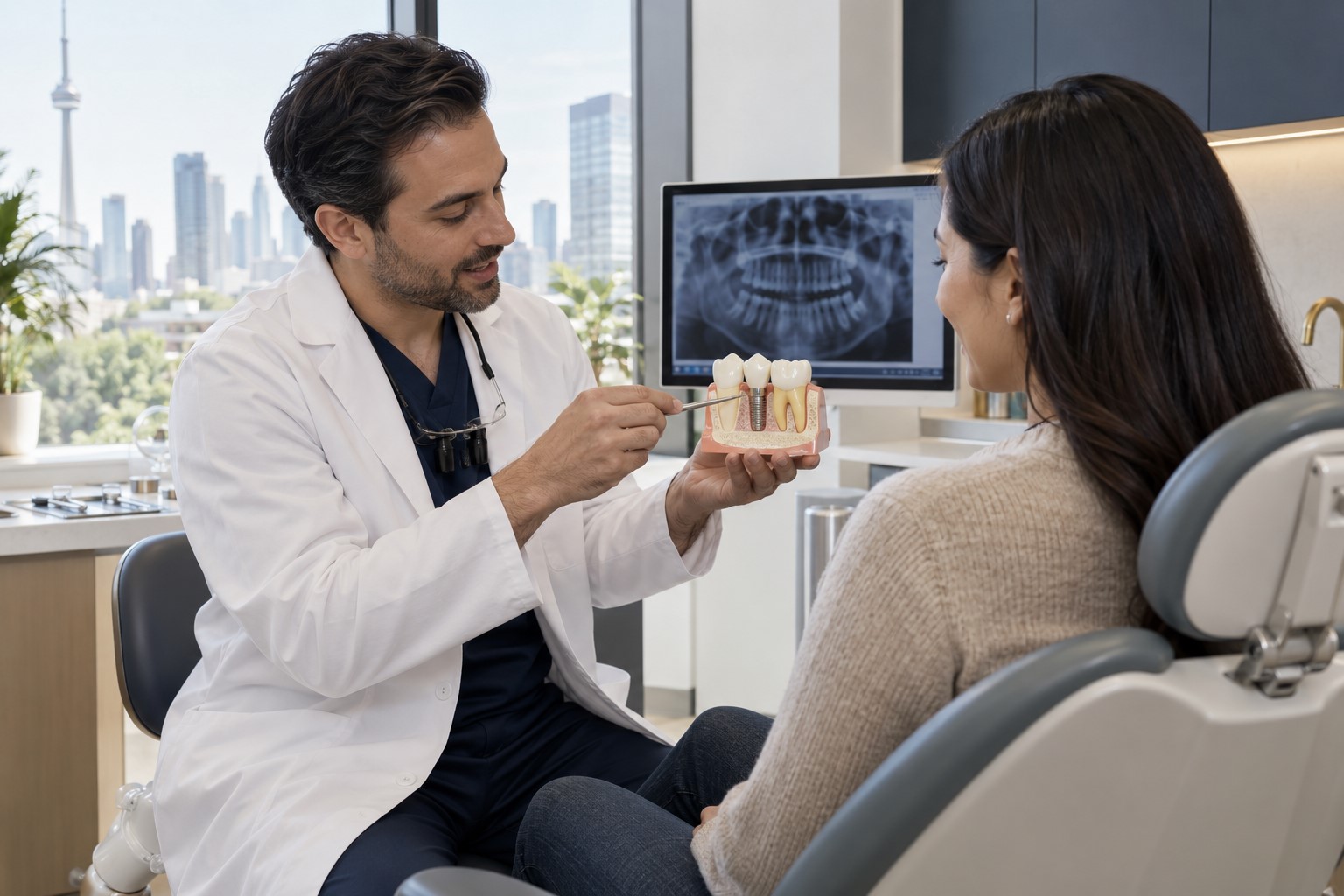
Cost is often one of the first questions people have about dental implants, and it is understandable to want a clear figure before deciding what to do next. There is no single fee that applies to every case, because the treatment needed to replace a missing tooth can differ considerably from one patient to another.
The estimate can be affected by the number of implants, how many teeth are being replaced, the type of final restoration, and the complexity of the case. Tooth removal, jawbone condition, diagnostic planning, additional procedures, and the number of treatment stages can also influence the total. A dental examination is the most reliable way to understand which of these factors apply to you. Once the dentist has reviewed the area and outlined the proposed plan, you can receive a case-specific estimate, ask questions about what it includes, and consider the available options with clearer information.
How Long Do Dental Implants Last?
Dental implants are designed as a long-term way to replace missing teeth. Their service life is different for every patient, but daily oral hygiene, healthy surrounding tissues, regular dental care, and ongoing maintenance can all help support the result over time.
It is also useful to separate the implant fixture from the visible restoration. The fixture is placed in the jawbone, while a crown, bridge, or another restoration is attached above it. These components can wear at different rates. A restoration may eventually need repair or replacement even when the implant fixture remains stable. Smoking or tobacco use, teeth grinding or clenching, bite forces, general health, and changes affecting the gums or bone can also influence longevity. Regular examinations give the dentist an opportunity to monitor the implant, the restoration, and the surrounding tissues before smaller concerns become more difficult to manage.
Dental Implant Aftercare and Maintenance
Dental implants and implant-supported restorations require ongoing care. Brush as directed by your dental professional, and clean between the teeth and around the implant. The recommended method or cleaning aid can vary according to the type and location of the restoration, so follow the guidance provided for your case.
Regular dental examinations allow the dentist to monitor the implant, restoration, bite, gums, and surrounding tissues. The frequency of professional care should be based on your oral health and the dentist’s recommendations. During early healing, continue to follow your post-operative instructions. Smoking or other tobacco use can affect oral health and healing, so discuss this with a dental or healthcare professional. Report unusual changes, discomfort, or other concerns to the dental team so the area can be assessed.
The Dental Implant Procedure
Dental implant treatment is planned for each patient, so the number and order of stages can vary. Oral health, jawbone condition, the number and location of missing teeth, and the type of final restoration all influence the plan. The steps below describe a common sequence, but some stages may be combined, adjusted, or unnecessary. Each step is based on the findings available at that point in care.
Step 1: Consultation, Examination, and Treatment Planning
Treatment begins with a consultation and dental examination. The dentist reviews the missing tooth or teeth, checks the teeth and gums, and considers the patient's medical and dental history. Concerns, treatment goals, and possible tooth replacement options are also discussed. The examination helps determine whether implant treatment should be considered and what further assessment may be needed. Diagnostic information and dental imaging are often needed to assess the treatment area and plan possible implant placement. These records help the dentist evaluate the jawbone and nearby structures, and the findings are considered alongside the examination, the proposed implant position, and the type of restoration being planned.
Step 2: Preparing the Treatment Area and Implant Placement
Some patients need existing oral health concerns addressed before implant placement. This could involve treating gum or dental problems, removing a tooth that cannot be retained, or considering additional treatment when bone support is limited. These steps are not required in every case, and any preparation is based on the examination and diagnostic findings. During implant placement, the implant fixture is positioned in the jawbone to provide a foundation for the planned restoration. Local anesthesia is typically used for this stage, and the exact procedure varies according to the treatment area, the number of implants, and the individual plan.
Step 3: Healing, Osseointegration, and the Final Restoration
A healing period follows implant placement. During osseointegration, the surrounding bone gradually forms a connection with the implant surface. This process is important for supporting the future restoration, but the progress and extent of healing must be assessed before treatment moves to the next stage. After sufficient healing, treatment may involve connecting an abutment and preparing or placing the final restoration. Depending on the plan, this could be an implant crown, an implant-supported bridge, or another implant-supported restoration. The restoration is planned in relation to the bite and surrounding teeth. The exact sequence varies, and it is not always placed at the same time as the implant fixture.
Step 4: Follow-Up Care
Follow-up appointments allow the dental team to assess healing, review the implant-supported restoration, monitor the surrounding tissues and bite, and address concerns. Daily oral hygiene and regular dental care remain important after treatment. The timing and number of follow-up visits depend on the individual plan.
What to Know Before Getting Dental Implants
How Long Does the Dental Implant Process Take?
The complete dental implant process generally takes longer than the implant placement appointment itself. For many patients, treatment extends over several months because the area needs time to heal before the restorative stages can be completed. Implant placement is only one part of the overall process, which may also include a healing period, connection of an abutment where one is used, and completion of the final restoration.
Several factors can influence the total treatment time. These include the number and location of implants, the patient’s healing response, the condition of the jawbone, whether a damaged tooth needs to be removed, and whether preliminary or additional care is required. The complexity of the case, the type of final restoration, and whether stages can be combined or need to be completed separately also affect the schedule. A more reliable estimate can be provided after an examination, diagnostic assessment, and treatment planning. This allows the dentist to explain which stages are likely to be involved and how the expected timeline applies to the individual case.
Are Dental Implants Painful?
Questions about pain are common when you are considering dental implants. Knowing what usually happens during and after the procedure can make the process feel more manageable and help you prepare for your appointment.
Local anesthesia is typically used to numb the treatment area during implant placement. You may still notice pressure, movement, or other sensations, but you should let the dental team know if you feel uncomfortable or anxious. Talking openly about your concerns beforehand gives the dentist an opportunity to explain what to expect and address questions related to your situation. After the appointment, temporary soreness, swelling, tenderness, or bruising can occur while the area begins to heal. The experience is different for each person and can be affected by the treatment performed and your individual healing response. Follow the post-operative instructions provided by your dental professional. If discomfort becomes worse, feels unexpected, or continues beyond the period described in your instructions, contact the dental team so they can assess the area and advise you on the next step.
Dental Implant Recovery
It is understandable to wonder what the first few days after implant placement will feel like. Recovery is different for everyone, but temporary soreness, swelling, tenderness, or bruising can occur while the treatment area begins to settle.
Your dental professional will give you post-operative instructions based on the procedure you received. These may cover cleaning the area, food choices, physical activity, and the use of prescribed or recommended medications. Following that guidance can make the early recovery period easier to manage and help protect the treatment area while it heals. The first few days are only one stage of recovery. Healing continues after the initial discomfort improves, and follow-up appointments allow the dental team to check the area and answer questions along the way. Contact the clinic if symptoms feel unexpected, become worse, or continue beyond the period described in your instructions. The dental team can assess what is happening and advise you on the appropriate next step.
Benefits of Dental Implants
Dental implants may offer several benefits for patients who are replacing one or more missing teeth. The value of each benefit depends on the patient’s oral health, treatment plan, and the type of restoration used.
Benefits can include natural-looking results, improved chewing and function, support for jawbone structure, a long-term tooth replacement option and, in many cases, no need to alter the adjacent teeth.
Types of Dental Implant Treatments
Dental implants can support different restorations based on the number and location of missing teeth, oral health, jawbone condition, and the findings of a dental assessment.
No single implant option is better than the others in every situation. The right choice depends on how many teeth are missing and where, the health of your gums and jawbone, and what the final restoration needs to do. Two people missing the same number of teeth can be suited to different treatments. A dental assessment is what narrows these options down to the ones that make sense for your case.

What Determines If You Are a Candidate for Dental Implants?

If you are missing one or more teeth, a dental implant assessment can help you understand whether this approach is suitable for your needs. The decision is based on more than the gap itself. Your dentist also needs to consider the health of your gums and remaining teeth, the condition of the jawbone, and your medical and dental history.
Healthy surrounding tissues and enough bone to support the planned implant are important considerations. When gum disease, tooth decay, or another oral health concern is present, it may need attention before implant placement. Limited bone does not automatically rule out treatment, but it can affect the options discussed with you.
“Dental implant suitability is not determined by one factor alone. We look at the health of the gums and remaining teeth, the available bone, the patient’s medical history, and what they hope to achieve before discussing the appropriate options.” — Dr. Mahan Alavi
The assessment also considers factors that can influence healing and long-term maintenance. These include smoking or tobacco use, certain health conditions or medications, teeth grinding or clenching, daily oral hygiene, and your ability to attend follow-up appointments.
There is no single checklist that determines suitability for everyone. An examination brings these factors together and gives you a clearer picture of the tooth replacement approaches available, what each one involves, and which next steps are worth discussing.
Frequently Asked Questions About Dental Implants
What Are Dental Implants?
How Long Does the Dental Implant Process Take?
Are Dental Implants Painful?
How Long Do Dental Implants Last?
Can Anyone Get Dental Implants?
How Much Do Dental Implants Cost in Toronto?
Are Dental Implants Better Than Dentures?
Discuss Your Tooth Replacement Options
You do not need to decide on dental implants before speaking with a dentist. An appointment gives you time to explain what is concerning you, have the missing-tooth area examined, and compare the replacement approaches that may be relevant to your needs. Market Dental Centre is located at 149 Lower Jarvis Street in Downtown Toronto, near St. Lawrence Market. Request an appointment through the website to ask your questions, discuss dental implants, and get a clearer understanding of what the next steps could involve.
Request a Dental Implant Consultation
We’ll follow up to confirm a time and answer your questions.
Please do not include sensitive medical information. This form is for appointment requests only.
