









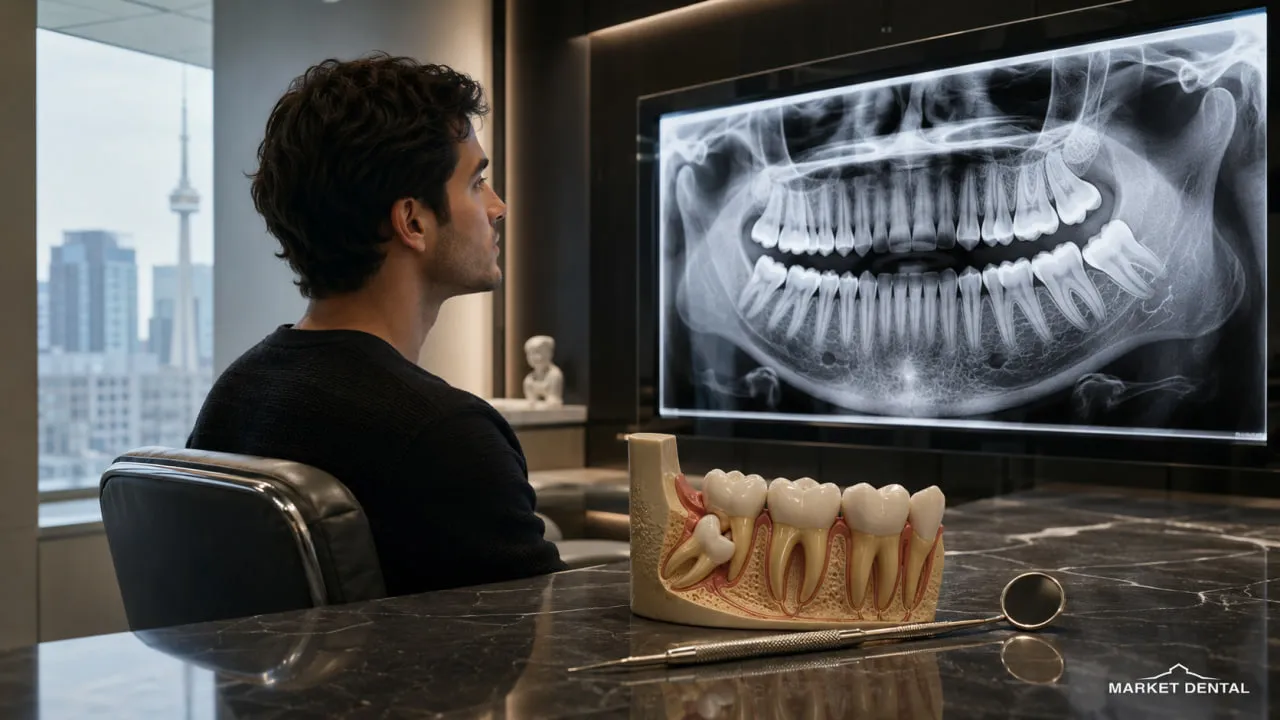
Why wisdom teeth should be removed early is a fair question when nothing hurts and an X-ray is the first sign that a third molar may become a problem. Early wisdom tooth extraction can make sense in some cases, but age alone is not a reason to operate. A healthy, functional, cleanable wisdom tooth may be monitored. An impacted tooth that is repeatedly inflamed, damaging the second molar, developing disease, or unlikely to erupt into a maintainable position is a different situation. The useful decision is not “early or late” in the abstract. It is whether removal is indicated for that tooth, and if so, whether waiting adds avoidable difficulty or risk.
Why Wisdom Teeth Should Be Removed Early When Removal Is Already Indicated
Earlier removal may be considered when a third molar is linked to recurrent pericoronitis, unmanageable decay, second-molar damage, a cyst or other pathologic change, or an eruption path unlikely to become healthy and cleanable. When extraction is already indicated, treating before the roots and surrounding anatomy fully mature may make surgery less complex for some patients.
A fully erupted tooth that functions normally, can be cleaned, and shows no disease may instead be monitored.
Early removal does not mean automatic removal. Why wisdom teeth should be removed early only becomes useful once there is a clinical reason to consider extraction.
Remove Now or Monitor? The Findings Matter More Than the Birthday
| Finding | Earlier Removal May Be Considered | Monitoring May Be Reasonable |
|---|---|---|
| Eruption | Impacted, partly erupted, or poorly positioned | Fully erupted and functional |
| Gum health | Recurrent inflammation or infection | Healthy tissue, no recurring symptoms |
| Second molar | Decay, periodontal damage, or resorption | Healthy on examination and imaging |
| Cleaning | Area cannot be kept predictably clean | Patient can clean the tooth well |
| Imaging | Cystic change, resorption, or other pathology | No concerning finding |
| Anatomy | Removal is indicated and delay may add complexity | No current disease and review is practical |
| Follow-up | Ongoing monitoring may be difficult | Periodic review is realistic |
This is general orientation only. An examination and appropriate imaging are needed for an individual recommendation.
How Wisdom Teeth Become Impacted
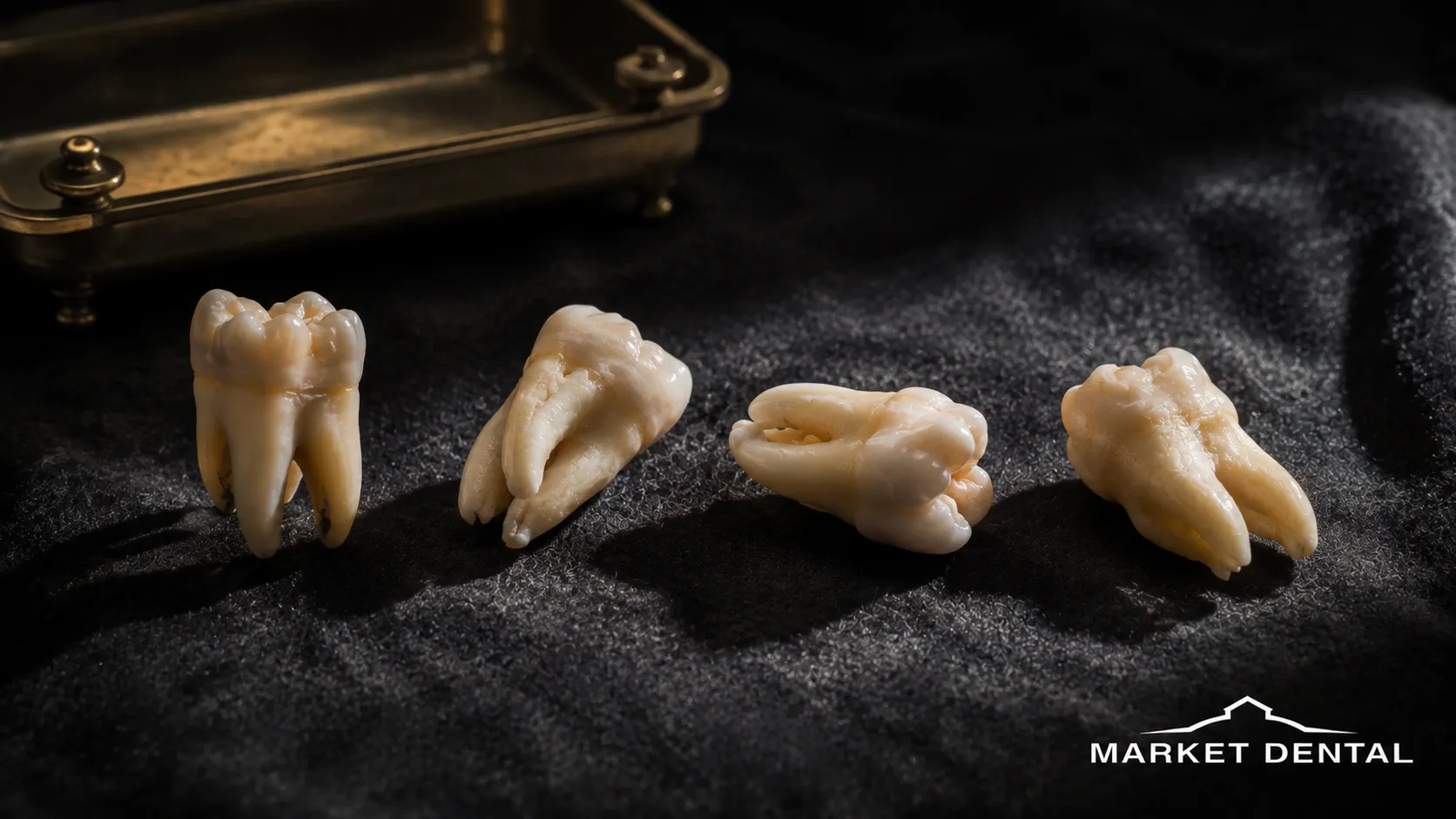
Wisdom teeth are third molars, usually the last permanent teeth to erupt. If space or eruption direction is unfavorable, a tooth can remain partly or completely trapped.
Dentists may describe the angle as:
- Mesial: angled forward toward the second molar
- Vertical: upright but unable to erupt fully
- Horizontal: lying sideways toward the tooth in front
- Distal: angled toward the back of the jaw
An impaction may also be soft-tissue, partial-bony, or complete-bony.
The label alone does not decide treatment. Position is only one part of the clinical picture.
Why Age Can Matter Without There Being One “Best” Age
Root development and the relationship between the roots, jawbone, and nearby nerves change as a third molar matures. When removal is already indicated, surgery before root development is complete may be less difficult in selected patients. Across populations, postoperative complications also tend to increase with age.
The Canadian Association of Oral and Maxillofacial Surgeons notes that wisdom teeth often erupt between about 15 and 25 and that removal risks and recovery tend to increase with age. CAOMS wisdom teeth patient information
Age still does not establish the indication. Why wisdom teeth should be removed early has more to do with development, disease, and anatomy than a specific birthday.
Six Reasons Earlier Wisdom Tooth Removal May Be Recommended
1. The Roots May Still Be Developing
Incomplete root development can make removal technically different from extracting a fully mature tooth.
It does not guarantee a simple procedure or prove that the roots are far from the inferior alveolar nerve. Individual anatomy still matters.
2. Surgical Complexity Can Increase Over Time
As roots mature and anatomy changes, some later extractions become more involved. Medical history can also become more complex with age.
These are population-level tendencies, not a prediction of how any one person will recover.
3. The Second Molar May Be at Risk
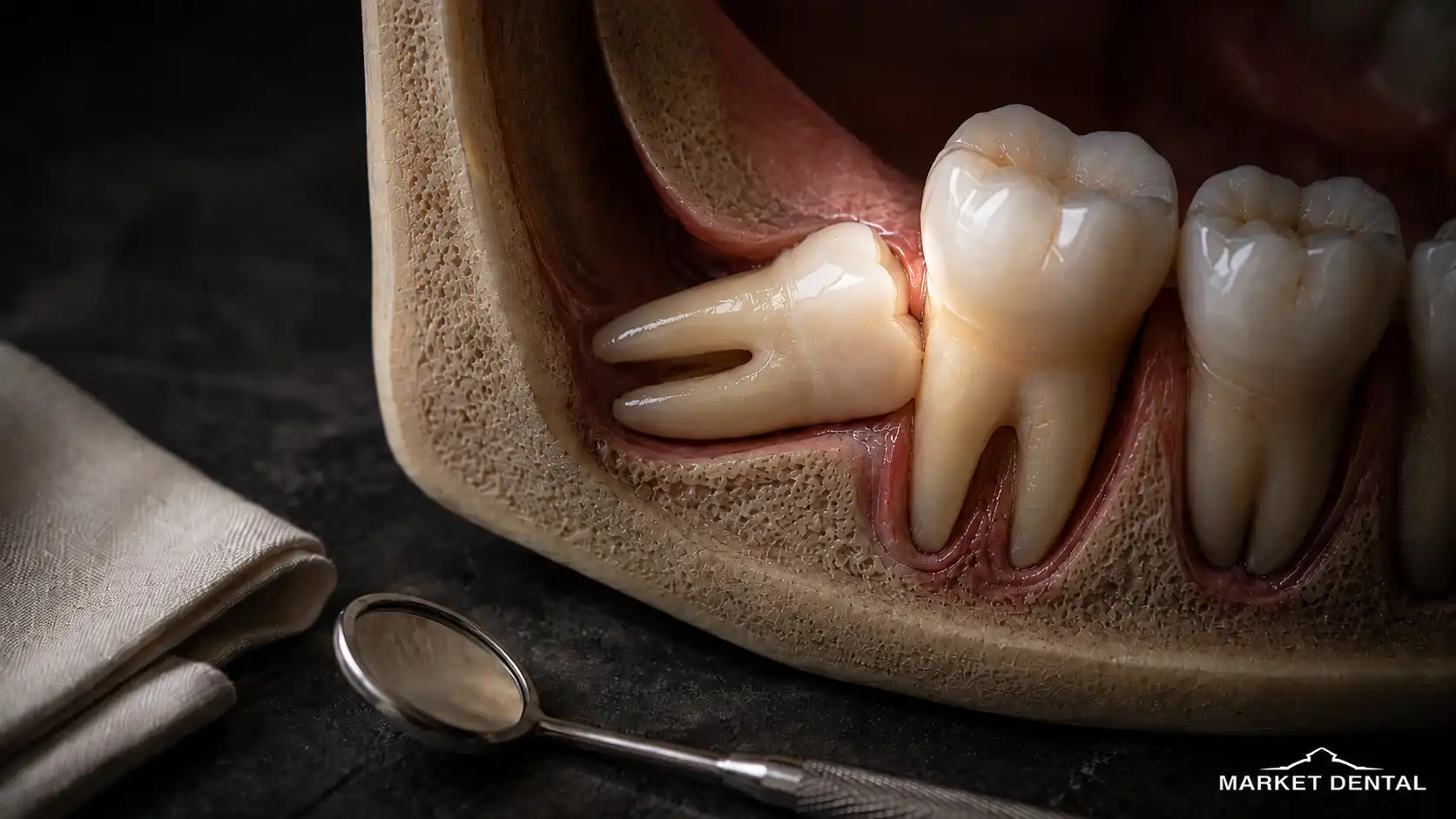
An impacted or partly erupted wisdom tooth can create a plaque-retentive area behind the second molar. That may contribute to decay, periodontal damage, or, less commonly, external root resorption.
If a wisdom tooth is clearly threatening the second molar, waiting for pain may allow avoidable damage to progress.
4. Pericoronitis Can Keep Returning
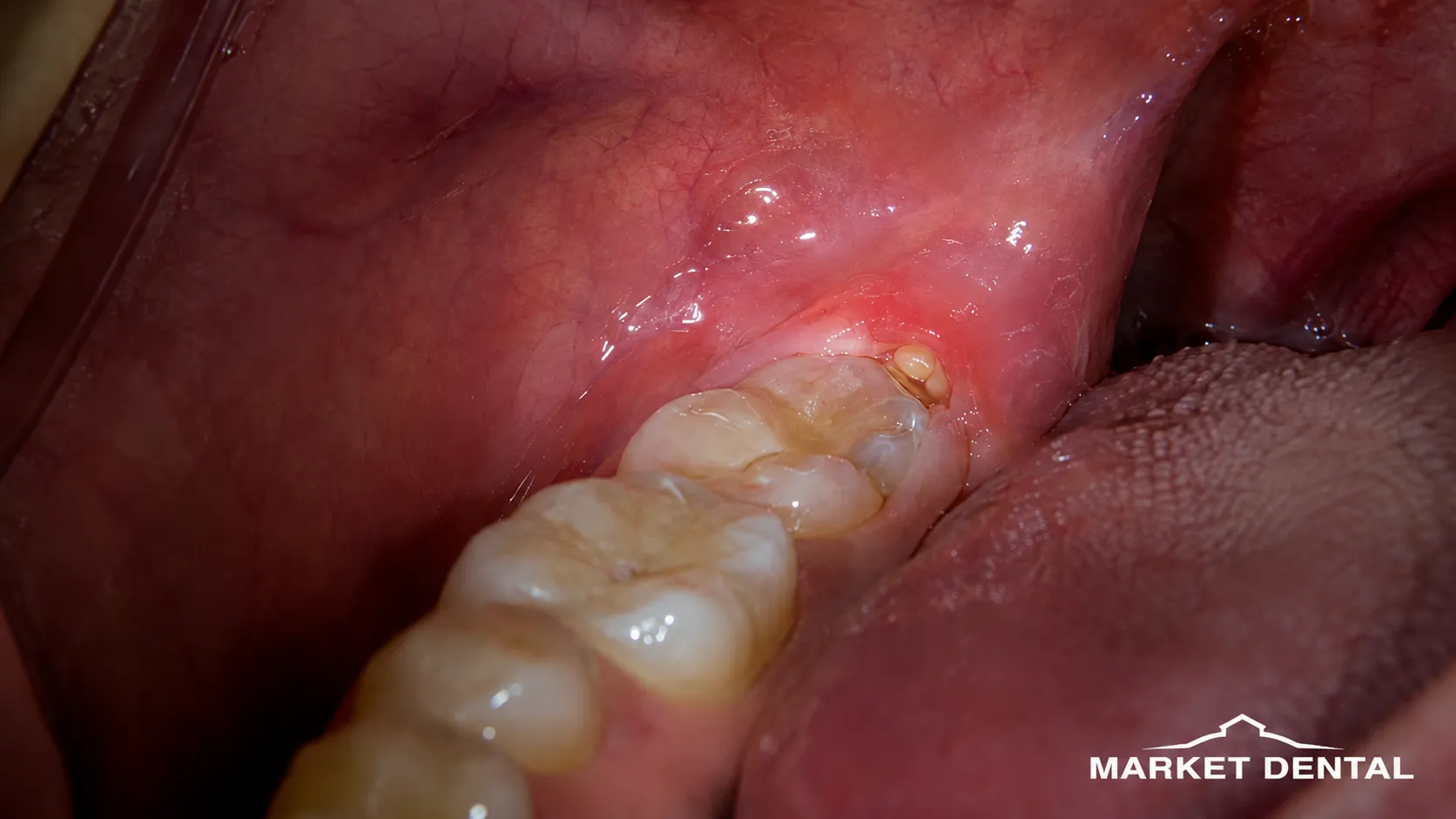
Pericoronitis is inflammation around a partly erupted tooth, often under a flap of gum. Symptoms can include tenderness, swelling, food trapping, a bad taste, and difficulty cleaning the area.
One mild episode does not automatically mean extraction. Repeated episodes, especially when the tooth has little chance of erupting into a maintainable position, change the conversation.
5. A Cyst or Other Pathologic Change May Develop
Cysts and other lesions can occur around impacted third molars, although they are not inevitable.
A concerning imaging finding can justify treatment even without pain.
6. Waiting Can Turn a Planned Decision Into an Urgent One
If a tooth already has a poor long-term outlook, delaying removal may mean dealing with it during a flare-up, infection, or after the second molar has already been affected.
That does not make every delay dangerous. It means timing deserves a discussion once there is a genuine indication.
No Pain Does Not Always Mean No Problem
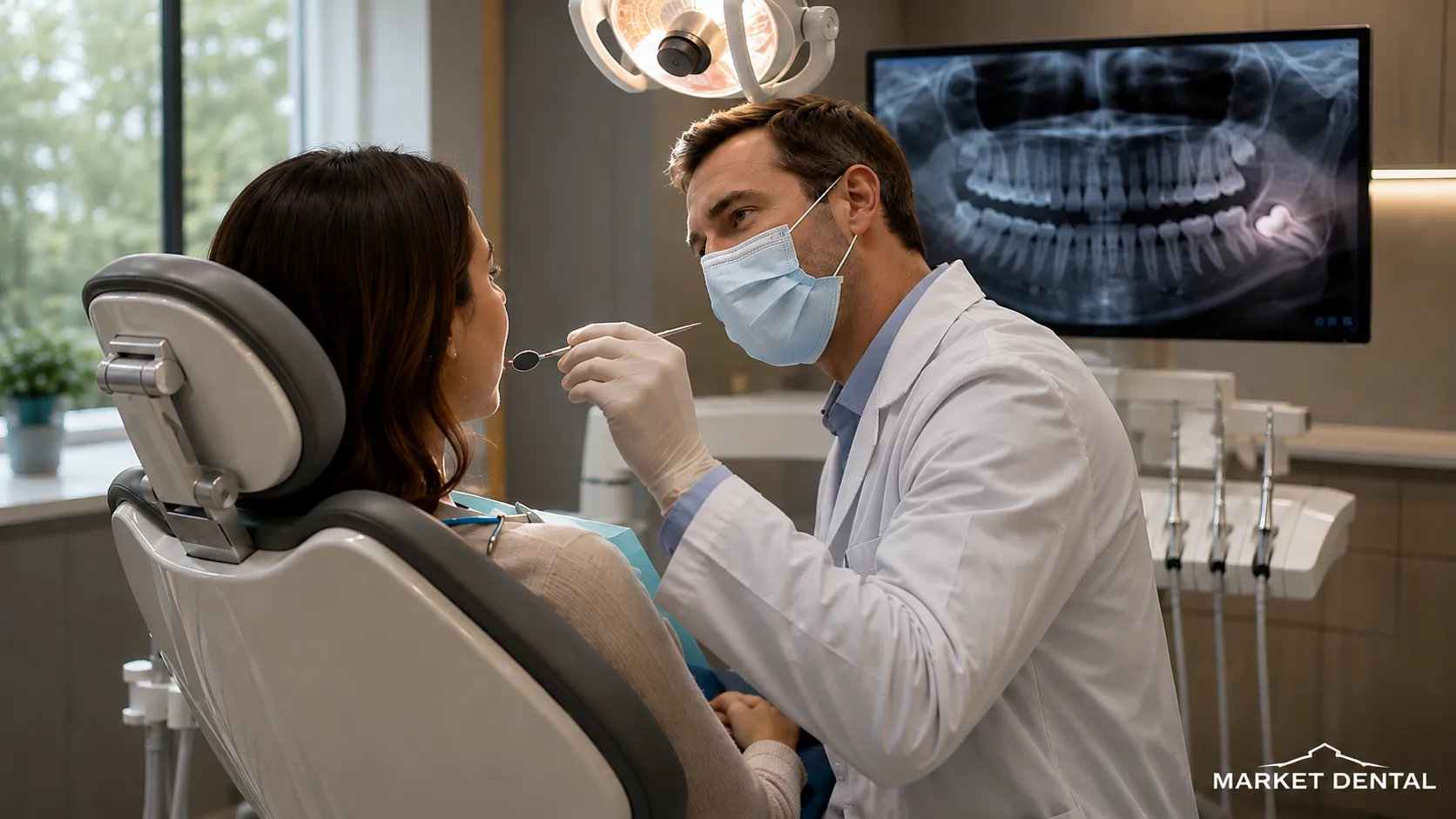
Some problems can develop quietly. Decay on the back of the second molar, periodontal pockets, root resorption, and certain cystic changes may be found before they create obvious pain.
The reverse is equally important: an asymptomatic tooth is not automatically diseased. For disease-free impacted wisdom teeth, evidence does not support a blanket rule that everyone should have preventive surgery. Monitoring can be reasonable when the tooth and surrounding tissues remain healthy.
Pain is useful information, not the whole decision behind why wisdom teeth should be removed early.
Wisdom Teeth and Crowding After Braces
Removing wisdom teeth solely to prevent lower front teeth from crowding is not strongly supported by current evidence.
Teeth can shift after orthodontic treatment for several reasons, including ongoing jaw changes and retainer use. Wisdom teeth may still need removal for their own clinical reasons, and they may sometimes be considered within a broader orthodontic plan, but extraction should not be sold as a guaranteed way to protect alignment.
That is especially relevant for someone who has already invested time in braces and is worried about relapse.
Symptoms That Deserve Prompt Assessment
Contact a dental professional if you notice:
- Pain or tenderness at the back of the mouth
- Swelling or redness around a partly erupted wisdom tooth
- A bad taste, drainage, or recurring food trapping
- Difficulty opening the mouth
- Jaw or facial swelling
- Pain when chewing in the area
- Symptoms that settle and then keep returning
Headache, ear discomfort, and sinus pressure are less specific and should not automatically be blamed on wisdom teeth.
Significant facial swelling with difficulty breathing or swallowing needs urgent medical assessment. For other sudden dental concerns, see Market Dental Centre's dental emergency information.
When Monitoring May Be the Better Choice
A wisdom tooth may be kept when it is healthy, functional, stable, cleanable, and not damaging the second molar or surrounding tissues.
Monitoring can include clinical review and imaging when justified by risk and previous findings. A fixed annual X-ray rule is not necessary for everyone.
This is the other half of why wisdom teeth should be removed early: without a clinical reason for surgery, observation may be the more conservative option.
How Imaging Changes the Decision
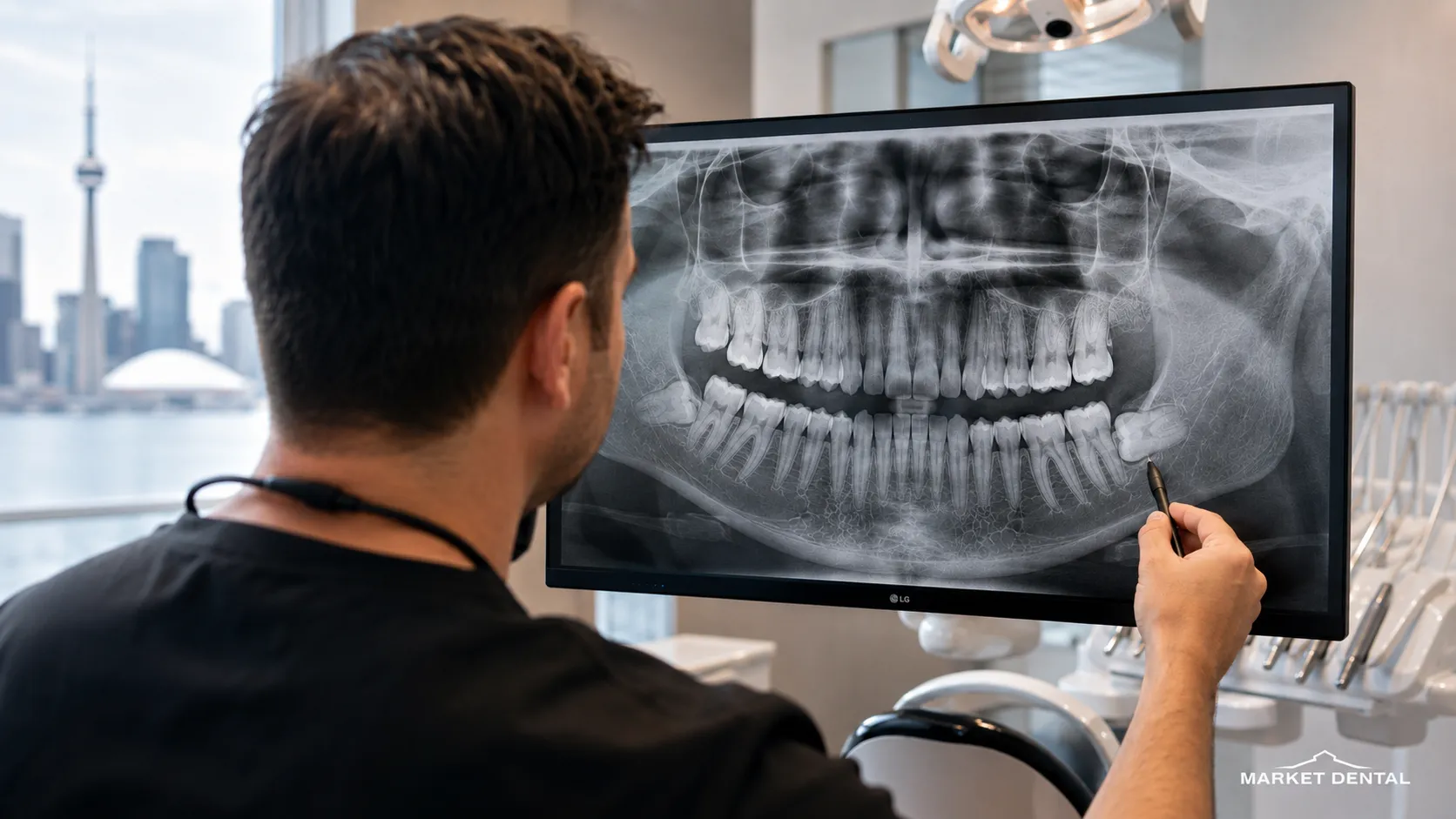
A panoramic radiograph commonly shows third-molar position, the neighboring second molars, and the general relationship between lower roots and the mandibular canal.
CBCT adds three-dimensional detail but is not routine for every patient. It may be considered when a specific question cannot be answered adequately with 2D imaging and the result could change planning.
At Market Dental Centre, imaging needs can be discussed after the clinical examination. On-site panoramic or CBCT availability should not be presented as a clinic feature unless currently confirmed.
What Wisdom Tooth Removal Can Involve
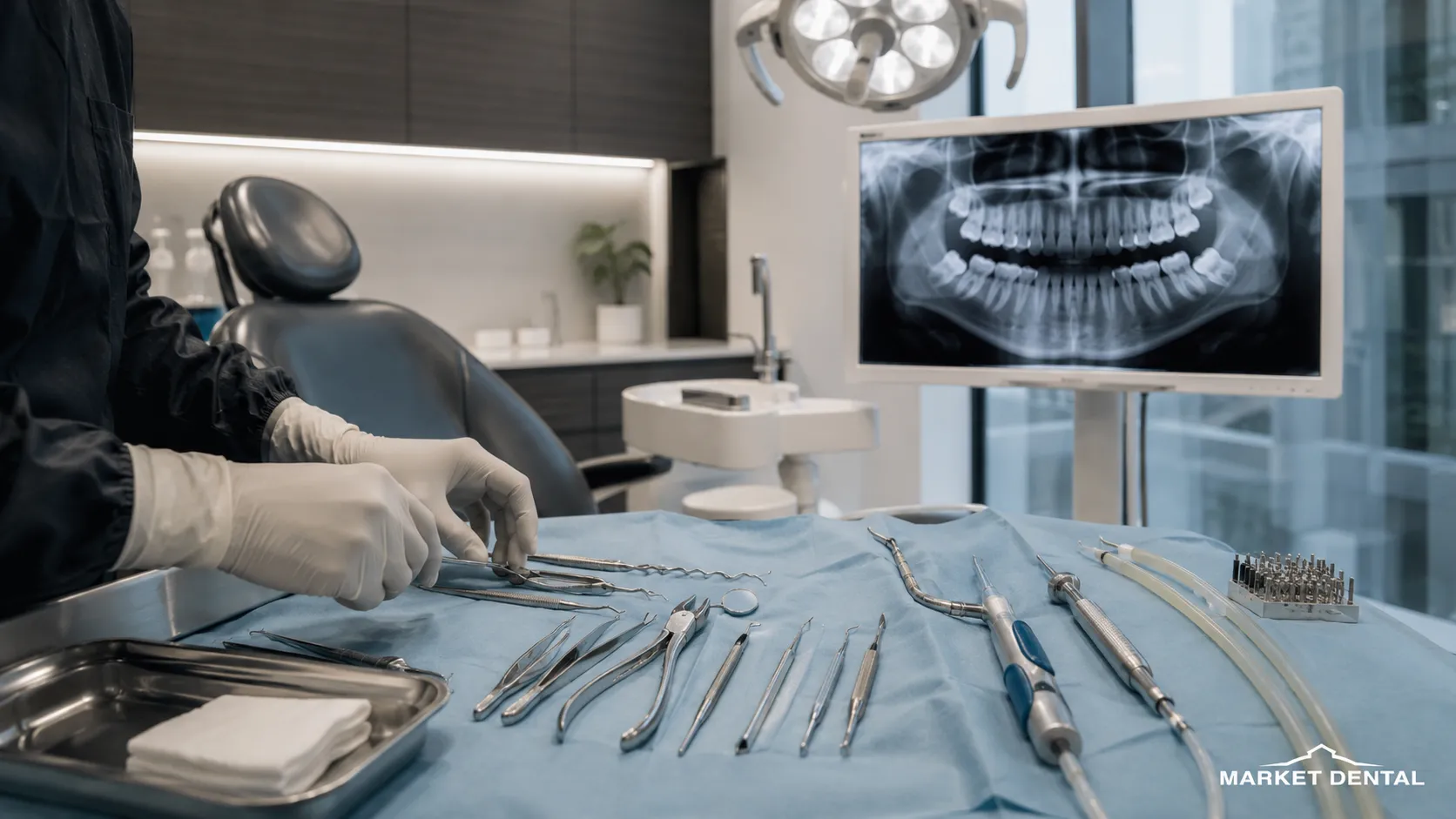
A fully erupted wisdom tooth may be removed much like another tooth. An impacted tooth can require access through the gum, removal of some surrounding bone, sectioning of the tooth, or sutures. Not every extraction uses every step.
Local anesthetic is intended to prevent sharp pain during treatment. Pressure, movement, and vibration can still be noticeable. If something feels sharp, tell the dentist at the time rather than trying to tolerate it.
Some wisdom teeth can be treated by a general dentist. More complex impactions, anatomy, medical considerations, or sedation needs may lead to referral to an oral and maxillofacial surgeon.
Read more about wisdom teeth removal at Market Dental Centre.
Wisdom Tooth Extraction Recovery: A More Realistic First-Week Timeline

Recovery is not identical from person to person.
First 24 hours: Some oozing is expected. Rest, use gauze as directed, and follow the instructions given for the surgical site.
Days 2–3: Swelling and jaw stiffness may be more noticeable. Soft foods and lower-intensity activity are often more comfortable.
Following days: Symptoms should generally trend in the right direction. Diet and activity can be increased according to the treating dentist's instructions and how you are healing.
Dry socket, or alveolar osteitis, is a painful postoperative complication involving disruption of normal socket healing. Smoking and vaping increase risk. Avoid forceful rinsing or spitting early in healing, and follow your dentist's advice about straws, exercise, and oral hygiene.
Many people resume routine daily activities within several days, but wisdom tooth extraction recovery varies with the number of teeth removed, impaction depth, surgical complexity, health, smoking, and individual healing.
After treatment, follow the clinic's post-surgical dental care instructions together with the personalized instructions you receive.
Paying for Wisdom Tooth Removal in Ontario
Private dental insurance in Ontario varies by contract. Assessment, imaging, extraction, and sedation may be reimbursed differently, with deductibles, annual maximums, and procedure codes affecting the patient portion.
A predetermination can estimate expected benefits for planned treatment, but it does not guarantee final reimbursement.
If you are comparing wisdom teeth removal in Toronto, compare the proposed treatment and fee with your own plan rather than assuming a standard coverage percentage. Market Dental Centre's dental insurance information explains additional questions patients can consider about individual plans.
Getting a Wisdom Tooth Assessment in Downtown Toronto
Market Dental Centre is a general dental practice at 149 Lower Jarvis Street in Downtown Toronto, Ontario, near St. Lawrence Market. The location may be practical for people who live nearby, work in the downtown core, or study in central Toronto.
For Toronto patients, a general dentist can examine the area, review appropriate imaging, and explain whether the tooth looks healthy enough to monitor or whether removal should be considered. If the anatomy or surgical needs are more complex, referral may be appropriate.
For someone asking why wisdom teeth should be removed early, that appointment should end with a reason you can understand, not simply an age-based recommendation.
You can also read about general dentistry and oral assessments at Market Dental Centre.
Key Takeaways
- Not every third molar needs extraction.
- Why wisdom teeth should be removed early is most relevant when removal is already clinically indicated.
- Younger age can offer surgical advantages in selected cases, but there is no universal “best age.”
- A pain-free wisdom tooth can still have disease, while an asymptomatic disease-free tooth may sometimes be monitored.
- Recurrent pericoronitis, second-molar damage, and pathologic findings are stronger reasons for treatment than fear of future crowding.
- Panoramic imaging is often useful; CBCT is reserved for situations where 3D information could change the plan.
- Recovery varies, so exact downtime should not be promised.
- Complex cases may be referred to an oral and maxillofacial surgeon.
Not Sure Whether Your Wisdom Teeth Should Come Out Yet?
You should not have to choose extraction simply because of your age, or wait for severe pain before asking the question.
A wisdom tooth assessment can clarify whether the teeth are healthy, whether they have room to erupt, what is happening to the second molars, and whether removal makes more sense now, later, or not at all.
Market Dental Centre is at 149 Lower Jarvis Street in Downtown Toronto, Ontario. Call (416) 363-4115 or request an appointment with Market Dental Centre to have the area assessed and discuss the options with a general dentist.

.webp)


