










Cracked tooth symptoms can be easy to miss at first. You may feel a sharp jolt when biting, notice pain as you release pressure, or suddenly find cold water uncomfortable even though the tooth looks normal. That uncertainty can be unsettling, especially when you are worried about a root canal or losing the tooth. Some cracks stay limited to the enamel, while deeper fractures can affect the inner tooth or surrounding tissues. The only reliable way to know is through a dental examination. This guide explains the main fracture types, common warning signs, when a cracked tooth becomes urgent, what to do before your appointment, and the treatment options a dentist may consider in Toronto.
What Is a Cracked Tooth? Types of Dental Fractures
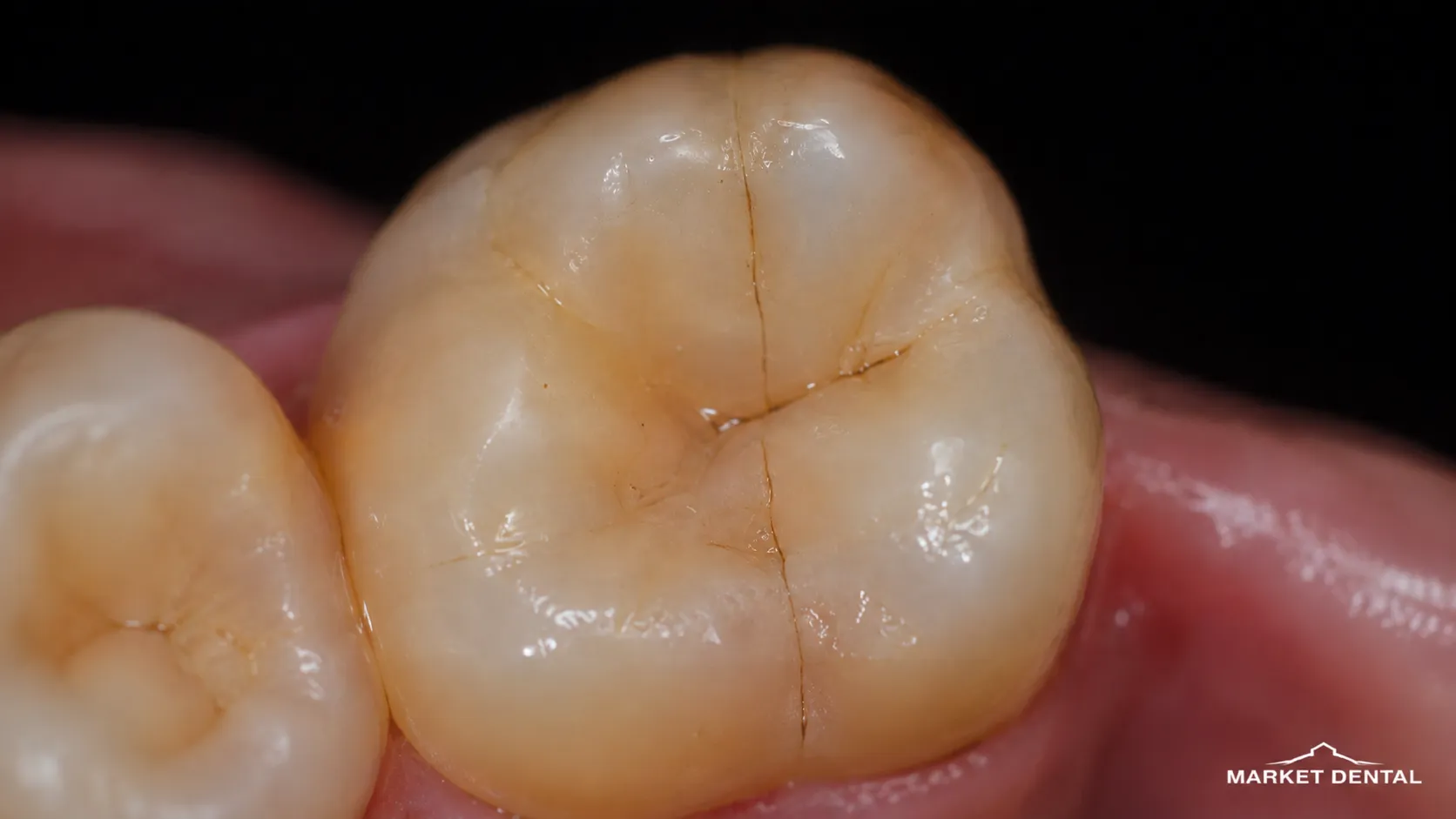
A tooth can fracture in several different ways. Some cracks remain within the outer enamel. Others extend through dentin, toward the pulp, below the gumline, or into the root.
That difference matters because two teeth that look similar in the mirror can need very different care.
A commonly used clinical classification includes five main patterns: craze lines, fractured cusps, cracked teeth, split teeth, and vertical root fractures.
If biting suddenly hurts, a piece of your tooth has broken, or the symptoms are getting worse, request a dental assessment at Market Dental Centre. The clinic is located at 149 Lower Jarvis Street in Downtown Toronto, near St. Lawrence Market.
Craze Lines
Craze lines are very shallow cracks involving the enamel.
They are common in adult teeth and are usually painless. Many are noticed only because light catches the line differently from the surrounding enamel.
A surface line does not necessarily mean the tooth is structurally damaged. Still, it can be difficult to judge the depth of a line by looking at it yourself. If you are unsure, mention it at your next dental examination.
Fractured Cusp
A fractured cusp involves part of the chewing surface of the tooth. It may occur around an existing restoration or in an area where less natural tooth structure remains.
Symptoms vary.
You may notice mild discomfort when biting, a rough or missing piece of tooth, or sensitivity around the area. Pulp involvement is possible, but it is not inevitable.
A fractured cusp is worth having assessed even when the pain is manageable because the dentist needs to determine how much tooth structure remains and whether the area can be restored.
Cracked Tooth
A cracked tooth usually has a fracture that begins on the chewing surface and extends downward.
This pattern is often associated with pain while chewing, particularly when pressure is applied or released. Cold sensitivity may also occur. The crack can be difficult to see, and symptoms may disappear between meals.
The location and depth of the fracture influence whether the tooth can be restored and what type of treatment may be appropriate. Earlier assessment can provide more options in some cases, but no dentist can promise that every cracked tooth can be saved.
At this stage, cracked tooth symptoms often become more noticeable during eating, especially with harder foods.
Split Tooth
A split tooth is a more extensive fracture in which the tooth has separated, or is separating, into distinct segments.
Pain may become more noticeable, and part of the tooth may move. Some patients also develop gum tenderness or swelling.
A split does not automatically tell you what treatment will be needed. The dentist has to evaluate where the fracture extends and whether any part of the tooth remains predictably restorable.
Vertical Root Fracture
A vertical root fracture begins in the root, below the gumline.
These fractures can be particularly difficult to identify because early symptoms may be subtle. Localized gum tenderness, swelling, drainage, a deep isolated gum pocket, or an infection that repeatedly returns around the same area can raise suspicion.
Those symptoms are not unique to a root fracture, so proper tooth crack diagnosis requires a clinical assessment.
This table can help you describe what you are noticing, but it cannot determine which tooth fracture stage or crack type you actually have.
Common Cracked Tooth Symptoms You Shouldn't Ignore

The symptoms are not always dramatic. In fact, the stop-and-start nature of cracked tooth pain is one reason people sometimes wait before having it checked.
Sharp Pain When Biting or Releasing Pressure
A quick, localized pain when you bite down is one of the better-known signs of a possible crack.
Some people notice the sharper sensation as they release pressure rather than when they first bite.
This pattern is sometimes described as cracked tooth syndrome. Back teeth absorb significant chewing forces, so cracked molar symptoms commonly involve pain when eating firmer foods.
Other dental problems can cause similar discomfort. Pain when biting is therefore a reason for assessment, not proof that a fracture is present.
Sudden Sensitivity to Cold, Heat or Sweets
A sip of cold water may suddenly feel much sharper than it did last week. Hot coffee or a sweet food can trigger a similar response.
Temperature sensitivity can occur with a crack, but it also appears with cavities, exposed root surfaces, worn enamel, inflamed pulp and other dental conditions.
The pattern matters.
Tell your dentist what triggers the sensitivity, how long it lasts and whether the sensation stops immediately or lingers.
Gum Tenderness or Swelling Around One Tooth
Tenderness close to one tooth may indicate that the tissues around it are irritated.
Swelling raises the level of concern, especially if it is increasing rather than settling down.
If swelling spreads into the face or neck, occurs with fever, or makes swallowing or breathing difficult, the problem needs more urgent attention.
Pain That Comes and Goes
This is one of the more frustrating broken tooth symptoms.
You can eat breakfast without trouble, feel a sharp pain at lunch, then have no symptoms for the rest of the afternoon. The next day it happens again.
Intermittent pain can also be hard to locate. You may know the discomfort is coming from the left side of your mouth without being able to identify one tooth.
If the same biting or temperature pain keeps returning, a dental examination makes more sense than waiting for it to become constant.
A Practical Toronto Example
Imagine someone working near St. Lawrence Market who feels a sharp pain in a back tooth while eating lunch.
The pain disappears immediately. The tooth looks normal.
Later that day, the same spot hurts when pressure is released after another bite.
At this point, cracked tooth symptoms are strongly suspected, even if the tooth still looks intact.
A sensible response is to stop chewing on that side, avoid very hard foods and arrange an assessment. If significant swelling, severe pain, trauma or general illness develops, the situation becomes more urgent.
Emergency Triage: Is a Cracked Tooth a Dental Emergency?

Cracked tooth symptoms range from painless enamel lines to fractures associated with severe pain, swelling or trauma.
Use the table below as a guide for deciding what to tell the dental office when you call. It is not a diagnostic tool.
A painless surface line and a broken tooth with active pain should not be treated as the same situation.
The urgency also changes when other symptoms appear.
Seek urgent medical or dental attention if you develop:
- Rapidly increasing facial or neck swelling
- Difficulty breathing or swallowing
- Bleeding that does not stop with steady pressure
- Significant trauma to the face or jaw
- Fever together with spreading swelling
- Severe illness alongside dental symptoms
For tooth pain, fractures or dental trauma that need prompt assessment, you can review Market Dental Centre's emergency dental care information. The clinic's current website lists emergency dental services and the Toronto office at 149 Lower Jarvis Street.
What Causes Teeth to Crack?
A crack does not always have one obvious cause.
Sometimes a tooth breaks after a single hard bite. In other cases, repeated forces and existing structural changes contribute over time.
Grinding and Clenching
Bruxism means grinding or clenching your teeth, often without realizing it.
Repeated heavy forces can place additional stress on teeth. Not everyone who grinds develops a fracture, but ongoing pressure is one factor a dentist may consider when looking at a cracked or heavily worn tooth.
Large or Older Restorations
A tooth with a large filling has less remaining natural tooth structure than an untouched tooth.
That does not mean the filling material itself is necessarily the problem. The amount and condition of the remaining tooth matter.
Dentists consider previous restorations, areas of weakened structure and the way a tooth handles chewing forces when assessing fracture risk.
Biting Very Hard Foods or Objects
Ice, hard candy and unpopped popcorn kernels are classic examples.
The problem is often an unexpectedly hard bite that creates a sudden load on the tooth, particularly if the tooth is already structurally weakened.
Chewing pens, opening packaging with your teeth and similar habits can add avoidable stress too.
Sports Injuries and Accidental Trauma
A fall, collision or impact to the face can chip, fracture or loosen a tooth.
Some injuries are obvious immediately. Others become noticeable later when the patient starts feeling sensitivity or pain while chewing.
A properly fitted sports mouthguard can reduce the risk of dental injury during contact or collision sports.
Age and Accumulated Wear
Cracks become more common as teeth accumulate years of chewing forces, restorations and natural wear.
There is no useful age at which a tooth suddenly becomes "too old" or destined to crack. Age is one part of a much larger clinical picture.
What to Do Before You Reach the Dentist
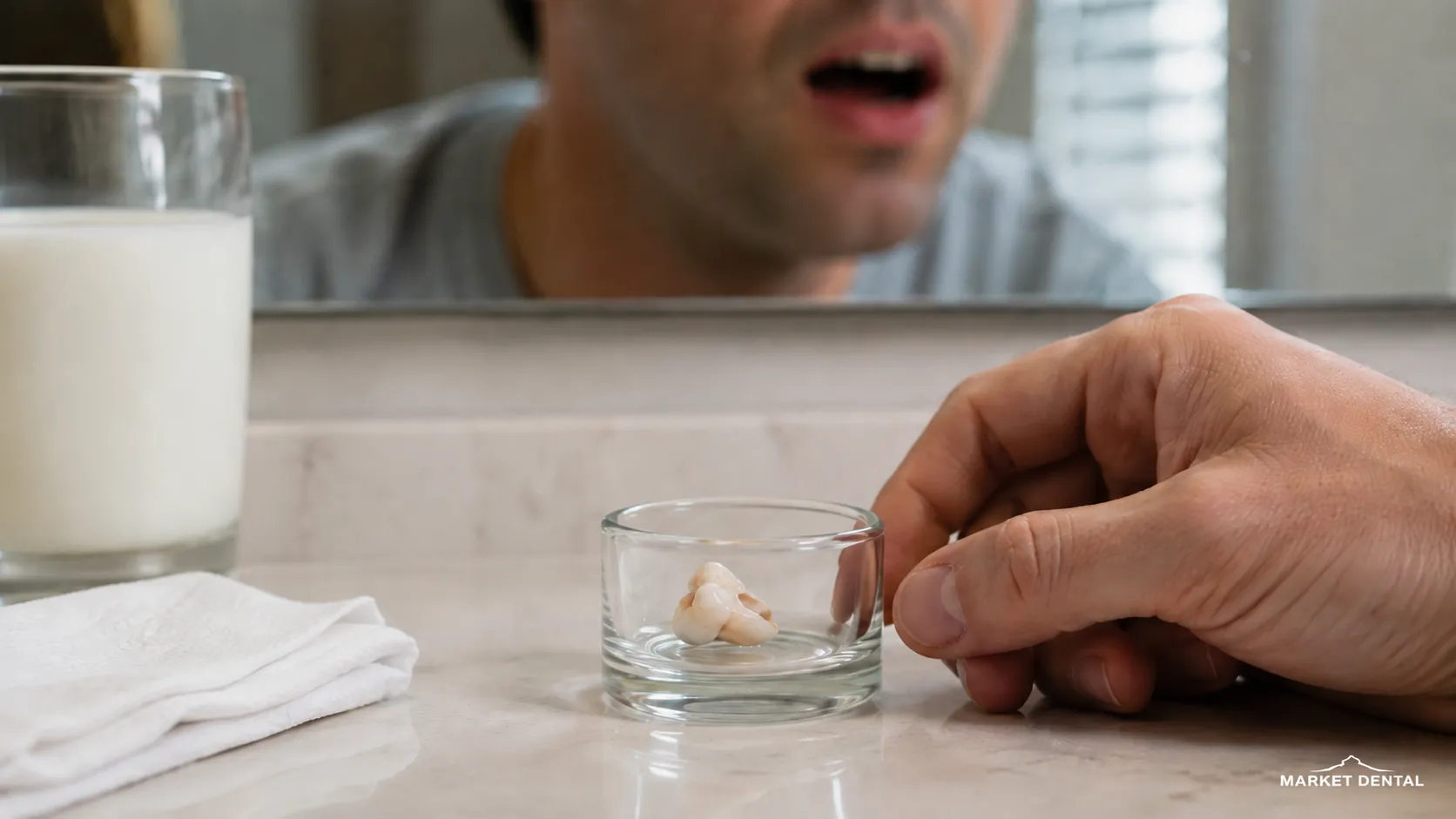
If you suspect a crack, the goal at home is not to repair it. It is to protect the area and stay reasonably comfortable until it can be examined.
1. Rinse Gently
Use lukewarm water to clear food and debris from the area.
A mild warm salt-water rinse can also be used gently if it is comfortable. Avoid vigorous swishing, especially if the tooth broke because of an injury and nearby soft tissue is bleeding.
2. Use a Cold Compress if There Is Swelling
Place the compress against the outside of your cheek in short intervals.
Do not place ice directly against your gums or the damaged tooth.
A cold compress may help with swelling and discomfort, but it does not treat the underlying fracture.
3. Use Pain Medication Only if It Is Safe for You
Over-the-counter medicines such as ibuprofen or acetaminophen may be options for some adults.
Use only a medicine you can normally take safely and follow the product label or advice from a dentist, physician or pharmacist.
Medical conditions, pregnancy, allergies and medication interactions can affect which pain reliever is appropriate. Do not increase the dose because the tooth hurts more.
4. Save Any Piece That Breaks Off
If a fragment of tooth comes away, handle it gently.
If needed, rinse obvious debris away without scrubbing the fragment. Keep it moist in milk or saline if practical, place it in a clean container and bring it to the appointment.
A dentist will determine whether the fragment has any use. Reattachment is not always possible.
A broken piece of a tooth is also different from a permanent tooth that has been completely knocked out of its socket. A knocked-out tooth needs more time-sensitive trauma care.
5. Stop Chewing on That Side
Give the tooth a break.
Choose softer foods for the moment and avoid:
- Ice
- Nuts and very hard foods
- Sticky or chewy foods
- Very hot or very cold foods if temperature triggers pain
- Biting directly on the affected tooth
Do not repeatedly press on the tooth to "test" whether it still hurts.
How Dentists Diagnose a Cracked Tooth
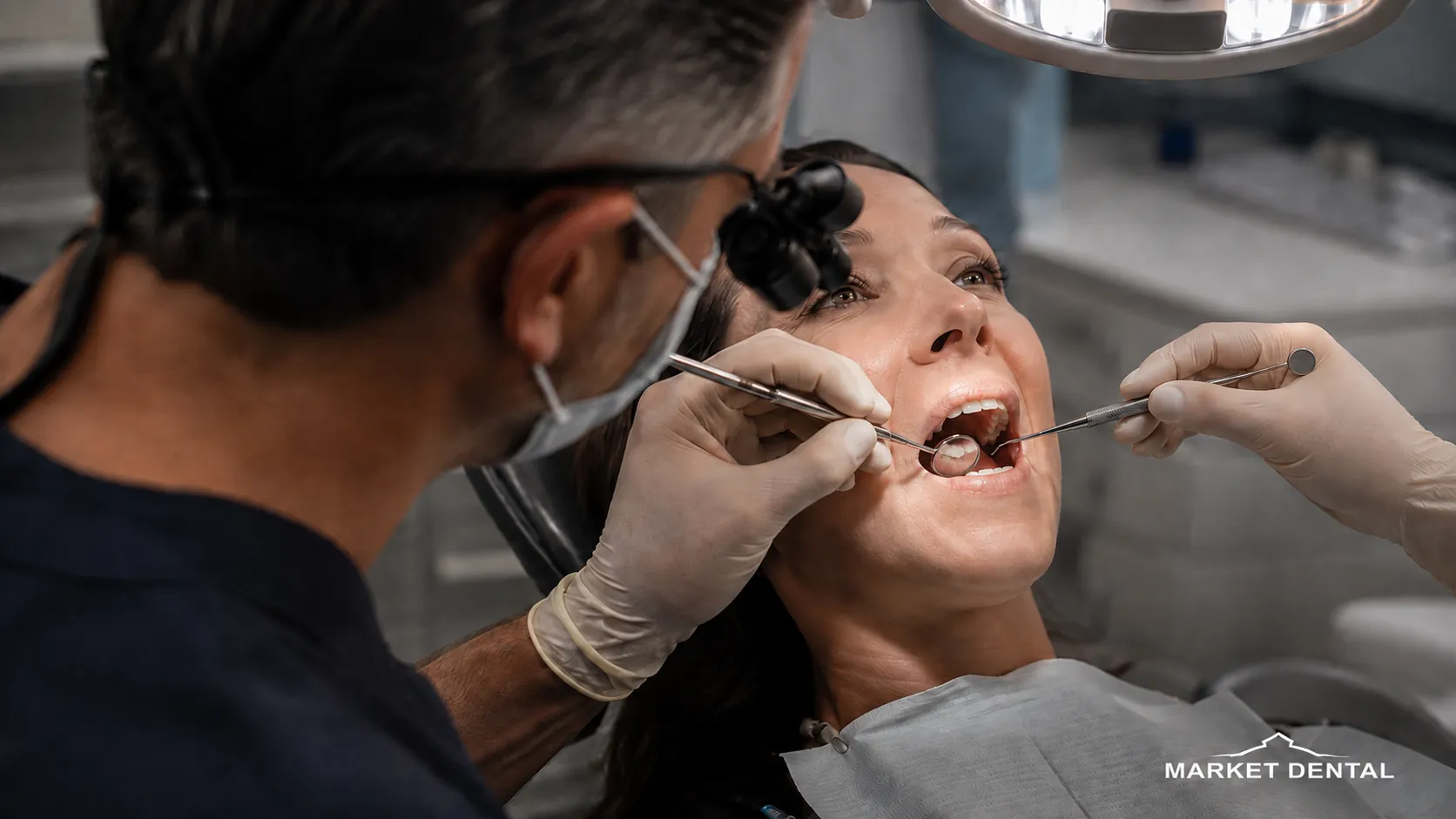
A crack can be surprisingly difficult to confirm.
A dental X-ray is useful, but it is only one part of the assessment. Some fracture lines are too fine or run in a direction that makes them difficult to see radiographically. X-rays may instead help the dentist evaluate the surrounding bone, restorations, decay and other possible sources of pain.
Depending on the case, a dentist may use a combination of:
- Visual examination
- Bite testing
- Magnification
- Transillumination, which uses light to help reveal changes in tooth structure
- Periodontal probing around the tooth
- Dental radiographs
- Examination of existing restorations
- Pulp sensibility testing
Not every patient needs every test.
This is why tooth crack diagnosis often relies on the overall pattern rather than a single image or symptom.
The American Association of Endodontists summarizes the issue well: "The treatment and outcome for your tooth depend on the type, location, and extent of the crack."
Treatment Options for a Cracked or Broken Tooth
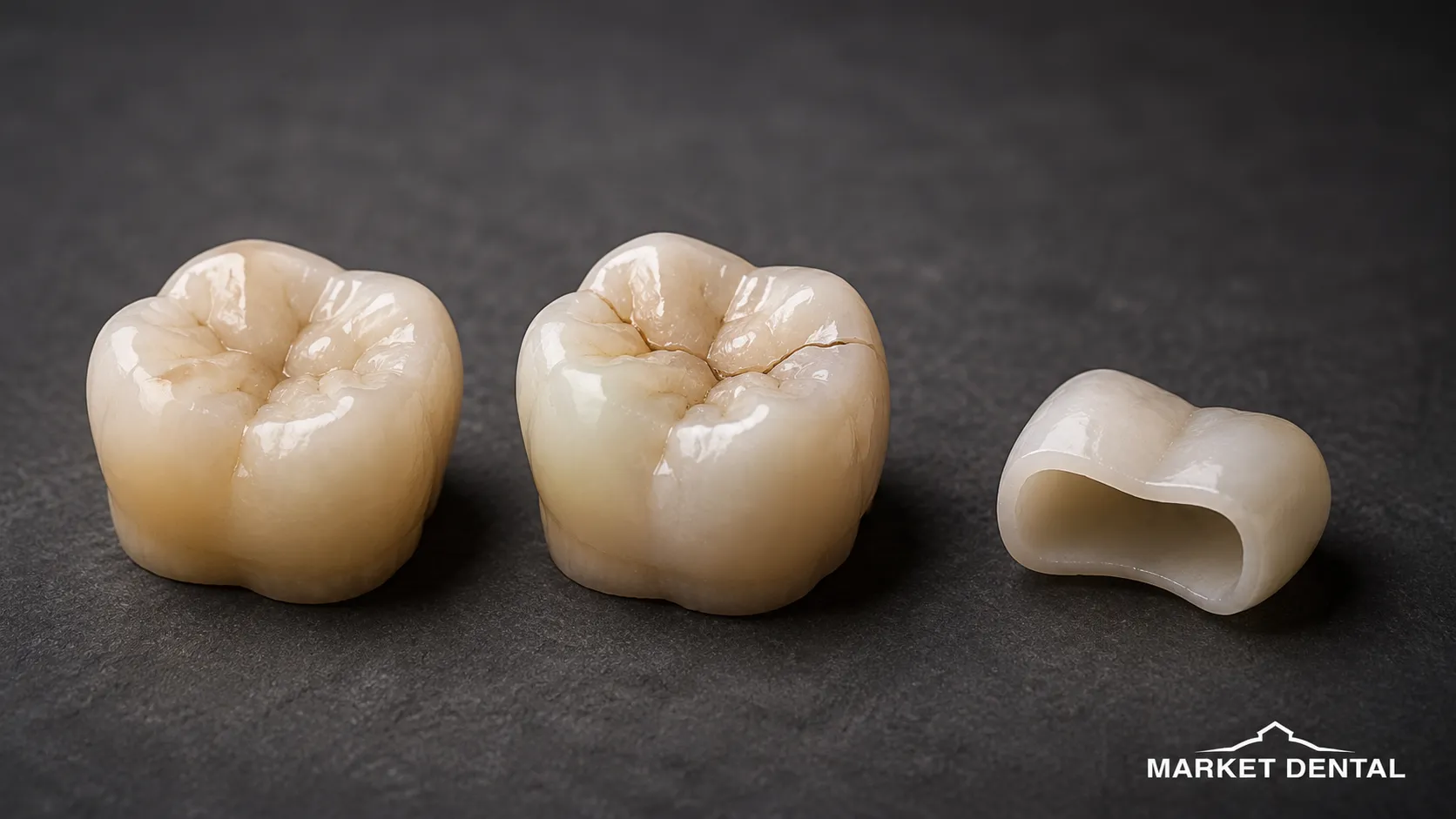
There is no single "cracked tooth treatment."
The dentist first needs to determine where the fracture is, how much healthy tooth remains, whether the pulp is involved and whether the tooth can be restored predictably.
Bonding or Dental Filling
Small areas of damage may sometimes be repaired with tooth-coloured restorative material.
This may be considered for limited enamel or cusp damage where enough healthy structure remains.
A filling or bonding procedure is not suitable for every crack, particularly when the fracture extends deeper into the tooth.
Dental Crown
A crown covers the visible part of a tooth and may be considered when more structural support is needed.
For some cracked or weakened teeth, covering the tooth can reduce flexing during normal function and protect the remaining structure. The suitability of a crown depends on the extent and location of the fracture.
Market Dental Centre provides restorative dentistry, including dental crowns. Its current restorative dentistry page describes crowns as an option for teeth that are damaged or cracked and notes that crowns may be made from different materials.
A crown does not guarantee that a crack will never progress, and it does not automatically eliminate the possibility of future root canal treatment.
Root Canal Treatment
Inside each tooth is pulp tissue containing nerves and blood vessels.
If a crack has caused irreversible pulp inflammation or infection and the tooth is still restorable, root canal therapy may be considered.
Root canal treatment is not an automatic part of treating every cracked tooth.
The decision depends on the health of the pulp, symptoms, fracture depth and whether the remaining tooth can be restored. Market Dental Centre lists root canal therapy among its current dental services.
Tooth Extraction
Sometimes a fracture extends too deeply or divides the tooth in a way that prevents predictable restoration.
In that situation, extraction may need to be discussed.
That decision comes after a clinical assessment. A split tooth or vertical root fracture should not be self-diagnosed from symptoms alone, and the presence of a crack does not automatically mean the tooth needs to come out.
Market Dental Centre offers oral surgery services, which include dental extraction care.
Replacing a Tooth After Extraction
If a tooth cannot be restored and is removed, replacement options can be discussed separately.
Depending on the location, oral health and individual treatment plan, options may include:
- A dental implant
- A dental bridge
- A removable dental prosthesis
- In some situations, no immediate replacement
Market Dental Centre offers dental implant treatment, but an implant is not automatically appropriate after every extraction. Candidacy requires individual assessment.
When Should You Contact an Emergency Dentist in Toronto?
If your search for an emergency dentist Toronto started because a tooth suddenly hurt while you were eating, the severity and associated symptoms matter.
Prompt dental assessment is particularly reasonable when:
- A visible part of the tooth breaks
- Biting repeatedly produces sharp pain
- Pain becomes severe or persistent
- Pain interferes with eating or sleeping
- Gum or facial swelling appears
- The tooth was injured during a fall or impact
- The tooth feels loose after trauma
- Bleeding continues
- You develop an unpleasant taste, drainage or swelling that may suggest infection
A painless craze line without sensitivity generally does not carry the same urgency.
If you work in Downtown Toronto or the Financial District and develop tooth pain during the day, location may make arranging an assessment near St. Lawrence Market more practical. Market Dental Centre is at 149 Lower Jarvis Street, and the clinic's official contact information lists (416) 363-4115.
Why Contact Market Dental Centre for a Suspected Cracked Tooth?
Market Dental Centre provides general, restorative, root canal, oral surgery and emergency dental services from its Downtown Toronto location near St. Lawrence Market.
For a suspected fracture, the useful first step is an examination.
That appointment can help answer the questions that are difficult to solve at home:
- Is there actually a crack?
- How deep does it appear to extend?
- Is the pulp involved
Not Sure If Your Tooth Can Wait?
A cracked tooth is difficult to judge from pain alone. A symptom that comes and goes may still need attention, while a harmless-looking line may turn out to be limited to the enamel.
If biting hurts, part of the tooth has broken, or your symptoms are changing, an examination can give you a clearer answer than trying to diagnose the problem yourself.
Market Dental Centre is located at 149 Lower Jarvis Street in Downtown Toronto, Ontario, near St. Lawrence Market. Call (416) 363-4115 or request an appointment online to discuss the next step.

.webp)


