









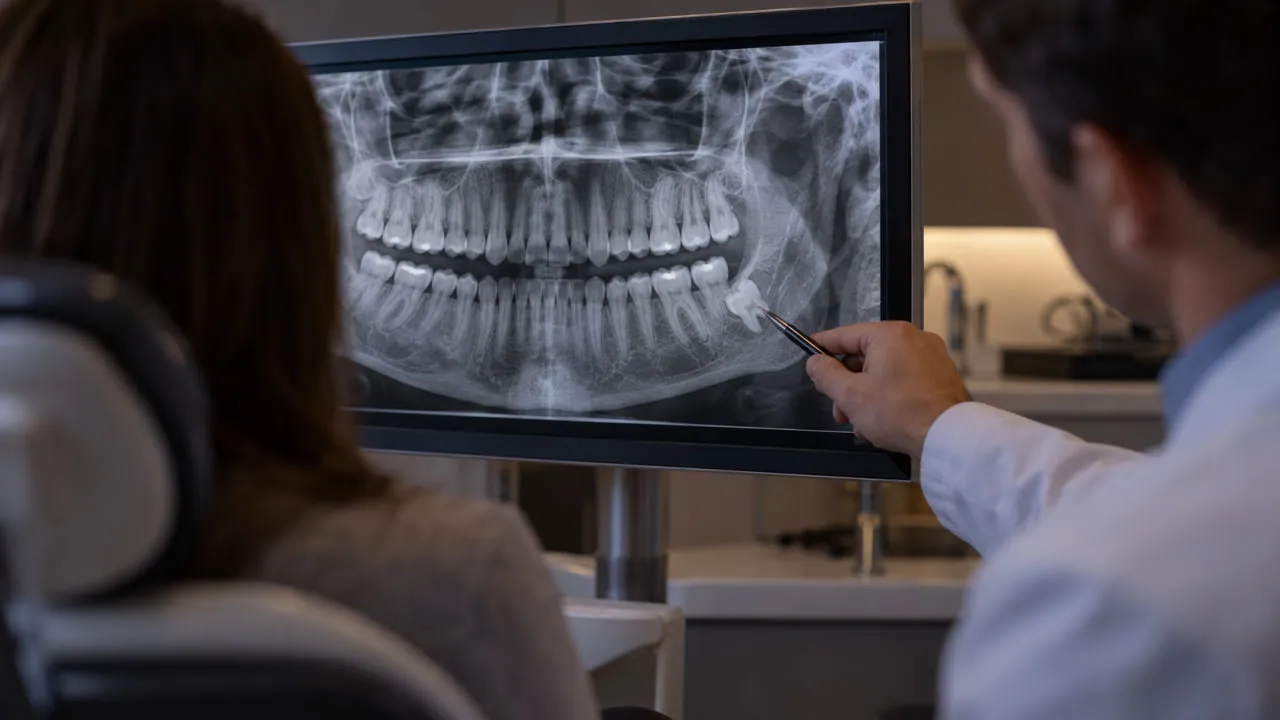
When you need wisdom tooth pain relief, the first question is usually what is causing the pain. A throbbing ache behind the last molar, swollen gum or tenderness around a partly erupted wisdom tooth can have several explanations. Pericoronitis, inflammation around a partially erupted tooth, is one possibility, but pain alone cannot confirm it. Decay, gum irritation, a neighboring tooth or pressure from the bite can produce similar symptoms. Gentle home care may make the next few hours easier, but persistent pain or increasing swelling deserves dental assessment. Trouble breathing or swallowing, rapidly spreading swelling or difficulty managing saliva requires emergency medical care instead.
What Can Help With Wisdom Tooth Pain Relief Right Now?

Start by protecting the sore area rather than trying to treat it aggressively.
Gentle brushing, a warm salt-water rinse, chewing on the other side and choosing softer foods can reduce irritation while you arrange an assessment. A cold compress on the outside of the cheek may also feel helpful if swelling is present.
An over-the-counter pain reliever may help if it is normally safe for you. Follow the product label. If you are pregnant, take prescription medication, have kidney or liver problems, take blood thinners or are unsure what is appropriate, ask a pharmacist, physician or dentist.
These measures provide temporary wisdom tooth pain relief. They do not tell you why the tooth hurts or treat a deeper dental problem.
Persistent pain, pus or drainage, increasing swelling, a foul taste or increasing difficulty opening your mouth should be assessed by a dentist.
Why Can a Wisdom Tooth Throb?
Pain at the very back of the mouth does not automatically mean the wisdom tooth is infected.
Possible causes include:
- inflammation around a partly erupted wisdom tooth
- pericoronitis
- decay in the wisdom tooth
- decay or another problem in the second molar beside it
- gum inflammation
- an impacted or poorly positioned wisdom tooth
- an opposing tooth biting into swollen gum
- inflammation inside the tooth
- another nearby source, such as a cracked molar or jaw joint problem
Inflamed tissue can become swollen and sensitive to pressure, which may make the area feel more noticeable during chewing or at night.
A wisdom tooth that is still erupting can also cause temporary discomfort. At home, however, it is difficult to distinguish ordinary eruption discomfort from inflammation or another dental problem when symptoms persist or worsen.
Why Can Wisdom Tooth Pain Feel Like Ear or Jaw Pain?
The teeth, jaw and nearby areas share sensory pathways. Pain starting near a lower back tooth can therefore sometimes be felt toward the jaw, ear or side of the face.
That does not mean every earache near a wisdom tooth is dental. Ear conditions, sinus problems and temporomandibular joint disorders can cause overlapping symptoms.
If the pain seems to come from the ear rather than the teeth, especially with hearing changes or ear discharge, medical assessment may also be appropriate.
What Is Pericoronitis Around a Wisdom Tooth?
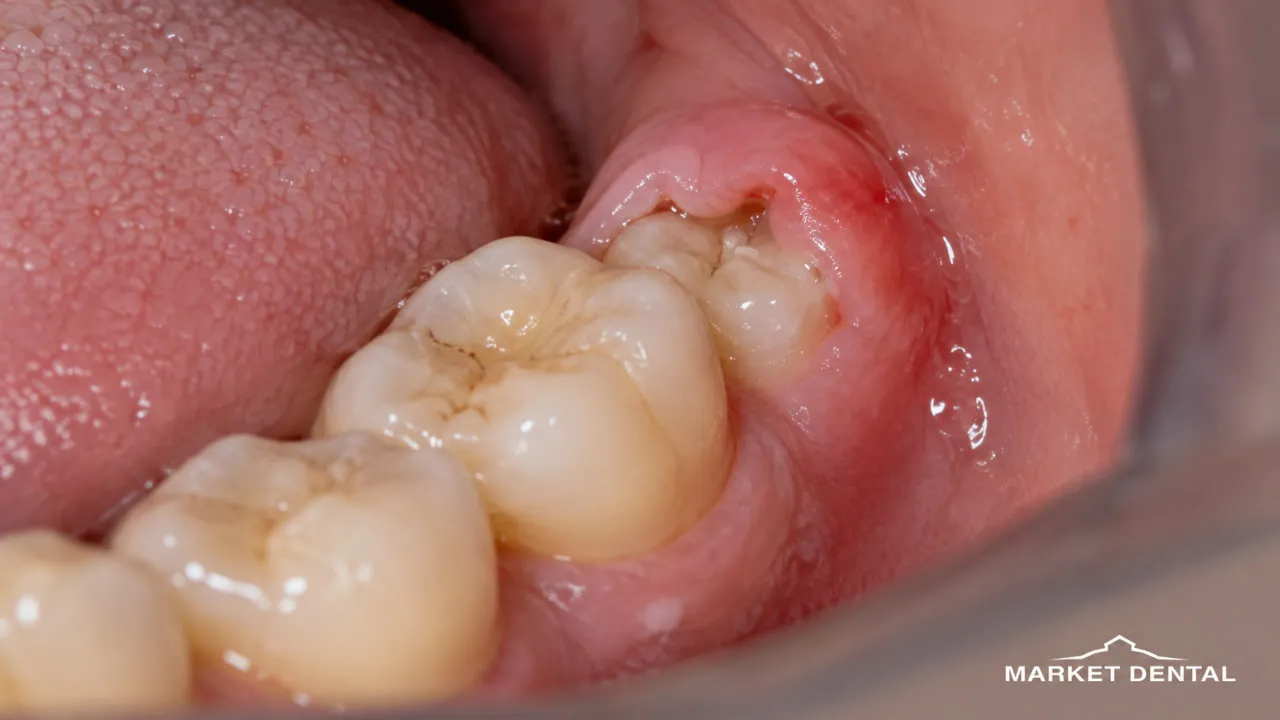
Pericoronitis is inflammation, sometimes accompanied by infection, of the gum around a partly erupted tooth. It most often affects lower wisdom teeth.
Possible symptoms include:
- tenderness behind the last molar
- red or swollen gum tissue
- pain when chewing
- bad breath or an unpleasant taste
- pus or drainage
- reduced mouth opening
- facial swelling in more significant cases
- fever or feeling unwell when infection is more extensive
The severity can vary considerably. Some people experience a mild episode that settles. Others have repeated flare-ups around the same tooth.
Cleveland Clinic's overview of pericoronitis symptoms and treatment also notes that management depends on the severity and the condition of the wisdom tooth.
What Is the Gum Flap Over a Wisdom Tooth?
When only part of a wisdom tooth has erupted, gum tissue can remain over a portion of its crown. This tissue is called an operculum.
Food and plaque can collect around or beneath the flap, where cleaning may be difficult. Once inflamed, the tissue can become tender and swollen.
An opposing upper tooth can sometimes bite against the swollen tissue and add further irritation. A dentist can determine whether that is contributing to the problem.
Having an operculum does not automatically mean the tooth has to be removed.
Mild Irritation, Urgent Dental Problem or Medical Emergency?
Most wisdom tooth problems belong in a dental office. A smaller number develop warning signs that require emergency medical care.
Increasing difficulty opening the mouth can occur as inflammation involves nearby tissues and muscles. There is no reliable finger-width or home measurement that tells you how serious the problem is.
If you are uncertain whether a dental problem is urgent, Market Dental Centre's emergency dental care information can help you decide what symptoms to mention when you call.
How to Get Temporary Wisdom Tooth Pain Relief at Home

Home care is about protecting the area until it can be assessed. It is not a substitute for diagnosis.
- Rinse gently with warm salt water. This can help clear food and soothe irritated gum tissue.
- Keep the area reasonably clean. Use a soft toothbrush gently rather than avoiding the back of the mouth completely.
- Chew on the other side. Give the sore area a break from direct pressure.
- Choose softer foods temporarily. Small hard fragments, seeds and popcorn hulls can become trapped around a partially erupted tooth.
- Use a cold compress externally if swelling is present. Wrap it rather than placing ice directly against the gum.
- Use over-the-counter pain medication only according to the label and only when it is normally safe for you.
- Ask if you are uncertain. A pharmacist, dentist or physician can help if your medications or health history make pain-relief choices less straightforward.
What Should You Avoid?
Do not:
- put aspirin or another tablet directly against the gum
- cut or lift the gum flap yourself
- push toothpicks or metal objects underneath it
- squeeze or puncture swelling
- take leftover antibiotics
- use someone else's prescription
- exceed the labelled dose of pain medication
Aggressive home treatment can injure already inflamed tissue and make professional assessment more difficult.
When Wisdom Tooth Pain Relief at Home Is Not Enough
Temporary measures should not become a way of repeatedly postponing care.
Contact a dentist if:
- pain does not settle
- the problem repeatedly returns
- swelling is increasing
- pus or drainage develops
- you notice a persistent foul taste
- chewing is becoming difficult
- opening your mouth is becoming more difficult
- pain regularly wakes you or prevents sleep
A flare that disappears and then returns every few weeks or months is also useful information for the dentist, even if the area feels normal by the day of the appointment.
How a Dentist Finds the Cause of Wisdom Tooth Pain
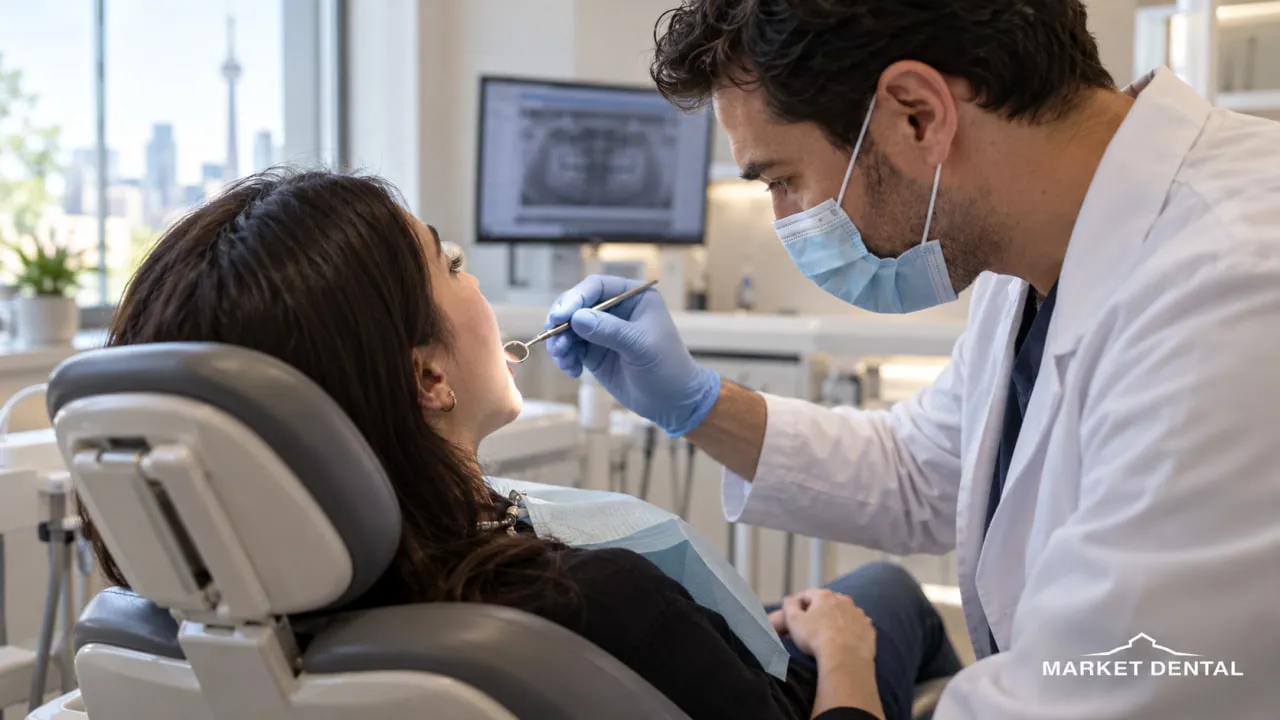
The examination is designed to answer a more useful question than “Is it the wisdom tooth?”
A dentist may assess:
- how far the wisdom tooth has erupted
- its position
- the gum surrounding it
- trapped food or plaque
- swelling or drainage
- decay in the wisdom tooth
- the second molar beside it
- whether an opposing tooth is irritating the gum
- how comfortably the mouth opens
Dental imaging may also be recommended when it would help assess tooth position, decay, neighboring structures or treatment options.
If the wisdom tooth and surrounding gum look healthy, the dentist may investigate another tooth or a jaw-related source instead.
Lasting wisdom tooth pain relief depends on finding the actual cause rather than treating every back-of-the-mouth ache as pericoronitis.
Pericoronitis Treatment Depends on How Localized or Recurrent It Is
There is no single treatment that applies to every case.
The plan depends on how inflamed the area is, whether infection is spreading, the position of the tooth and whether the problem has happened before.
Cleaning and Irrigation
For localized pericoronitis, professional cleaning or irrigation may be used to remove food, plaque and other debris from around the partially erupted tooth.
The dentist may also recommend ways to keep the area cleaner while the inflammation settles.
This is different from assuming that every episode requires antibiotics or extraction.
When Antibiotics May Be Used
Antibiotics are not routine treatment for every localized pericoronitis flare.
They may be considered when there is evidence of spreading infection, systemic symptoms such as fever or feeling significantly unwell, substantial facial swelling, relevant medical risk factors or another clinical indication.
Antibiotics also do not change the position of the tooth or remove a gum flap. If those factors continue to trap plaque and food, additional dental treatment may still need to be discussed.
When Operculectomy May Be Considered
An operculectomy removes the gum flap covering part of the tooth.
It may be considered in selected situations, particularly when the wisdom tooth is positioned so that it may erupt into a functional, cleanable position.
Removing the flap is not appropriate or necessary in every case, and it cannot guarantee that symptoms will never return.
When Wisdom Tooth Removal May Be Considered

Extraction may enter the discussion when:
- pericoronitis repeatedly affects the same tooth
- the tooth is impacted or poorly positioned
- the area is unlikely to become easy to clean
- decay affects the wisdom tooth or neighboring molar
- another clinical reason makes keeping the tooth less appropriate
One episode of inflammation does not automatically mean extraction is required.
If removal is being considered, our wisdom teeth removal page explains the procedure and assessment in more detail.
More complex surgical needs may also involve referral or different treatment planning depending on the tooth and provider. Market Dental Centre's oral surgery page provides broader information about surgical dental care.
Worried About Treatment While Your Wisdom Tooth Hurts?
Pain can make an already stressful dental visit feel harder.
Tell the dental team if you have had difficulty becoming numb before, take medications that may affect treatment or have delayed care because of anxiety.
Local anesthetic and sedation do different jobs. Local anesthetic numbs the treatment area, while sedation is intended to reduce anxiety or awareness.
Which options are appropriate and available depends on the patient's health, procedure and clinical setting. Our guide to dental anxiety and sedation options explains those differences without assuming a particular method will be used.
Getting Wisdom Tooth Pain Assessed in Downtown Toronto
Market Dental Centre is located at 149 Lower Jarvis Street in Downtown Toronto, near St. Lawrence Market.
Current public clinic hours are:
- Monday: 8 AM–5 PM
- Tuesday: 8 AM–5 PM
- Wednesday: 10 AM–7 PM
- Thursday: 8 AM–5 PM
- Friday: 8 AM–5 PM
- Saturday: 9 AM–3 PM
- Sunday: Closed
Opening hours do not mean an urgent appointment is automatically available.
If wisdom tooth pain begins during clinic hours, call (416) 363-4115 before travelling. Describe the pain, swelling, fever, drainage and any difficulty opening your mouth so the team can check current availability and advise on the next step.
What If Wisdom Tooth Pain Starts After the Clinic Is Closed?
Without medical emergency signs, the temporary measures above may provide some wisdom tooth pain relief until you can contact a dental provider.
Localized tooth or gum pain is generally better assessed by a dentist rather than an emergency department. If the problem begins outside Market Dental Centre's hours, contact an available dental service when appropriate or call the clinic after it reopens.
The situation changes if you develop difficulty breathing or swallowing, rapidly spreading facial or neck swelling, difficulty managing saliva or severe illness with spreading swelling. Those symptoms require emergency medical assessment.
Wisdom Tooth Emergency Care, Insurance and CDCP in Ontario
Fees depend on what the visit involves. An examination, dental imaging, local treatment and extraction are different services, and the complexity of a later extraction can also affect cost.
The Ontario Dental Association Suggested Fee Guide is a reference. Dentists are not required to charge the suggested amounts and set their own professional fees.
For private, employer and student dental plans:
- coverage varies by plan
- deductibles and co-insurance can apply
- annual limits may apply
- predetermination can help estimate benefits but does not guarantee final payment
Market Dental Centre offers direct billing and claim support. Direct billing changes how the claim is submitted; it does not determine what the insurer pays.
Market Dental Centre also accepts the Canadian Dental Care Plan. The current CDCP includes eligible oral surgery services such as removal of teeth and roots, but coverage depends on the specific service, program criteria and any applicable preauthorization or co-payment requirements.
Our guide to emergency dental insurance explains these issues in more detail.
Key Takeaways
- Wisdom tooth pain can have several causes, and pericoronitis is only one possibility.
- Pericoronitis commonly develops around a partially erupted tooth where the surrounding gum becomes inflamed.
- Gentle cleaning and other home measures may ease symptoms temporarily but do not diagnose the cause.
- Localized pericoronitis does not automatically require antibiotics.
- Recurrent inflammation may change the discussion about the gum flap or wisdom tooth itself.
- Increasing difficulty opening the mouth deserves prompt dental attention.
- Difficulty breathing or swallowing and rapidly spreading swelling are medical emergency signs.
- For urgent dental concerns, call before travelling to check current appointment availability.
Still Looking for Wisdom Tooth Pain Relief in Downtown Toronto?
If pain at the back of your jaw persists, swelling is increasing or the same area keeps flaring up, a dental examination can help determine whether the cause is pericoronitis, decay, tooth position or another problem.
Market Dental Centre
149 Lower Jarvis Street
Downtown Toronto, near St. Lawrence Market
Phone: (416) 363-4115
Saturday: 9 AM–3 PM
Sunday: Closed
Call first to check current urgent appointment availability. If the problem is stable and does not require immediate attention, you can also request an appointment online.

.webp)


