










Why do my gums bleed when flossing is usually asked after a small but unsettling moment: blood appears on the floss even though the teeth themselves feel fine. Bleeding gums when flossing can happen because inflamed tissue is being cleaned, because the floss is being pushed too forcefully, or because one space has a local problem that keeps getting irritated. A little blood after restarting a neglected routine is different from bleeding that continues every day. The useful clues are the pattern, the technique, and how long it has been happening. Those details help separate a cleaning issue from something that deserves a closer dental look.
Why Do My Gums Bleed When Flossing? Often, the Floss Is Revealing Inflammation
Plaque is a bacterial biofilm that develops on teeth throughout the day. It is easy to miss near the gumline and between teeth, especially in tight spaces. When plaque is not disrupted consistently, the nearby gum tissue can become inflamed and bleed more readily when touched.
That is why, when someone asks why do my gums bleed when flossing, the floss may be exposing inflammation that was already present rather than creating it.
Technique can still cause bleeding. If floss is snapped through a contact or pressed sharply into the gum, it can injure the tissue. Bleeding caused by repeated mechanical irritation may keep occurring in the same location until the technique changes.
Plaque can also mineralize into calculus, or tartar. Once hardened, it cannot be removed with normal brushing or flossing and requires professional removal.
For day-to-day technique between visits, the clinic's home dental care guidance covers brushing and flossing basics.
Does One Spot Bleed, or Do Several Areas Bleed?

The location of the bleeding is useful. Why do my gums bleed when flossing has a different set of likely explanations when only one space reacts every night compared with several areas throughout the mouth.
| Pattern | What May Be Contributing | What Makes Sense Next |
|---|---|---|
| The same space bleeds repeatedly | Localized plaque, food trapping, floss snapping into the tissue, an unusual contact, or a restoration margin | Clean gently and consistently; if it persists, catches floss, or traps food, have the area checked |
| Several spaces bleed | More generalized plaque-related gingival inflammation becomes more plausible | Improve daily interdental cleaning and arrange an assessment if the pattern continues |
| Bleeding happens without brushing or flossing | More significant inflammation, medication effects, or another dental or medical factor may need consideration | Arrange an evaluation, particularly if the bleeding is recurrent or heavy |
| Bleeding began after restarting flossing | Inflamed tissue may be reacting as plaque is removed again | Continue with gentle technique and watch for improvement |
Here is a useful example. Someone flosses every night, but only the space between two back teeth bleeds. The rest of the mouth does not. A dentist may look for missed plaque, food packing, the way those teeth contact each other, or whether a nearby filling or crown is affecting the area. One bleeding site should not automatically be treated as generalized gum disease.
For bleeding that happens outside flossing, Market Dental Centre's broader guide to why gums bleed covers additional causes.
Three Different Reasons Flossing Can Trigger Bleeding
The Gums Are Already Inflamed

Plaque-related gingivitis is a common reason gums bleed with interdental cleaning. The tissue may look swollen or feel tender, although not everyone notices obvious changes before seeing blood.
Periodontitis can also involve bleeding, but it is not simply “worse gingivitis.” It includes loss of the supporting attachment and bone around teeth and requires a periodontal assessment to diagnose.
The Flossing Technique or Local Anatomy Is Irritating the Tissue
Floss should clean the side of each tooth rather than cut into the small triangle of gum between them. Snapping it down, sawing across the tissue, or repeatedly forcing it into one site can create mechanical trauma.
Local conditions can matter too. Food may pack into an open contact. A tight contact may encourage someone to push too hard. A rough restoration margin may catch or shred the floss. These are reasons to examine a consistently troublesome site rather than simply flossing harder.
Another Factor Is Making the Bleeding More Noticeable
Some health and medication factors can influence gum inflammation or bleeding:
- Anticoagulant or antiplatelet medication can make bleeding more noticeable or slower to stop. Do not stop prescribed medication because your gums bleed.
- Pregnancy and other hormonal changes can make gum tissue more responsive to plaque.
- Diabetes is an important risk factor for periodontal disease, but gum bleeding alone does not diagnose diabetes.
- Severe nutritional deficiencies can contribute to bleeding, although they are much less common than plaque-related inflammation.
- Smoking increases periodontal risk and can alter visible signs of inflammation. Evidence around vaping continues to develop.
Bleeding elsewhere in the body, unexplained bruising, or unusually prolonged bleeding deserves medical attention as well as dental evaluation where appropriate.
Should I Keep Flossing If My Gums Bleed?
For mild bleeding that appears after restarting interdental cleaning or around inflamed gums, it usually makes sense to continue cleaning gently rather than stop solely because you saw a little blood. Leaving plaque in place does not give inflamed gums a chance to become healthier.
There are exceptions. Do not repeatedly force floss into a painful site or keep snapping it through a contact that cuts the gum. If one area bleeds heavily, the floss catches or shreds, or the discomfort keeps returning, have the site checked.
A warm saltwater rinse may feel soothing for irritated tissue, but it does not remove calculus or replace interdental cleaning.
How to Floss Without Snapping Into the Gums
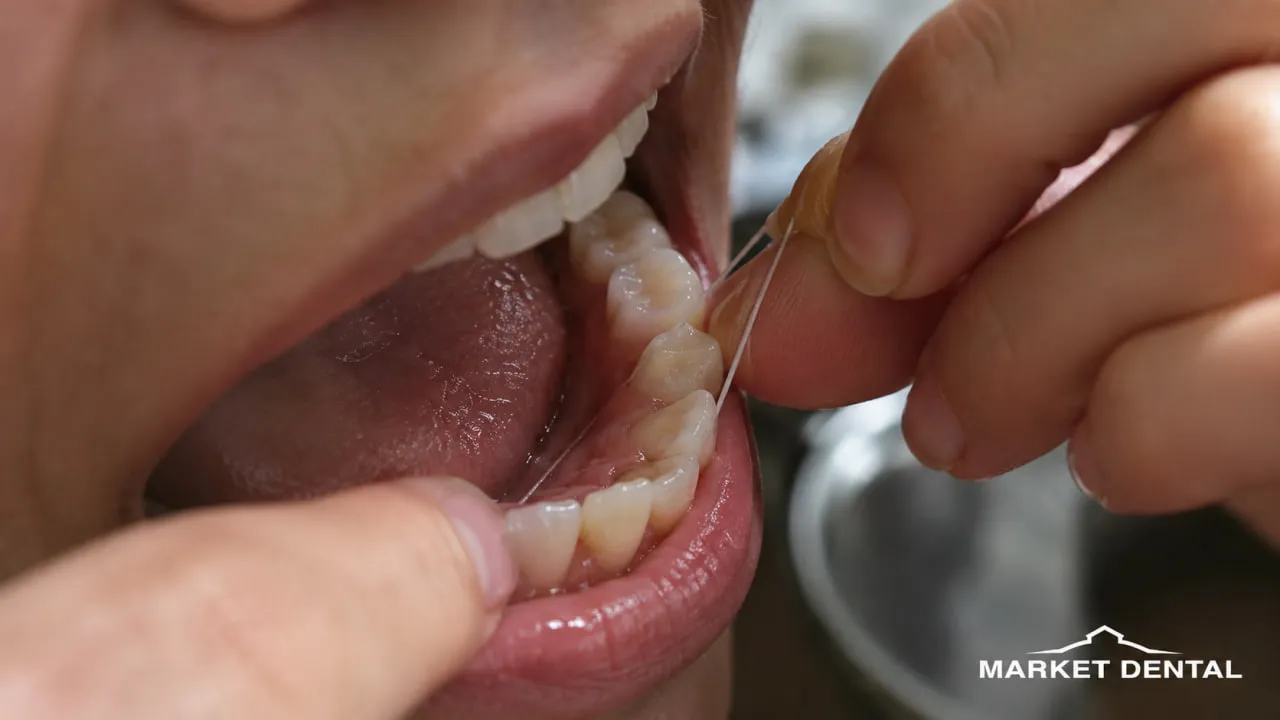
Proper flossing technique is less about pushing deeper and more about cleaning the tooth surface carefully.
- Guide the floss through the contact with a controlled side-to-side motion.
- Curve it around one tooth in a C shape.
- Move it gently up and down against that tooth surface.
- Let the floss pass slightly below the gum margin without forcing it into the tissue.
- Curve it around the neighboring tooth and repeat.
- Move to a clean section before the next space.
The Canadian Dental Association's flossing guidance also describes curving floss around each tooth rather than snapping it into the gums.
Technique is part of why do my gums bleed when flossing, especially when someone cleans every day but repeatedly traumatizes the same small area.
What If String Floss Is Difficult?
String floss is only one interdental tool.
Interdental brushes may work well when spaces are large enough to accommodate the correct size without force. They are often useful around areas where string floss is difficult to control.
Water flossers can be helpful around orthodontic appliances, bridges, implants, or for people who struggle with string floss. The best tool depends on tooth spacing, restorations, dexterity, and the areas that actually need cleaning.
What Should Change Over the Next Week or Two?

There is no reliable day-by-day timetable for every mouth.
During the first several days, mild bleeding may continue when someone restarts gentle daily interdental cleaning.
Around a week, plaque-related inflammation may begin to improve if the area is being cleaned effectively and there is no untreated local or periodontal problem.
By one to two weeks, frequent bleeding that is not improving deserves a dental assessment. Persistence does not prove that you have periodontitis or tartar below the gumline. It simply means the pattern has not settled with home care alone.
Gingivitis and Periodontitis Are Not the Same Problem
Bleeding can occur with either condition, so blood on floss cannot tell you which one is present.
| Feature | Gingivitis | Periodontitis |
|---|---|---|
| Tissues involved | Gum tissue | Gums plus the supporting attachment and bone |
| Attachment or bone loss | Not present from gingivitis itself | Present to varying degrees |
| Bleeding/inflammation | Common | Can occur |
| Tooth stability | Usually unchanged | May change as support is lost |
| Treatment goal | Control plaque and inflammation | Control disease and limit further loss of support |
| Reversibility | Generally reversible with effective plaque control and appropriate care because attachment has not been lost | Lost attachment or bone does not simply return to its original state, but disease can often be managed |
Periodontal diagnosis uses more than pocket depth. A clinician may consider probing measurements, bleeding on probing, attachment levels, recession, mobility, plaque and calculus, and bone levels on dental imaging when imaging is indicated.
Gum color is not a reliable shortcut either. Healthy gums can have a wide range of natural pigmentation.
When Bleeding Needs More Than a Technique Change
A dental appointment is worth arranging when you notice:
- bleeding that remains frequent after one to two weeks of gentle, consistent interdental cleaning
- the same spot bleeding every time
- spontaneous gum bleeding
- pus or drainage
- persistent bad breath or an unpleasant taste
- gum recession
- an adult tooth becoming loose or shifting
- increasing pain or swelling
Some situations need faster attention. Significant facial swelling, difficulty breathing or swallowing, uncontrolled bleeding, or feeling systemically unwell with a spreading oral infection may require urgent dental or medical care.
Most cases of bleeding gums when flossing are not emergencies. Persistent bleeding still deserves an explanation.
If You Floss Every Day and Still Bleed, What Can a Dental Exam Check?
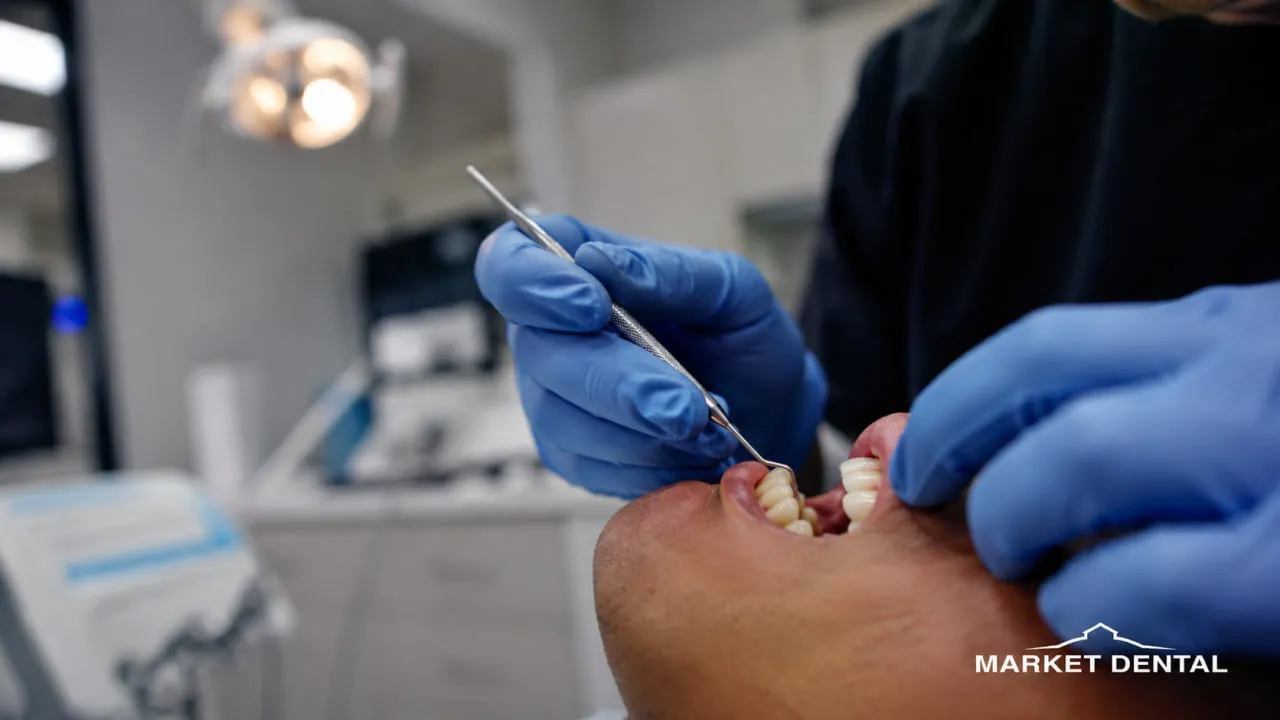
This is often the most frustrating version of why do my gums bleed when flossing: the routine is already consistent, but the blood never fully stops.
A dental professional may check:
- plaque and calculus above and below the gumline
- whether one site traps food
- how neighboring teeth contact
- whether a filling or crown margin is affecting cleaning
- the pattern of gum inflammation
- periodontal probing and attachment levels
- gum recession and tooth mobility
- relevant medical conditions and medications
- whether dental imaging is clinically useful
A general dental examination can help determine whether the problem is mainly local, plaque-related, periodontal, or something else.
Routine Cleaning or Periodontal Treatment?
A professional dental cleaning may be appropriate when plaque and calculus need to be removed and the periodontal findings do not call for deeper therapy.
Scaling and root planing or other gum disease treatment may be considered when the periodontal assessment supports it. Bleeding alone is not enough to decide that someone needs a “deep cleaning.”
Does Insurance Cover Gum Treatment in Ontario?
Dental benefits for cleanings, scaling, periodontal treatment, and root planing vary between Ontario plans. The amount a plan pays can depend on procedure codes, scaling units, frequency limits, deductibles, co-insurance, annual maximums, documentation requirements, and exclusions.
For planned periodontal treatment, a predetermination may help estimate expected benefits. It is not a guarantee of final payment.
Market Dental Centre may assist with claim submission according to the patient's plan, but direct billing does not determine what an insurer covers. The clinic's dental insurance information provides additional context.
Still Seeing Blood on the Floss? Getting Your Gums Checked in Downtown Toronto

Market Dental Centre is located at 149 Lower Jarvis Street in Downtown Toronto, Ontario, near St. Lawrence Market. The clinic provides general dentistry, dental cleanings, and gum disease care.
For Toronto patients asking why do my gums bleed when flossing, the appropriate starting point may be a routine examination, a professional cleaning, or a periodontal evaluation depending on the pattern and clinical findings.
The Downtown Toronto location may be practical for people who live nearby, work in the downtown core, or spend part of their day around St. Lawrence Market or Old Town Toronto. If you call (416) 363-4115, describe whether the bleeding happens in one space or several and how long it has been occurring.
Key Takeaways
- Floss can reveal tissue that is already inflamed; it is not always the cause of the bleeding.
- Snapping or forcing floss can create mechanical irritation of its own.
- Bleeding in one repeated location may point toward a local cleaning, contact, food-trapping, or restoration issue.
- Bleeding across several areas can fit plaque-related gingivitis, but blood alone does not diagnose gum disease.
- Mild bleeding after restarting interdental cleaning often does not mean you should abandon cleaning altogether.
- Persistent or spontaneous bleeding deserves assessment.
- Calculus cannot be removed with normal home flossing or brushing.
Still Bleeding When You Floss? Find Out What the Pattern Is Telling You
If you're still asking why do my gums bleed when flossing after gentle, consistent interdental cleaning, or the same space keeps bleeding, a dental assessment can help determine whether technique, plaque, calculus, a local contact or restoration, gingivitis, periodontitis, or another factor is involved.
Market Dental Centre is at 149 Lower Jarvis Street in Toronto. Call (416) 363-4115 or request an appointment online and mention where the bleeding occurs and how long it has been happening.

.webp)


