









Cracked tooth symptoms vs cavity can be difficult to sort out at home because one sore tooth can react in several ways. You may feel a quick jolt while chewing, sensitivity to cold water, an ache after something sweet, or pain that disappears for a day and returns at dinner. The tooth may still look completely normal in the mirror. Those patterns can give a dentist useful clues, but they cannot confirm the cause on their own because decay, cracks, failing restorations, and pulp inflammation can overlap. The most useful thing you can do before an appointment is notice what starts the pain, how long it lasts, and how consistently it returns.
Build a Symptom Fingerprint Before You Try to Name the Problem
When comparing cracked tooth symptoms vs cavity, describe the symptom before trying to diagnose it. Four details are especially useful:
- Trigger: What starts it: chewing, releasing a bite, cold, heat, sweets, or nothing obvious?
- Timing: Does the sensation stop quickly, or continue after the trigger is gone?
- Consistency: Does the same food or bite cause it every time, or only at certain angles?
- Context: Is there a large filling, food trapping, a rough edge, recent dental work, or a recent impact?
These details are more useful to a dentist than a pain score by itself.
Cracked Tooth Symptoms vs Cavity: Start With the Trigger, Not the Pain Score
The trigger can make one cause more suspicious than another, but no single trigger proves the diagnosis.
Pain When You Bite or Release Pressure

Sharp, intermittent pain with chewing, especially when pressure is released, can raise suspicion for a crack.
The American Association of Endodontists describes erratic chewing pain and pain on release of biting pressure among possible cracked-tooth symptoms.
Bite pain is not exclusive to a fracture. Deep decay, a failing restoration, inflammation inside the pulp or around the root, and bite-related problems can also make chewing uncomfortable.
A useful description would be: “One back tooth gives me a quick jolt when I release a bite on something firm.” That tells the dentist much more than simply saying the tooth hurts.
Cold, Heat or Sweet Sensitivity

Decay can make a tooth sensitive to cold or sweet foods as the affected area reaches dentin and begins irritating tissues deeper in the tooth.
A crack can also cause temperature sensitivity. Exposed root surfaces, worn enamel, gum recession, and other dental conditions can produce similar reactions.
Cold sensitivity therefore does not automatically mean a cavity, and it does not rule out a crack.
Pain That Lingers or Starts Without a Trigger
Pain that continues after a hot or cold trigger is gone, begins spontaneously, or wakes you at night can raise concern about more significant pulp inflammation.
That information tells the dentist more about how the pulp is responding than about whether the original problem was decay or a fracture.
A crack and a deep cavity can both eventually affect the pulp.
Timing and Consistency Add Important Clues
What happens after the trigger can be just as useful as what started it.
How Long Does the Pain Last?
Describe the response in ordinary language: “gone almost immediately,” “lingers for a while,” or “turns into a dull ache.”
Avoid trying to diagnose pulp inflammation by counting seconds. One home cold test cannot establish the condition of the pulp.
Does the Same Trigger Cause the Same Pain?
A crack can be frustratingly inconsistent. One bite hurts, the next does not, or the tooth reacts only when pressure lands on a particular part of the chewing surface.
Decay-related sensitivity can also come and go, especially earlier in the disease process.
What matters most is whether a recognizable pattern keeps returning or changes over time.
Context Around the Tooth Can Shift the Suspicion
A tooth with a large existing restoration has less remaining natural structure than an untouched tooth. Repeated chewing forces, clenching, wear, trauma, and the condition of the remaining cusps can all matter when a dentist assesses fracture risk.
Dental caries follows a different process. It is a biofilm-mediated disease influenced by factors such as repeated exposure to fermentable carbohydrates, plaque, saliva, fluoride exposure, and individual risk.
Acid erosion is different from dental caries, although erosion can also leave teeth sensitive.
For a deeper explanation of fracture types, general warning signs, and emergency concerns, see Market Dental Centre's full guide to cracked tooth symptoms.
Cracked Tooth Symptoms vs Cavity: Quick Comparison
This is the central point in cracked tooth symptoms vs cavity: symptom patterns can guide the examination, but they should not be used as a home diagnosis.
A Tooth Can Have Both Decay and a Crack
Yes. A tooth does not have to fit neatly into one category.
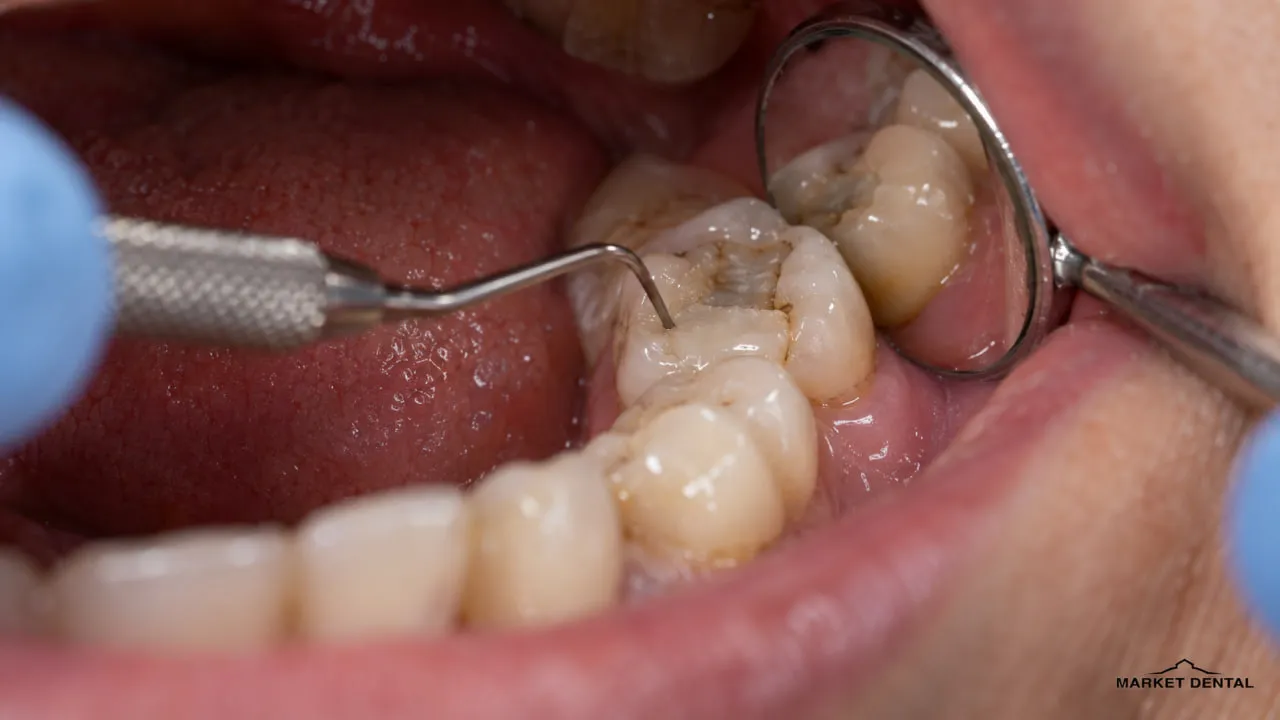
A tooth with an existing restoration can develop recurrent decay, deterioration around the restoration, a structural crack, and pulp inflammation at the same time.
That can create a mixed pattern. The tooth may react to cold or sweets and also hurt during a particular bite.
This overlap is one reason an examination matters more than matching yourself to a symptom checklist.
When the Tooth Looks Normal, the Dentist Tests the Pattern
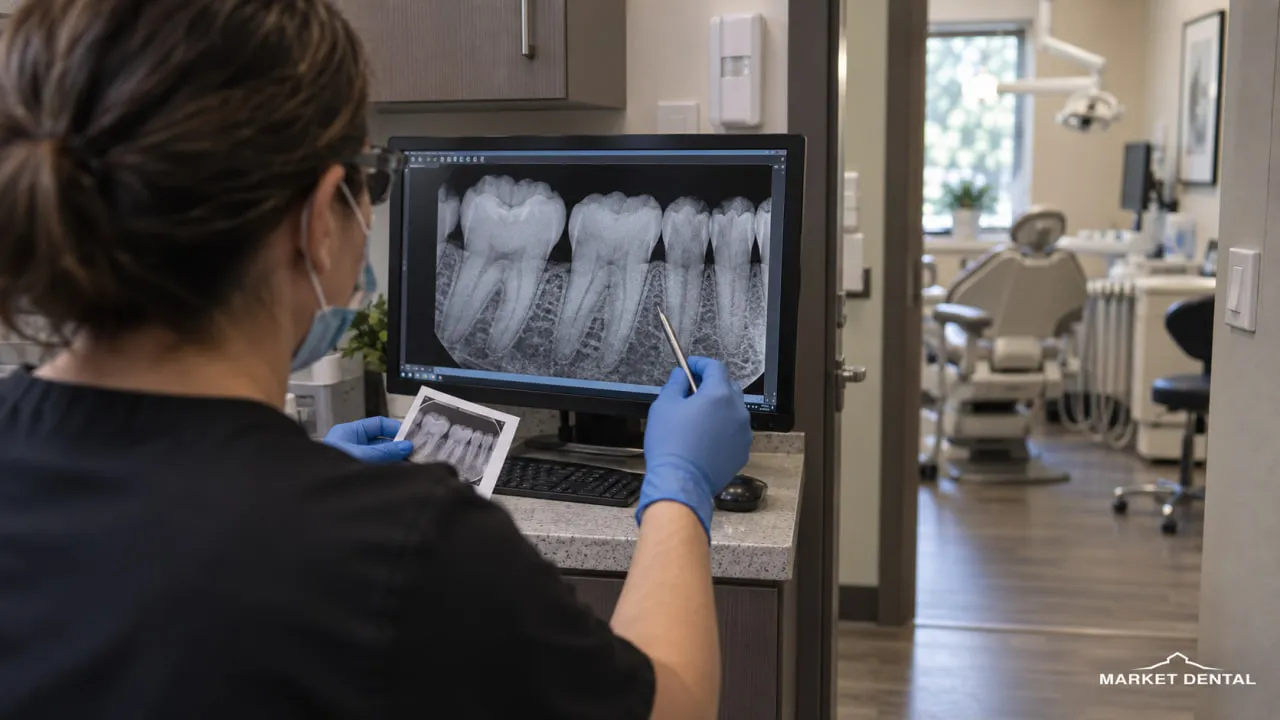
A dentist evaluates cracked tooth symptoms vs cavity by combining your symptom history with clinical findings and imaging when appropriate.
What Helps Identify Decay
The dentist may use visual and tactile examination, dental radiographs where indicated, inspection around existing restorations, and pulp testing when symptoms suggest deeper involvement.
Early decay can cause no pain at all.
Decay between teeth may also be impossible to see in a mirror, which is one reason bitewing X-rays can be useful.
What Helps Identify a Crack
Depending on the case, a dentist may use targeted bite testing, magnification, transillumination, periodontal probing, pulp sensibility testing, and dental radiographs.
Fine fractures may not appear directly on standard X-rays.
In selected complex cases, three-dimensional imaging may provide additional information about surrounding structures or indirect findings. It still does not detect every crack.
Why the Diagnosis Changes the Treatment
Treatment depends on what the dentist finds, how much healthy tooth structure remains, and whether the pulp has been affected.
If the Problem Is Limited Decay
A smaller area of decay may be treated with a dental filling after the affected tooth structure is removed and the area is restored.
Market Dental Centre's dental fillings page explains this treatment in more detail.
Larger areas of structural loss may need a different restorative approach based on the location and amount of healthy tooth that remains.
If the Tooth Is Structurally Cracked
A crack is treated according to its location, depth, the cusps involved, remaining tooth structure, and the condition of the pulp.
Some teeth may need a restoration that protects weakened cusps. Others may require a crown or another form of restorative coverage.
If the fracture makes the tooth non-restorable, extraction may need to be discussed.
If the Pulp Is Involved
Root canal therapy may be considered when the pulp is irreversibly inflamed or infected and the tooth can still be restored.
A root canal is not automatically required for every crack or deep cavity.
The pulp diagnosis and the restorability of the tooth need to be considered together.
When Tooth Pain Needs Prompt or Urgent Attention

Arrange a dental assessment when the same tooth repeatedly hurts with chewing, sensitivity is becoming stronger, a tooth is visibly broken, a restoration has come out, or localized swelling or drainage develops.
Rapidly spreading swelling of the face or neck, difficulty breathing or swallowing, or feeling seriously unwell with spreading swelling requires urgent medical attention.
Some cracks can progress, but symptoms cannot predict exactly how or when that will happen.
If you are unsure how urgent the problem is, Market Dental Centre's emergency dental care information explains the types of dental problems that may need more immediate attention.
Not Sure Whether It Is a Crack or a Cavity? Start With an Exam in Downtown Toronto
You do not need to settle cracked tooth symptoms vs cavity before booking an appointment. The purpose of the examination is to determine whether the source is decay, a fracture, a failing restoration, pulp inflammation, or another dental problem.
Before the visit, note:
- what triggers the pain
- whether it hurts on biting, release, or both
- whether temperature sensitivity stops quickly or lingers
- whether the tooth aches without a trigger
- whether food catches around it
- whether there is an existing filling or crown
- whether there has been recent trauma, swelling, or drainage
A general dental examination can then guide appropriate testing and the next step.
Market Dental Centre is located at 149 Lower Jarvis Street in Downtown Toronto, Ontario, near St. Lawrence Market, serving patients from the surrounding Toronto area.
Key Takeaways
- Pain on biting or release can raise suspicion for a crack, but it does not prove one.
- Cold and sweet sensitivity can occur with decay, but cracks and other dental problems can cause sensitivity too.
- Lingering or spontaneous pain may say more about pulp inflammation than the original cause.
- Early cavities can exist without pain or a visible hole.
- Fine cracks may not appear directly on standard dental X-rays.
- A tooth can have both decay and a crack.
- Treatment depends on clinical findings, not symptom matching alone.
- Spreading swelling or difficulty breathing or swallowing changes the urgency.
You Do Not Need to Know Whether It Is a Crack or a Cavity Before You Book
If one tooth repeatedly reacts to chewing, cold, sweets, or starts aching without a clear trigger, an examination can determine what is causing the problem.
For cracked tooth symptoms vs cavity, the most useful information is what starts the pain, how long it lasts, and whether the pattern is changing.
Market Dental Centre is located at 149 Lower Jarvis Street in Downtown Toronto, Ontario, near St. Lawrence Market.
Call (416) 363-4115 or request a dental assessment.

.webp)


