



Dental Veneers in Downtown Toronto: Porcelain & Composite Options
Sometimes the concern is small and specific. One front tooth may look a shade darker than its neighbors, an edge may be chipped, or a small space may keep drawing your attention. Details like these can feel personal even when they seem minor to someone else. Dental veneers are thin restorations placed over the visible surface of selected teeth. Depending on the teeth involved and what you would like to change, veneers can be considered for certain concerns involving color, shape, proportion, chipped edges or small spaces. Market Dental Centre is a general dental practice in Downtown Toronto near St. Lawrence Market, where porcelain veneers and composite veneers can be discussed. An examination and a conversation about your goals can help determine whether veneers suit your teeth or another treatment may make more sense.

What Are Dental Veneers?
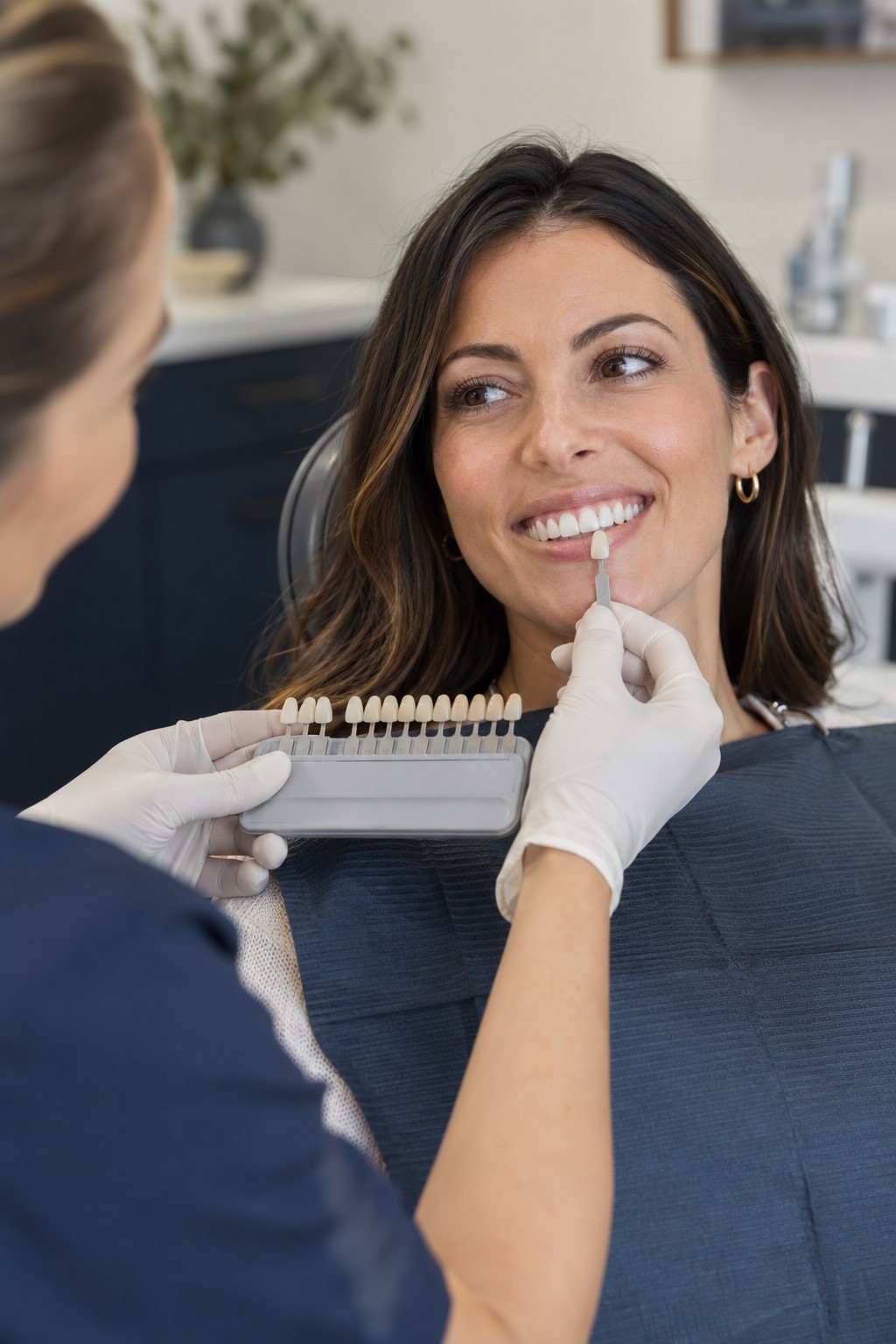
A veneer covers mainly the visible front surface of a tooth, and sometimes part of the biting edge, rather than surrounding more of the tooth the way a crown does. By changing that visible surface, a veneer can alter features such as color, contour, shape and proportion while the underlying tooth remains in place.
Veneers are one option for selected cosmetic concerns, not a solution for every appearance-related issue.
Dental veneers generally fall into two categories. Porcelain veneers are indirect restorations, meaning they are fabricated outside the mouth before being bonded to the tooth. Composite veneers use tooth-colored composite resin that is applied and shaped directly on the tooth.
A common concern is whether veneers always require extensive tooth reduction. They do not, but some preparation may be needed. Certain cases involve relatively limited reshaping, while others require more, depending on tooth position, existing shape, previous dental work and the planned result.
Suitability matters too. Decay, gum health, bite and the structural condition of the tooth are considered before veneers are recommended, and another treatment may sometimes be more appropriate.
Veneers vs. Dental Crowns vs. Orthodontic Treatment: What Is the Difference?
Two cosmetic concerns can look alike in a photo and still lead to quite different recommendations. That is because dental veneers, crowns and orthodontic treatment each work on a different part of the problem.

Veneers Change the Visible Surface
A veneer sits mainly on the front of a selected tooth and changes its visible surface, including color, shape, proportion and, in some cases, the appearance of a small space or mild positional irregularity.
The tooth itself is not moved, so veneers do not change root position. Not every tooth is suitable for this type of cosmetic change.

Crowns Cover More of the Tooth
When a tooth has larger existing restorations, significant damage or other structural concerns, broader restorative coverage may be more relevant than a veneer. A crown covers more of the tooth above the gumline.
Options such as custom porcelain crowns can be discussed when that level of coverage makes sense, although a crown is not automatically required after every large filling, fracture or root canal.

Orthodontic Treatment Moves Teeth
Rather than covering a tooth, orthodontic treatment changes tooth position by moving teeth over time, using approaches such as braces or clear aligners. More noticeable crowding, spacing, rotations or bite concerns may make an orthodontic assessment more relevant than changing only the visible tooth surface.
When weighing veneers vs. crowns or orthodontic care, the visible concern is only part of the picture. Tooth health, existing dental work, position, bite and treatment goals all influence the recommendation made after an examination. In some cases, more than one approach may be worth discussing.
Porcelain Veneers vs. Composite Veneers: How Do They Compare?
Porcelain veneers vs. composite veneers is less about which one is better and more about which approach suits the teeth involved and the change being considered. The table below highlights the practical differences.

How Much Do Dental Veneers Cost in Toronto?
Based on your treatment plan
Estimate after an examination
Knowing the likely fee is a reasonable part of deciding on treatment. When people research dental veneers cost in Toronto, they often find single per-tooth prices, but the fee for an individual treatment plan depends on several factors.
Veneer type matters, since porcelain and composite veneers involve different fabrication and treatment processes. A single veneer for one chipped or darker tooth is a different plan from veneers across several visible teeth. Tooth position, existing dental work, preparation needs and overall complexity can also influence the fee. Porcelain generally includes a fabrication stage outside the mouth, and if decay, gum concerns or other dental issues need attention before cosmetic treatment, that care can affect the overall plan too. A useful veneer treatment estimate generally follows an examination and treatment planning.
Does Insurance Cover Dental Veneers?
Depends on your plan
Direct billing where applicable
Insurance coverage for veneers depends on your individual plan, the reason for treatment, applicable procedure codes and other plan terms. When treatment is primarily cosmetic, coverage may be limited or unavailable under some plans.
Market Dental Centre offers direct insurance billing where applicable. A predetermination may help estimate expected benefits, but it does not guarantee reimbursement.
How Long Do Dental Veneers Last?
No fixed lifespan
Care and habits matter
Longevity varies with bite forces, habits, oral care and the condition of the underlying tooth, for both porcelain and composite veneers.
Porcelain chips or fractures may require repair or replacement depending on the extent of the damage. With composite veneers, some areas can be repaired or refinished, although not every problem is repairable. In both cases, natural teeth, margins and surrounding tissues still require routine care.
What Happens During Veneer Treatment?
Veneer treatment is planned around the condition of your teeth and what you would like to change, so the process is not identical for everyone. Porcelain and composite veneers also differ at certain stages.
1. Examining the Teeth and Discussing Goals
Planning begins by checking whether the teeth and surrounding tissues are suitable for cosmetic treatment. A comprehensive dental examination can include the teeth, existing restorations, gums and, where relevant, the bite.
Dental imaging may also be used when clinically appropriate. Your appearance-related goals help guide the discussion that follows.
2. Planning Shape, Shade and Treatment Extent
The next step is deciding which teeth are involved and what changes in color, shape or proportion are being considered. The relationship between the planned veneers and neighboring teeth also matters.
If the gumline affects the overall appearance, cosmetic gum contouring may sometimes be discussed as a separate or complementary option.
3. Preparing the Teeth When Needed
Veneer preparation varies by case. Some teeth need limited reshaping, others require more, and certain composite cases may need relatively little.
Tooth position, existing shape, previous dental work, veneer type and the planned result can all influence preparation. Anesthesia needs also vary with the treatment.
4. Creating, Placing and Finishing the Veneers
This is where the two approaches differ most. Porcelain veneers are generally fabricated outside the mouth, and temporary restorations may be used in some cases. Composite veneers are built up from composite resin and shaped directly on the tooth, without a separate fabrication stage.
During final placement, a porcelain veneer is fitted and bonded, while composite is shaped, finished and polished in place. Fit, contour, appearance and the bite are checked where relevant, and adjustments may be made before treatment is completed.
What Can Dental Veneers Change?
Selected Tooth Discoloration
Cosmetic veneers change the visible surface of a tooth, which helps define both what they can address and where their limits are. The cause and depth of tooth discoloration matter. Some color concerns may respond to professional teeth whitening, while others lead to a discussion about veneers or another option.
A veneer can sometimes mask underlying color, although darker or more complex discoloration can be more difficult to manage predictably.
Small Spaces Between Teeth
By changing the visible width or contour of neighboring teeth, veneers for gaps may reduce the appearance of selected small spaces.
Tooth proportions, bite and gum health all influence whether this approach makes sense, since closing a space cosmetically also changes the shape of the teeth involved.
Chipped or Worn Edges
Limited chipping or cosmetic wear along front edges is one reason people ask about veneers for chipped teeth.
A significant fracture, suspected crack, active decay, pain or structural weakness needs clinical assessment first. In those situations, the most appropriate treatment may not be cosmetic.
Uneven, Misshapen or Slightly Misaligned Teeth
Teeth that are uneven in length, irregular in contour or naturally small can sometimes be reshaped visually with veneers. The aim is to create proportions that fit the surrounding teeth rather than force exact symmetry.
A veneer can also change the visible contour of a selected tooth, so a mildly rotated or set-back tooth may appear more aligned with its neighbors. It does not move the tooth or its root. More significant crowding, bite problems or tooth-position concerns may be better assessed for orthodontic treatment.
How to Care for Dental Veneers
Dental veneer care looks a lot like caring for natural teeth, with some extra attention to the restoration edges and everyday habits.
Regular dental visits are also part of veneer maintenance because the surrounding teeth and gums still need routine care.

Why Consider Market Dental Centre for Dental Veneers in Downtown Toronto?

If you are considering dental veneers in Downtown Toronto, a few practical details may help you decide where to start.
Downtown location. Market Dental Centre is a general dental practice at 149 Lower Jarvis Street, near St. Lawrence Market in Old Town Toronto. For people who live, work or study nearby, the location can make planning a consultation more straightforward.
Options can be compared before deciding. Porcelain veneers and composite veneers can both be discussed, along with other options when they may suit the concern better, such as whitening, bonding or orthodontic treatment. A veneer is not automatically the right choice simply because a tooth looks different.
Practical scheduling and billing support. The clinic offers weekday and Saturday hours, which provides some flexibility when planning visits around work, school or other commitments. Direct insurance billing is available where applicable.
Frequently Asked Questions About Dental Veneers
Still unsure after reading? Bring the question to your consultation.
Are Dental Veneers Permanent or Reversible?
Will Porcelain Veneers Look Fake or Bulky?
Does Getting Dental Veneers Hurt?
Can Porcelain Veneers Stain?
How Many Veneers Do I Need?
What Should I Do If a Veneer Chips or Comes Loose?
Do Veneers Move Crooked Teeth?
Thinking About Dental Veneers in Downtown Toronto?
You do not need to choose between porcelain veneers and composite veneers before you contact the clinic, or even be sure veneers are the right option. It is enough to know which tooth or detail has been on your mind. To discuss dental veneers in Downtown Toronto, contact Market Dental Centre, a general dental practice near St. Lawrence Market. A visit can clarify the condition of your teeth, whether veneers may suit your concern and which other options are worth comparing. From there, you can decide how you would like to proceed.
Request a Dental Veneers Consultation
We’ll follow up to confirm a time and answer your questions.
Please do not include sensitive medical information. This form is for appointment requests only.
