









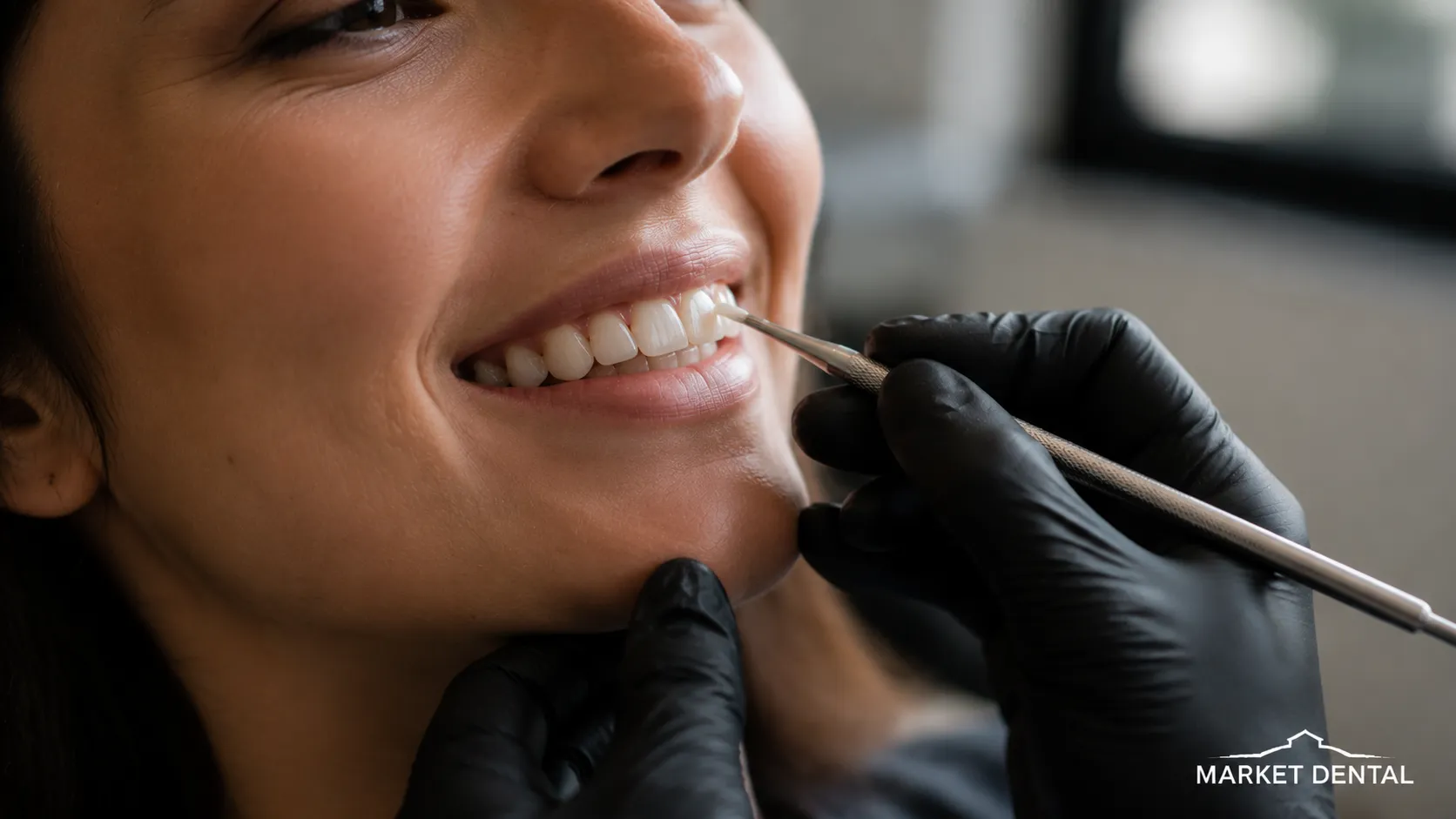
Dental bonding vs veneers is often the comparison people make when weighing composite bonding against porcelain veneers for a chipped edge, a small gap, uneven front teeth, or a color difference that whitening did not solve. At first, the choice can look simple: add composite resin or cover the tooth with porcelain. In practice, the more useful question is how much change the tooth actually needs. A one-corner repair is very different from changing the shape and shade of several front teeth. The amount of healthy enamel available, your bite, maintenance expectations, and budget can all shift the recommendation. Understanding those trade-offs before treatment makes the decision far easier to evaluate.
Dental Bonding vs Veneers: The Difference Is More Than Price
Dental bonding and veneers overlap in what they can improve, but they do not ask the same thing of a tooth.
Dental bonding usually adds tooth-colored composite resin to a limited area. It may rebuild a chipped corner, change an edge, close a modest space, or mask a localized color concern. Because the dentist is adding material rather than covering the entire visible surface, treatment can often be conservative.
Composite veneers use the same broad family of resin materials, but the composite is applied across much more of the front surface. That makes a wider change in shape or color possible.
Porcelain veneers are custom ceramic restorations bonded to the front of selected teeth. They generally involve more planning and a greater long-term commitment because some enamel is commonly prepared to create space and support the restoration.
There is no useful “winner” without first defining the problem.
Three Options, Three Different Levels of Tooth Coverage
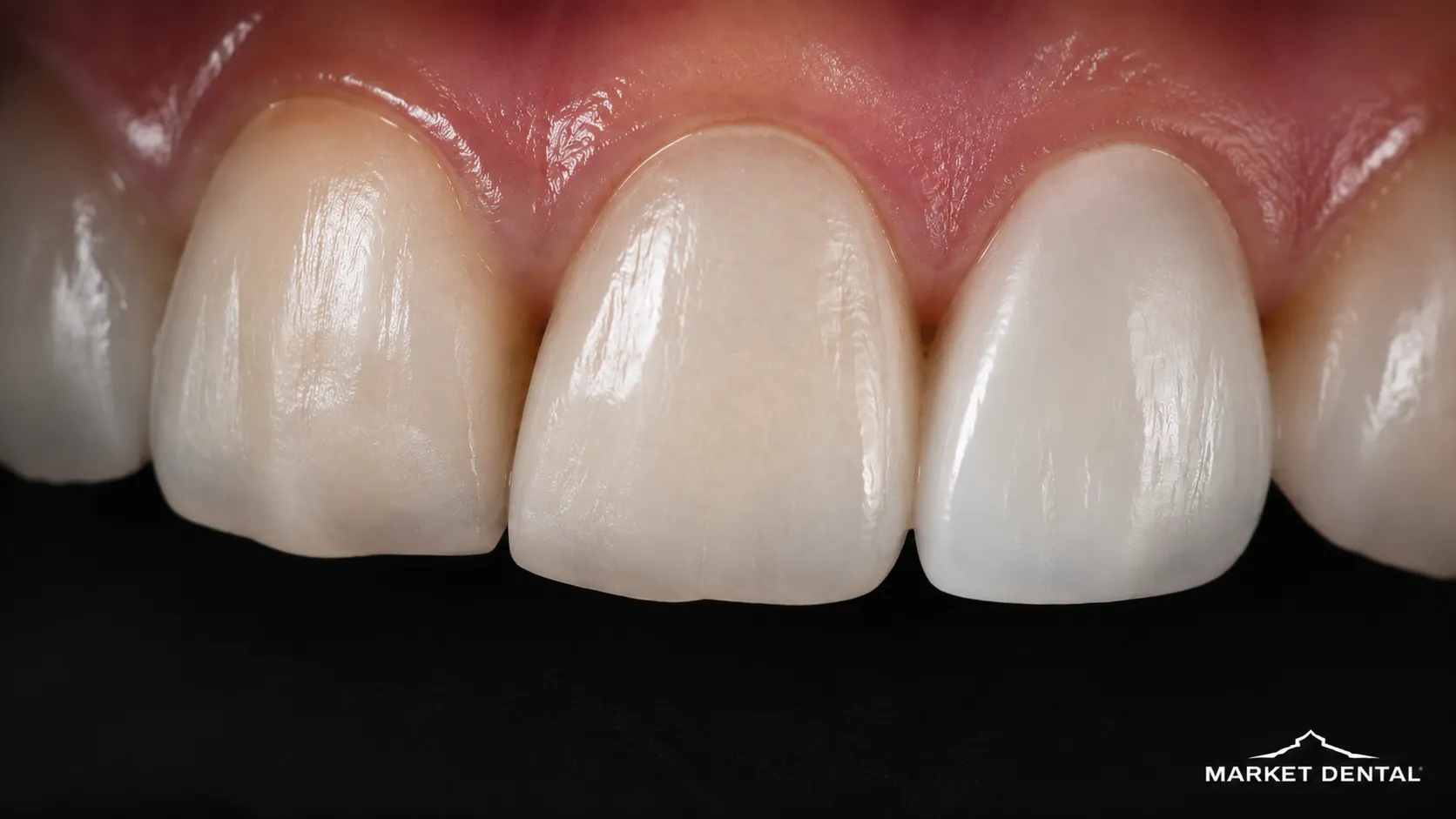
Dental Bonding: A Targeted Addition
Direct bonding is often considered when the change is small and localized. The dentist selects a composite shade, prepares the surface for adhesion, places and shapes the resin, cures it with a light, then checks the contour and bite.
It may be considered for:
- a minor chip on one front tooth
- mild edge wear
- a small space between teeth
- modest reshaping
- a localized area of discoloration
- repair of an existing composite restoration
Limited bonding can often be completed in one appointment, although treatment time depends on the number of teeth and the amount of reshaping required.
Bonding is usually more conservative than porcelain veneers, but “no tooth preparation” should not be treated as a guarantee. Some cases need slight contouring, and the enamel surface is conditioned so the resin can bond.
Composite Veneers: More Surface, Same Material Family
A composite veneer covers most or all of the visible front surface of a tooth rather than one small area. It can be built directly in the mouth, and some systems also use indirect fabrication.
This broader coverage can make sense when several aspects of a tooth need to change together, such as width, contour, surface texture, or shade. Because the material is composite resin, it remains more susceptible than porcelain to wear and discoloration over time.
Direct composite veneers may also be easier to repair locally if an edge chips. Preparation requirements and treatment time vary by case.
Porcelain Veneers: A Custom Ceramic Restoration
Porcelain veneers are thin ceramic restorations made for the front surface of selected teeth. Treatment usually involves assessment, shade and shape planning, preparation where needed, an impression or digital scan, laboratory fabrication, try-in, and final bonding. Temporary restorations may be used in some cases.
Porcelain generally resists surface staining better than composite resin and can reproduce enamel-like optical properties. Appearance still depends on the tooth underneath, the ceramic selected, shade planning, proportions, surface texture, and how the restoration relates to nearby natural teeth.
The Canadian Dental Association's overview of bonding and veneers also distinguishes bonding from veneers by the amount of tooth surface involved and notes that porcelain veneers generally last longer than composite resin veneers.
Dental Bonding vs Veneers at a Glance
The table is a comparison tool, not a treatment prescription. Tooth condition and bite still matter.
Five Questions That Matter More Than “Which One Is Better?”
1. Are You Fixing One Small Area or Changing Several Front Teeth?
A small chip does not automatically justify covering the entire front of a healthy tooth. If most of the enamel is intact and the goal is simply to rebuild one corner, bonding may be the more proportionate option.
The calculation changes when several teeth need coordinated changes in contour, width, length, or shade. Broader composite treatment or porcelain veneers may enter the discussion because they can alter more of the visible surface.
2. How Much Natural Enamel Do You Want to Preserve?

This is one of the most important differences in dental bonding vs veneers.
Bonding often involves little removal of healthy tooth structure. Porcelain veneers commonly require some enamel preparation to create room for the ceramic and support a natural contour.
Once enamel has been removed, the tooth cannot simply return to its untouched starting point. Future maintenance of a prepared tooth usually involves some form of restoration.
That does not make veneers inappropriate. It makes informed consent especially important.
3. How Important Is Long-Term Color Stability?

Composite resin can change color over time, particularly with repeated exposure to coffee, tea, tobacco, and other strong pigments. Surface polishing may improve some discoloration, but composite does not behave like natural enamel or glazed ceramic.
Porcelain generally resists surface staining better. That can matter to someone seeking a consistent shade across several visible teeth.
Neither material eliminates the need for good oral hygiene, and neither changes the color of surrounding natural teeth.
4. How Much Maintenance Are You Comfortable With?
Bonding can chip, wear, lose surface polish, or need reshaping. One advantage is that a localized composite defect can often be repaired without replacing the entire restoration.
Porcelain may offer longer service, but repair is less straightforward if a veneer fractures. Replacement may be necessary.
The lower initial fee of bonding should therefore be weighed against the possibility of more frequent polishing or repair. The higher initial fee of porcelain does not mean it will never need maintenance or replacement.
5. What Does Your Bite Do to the Front Teeth?
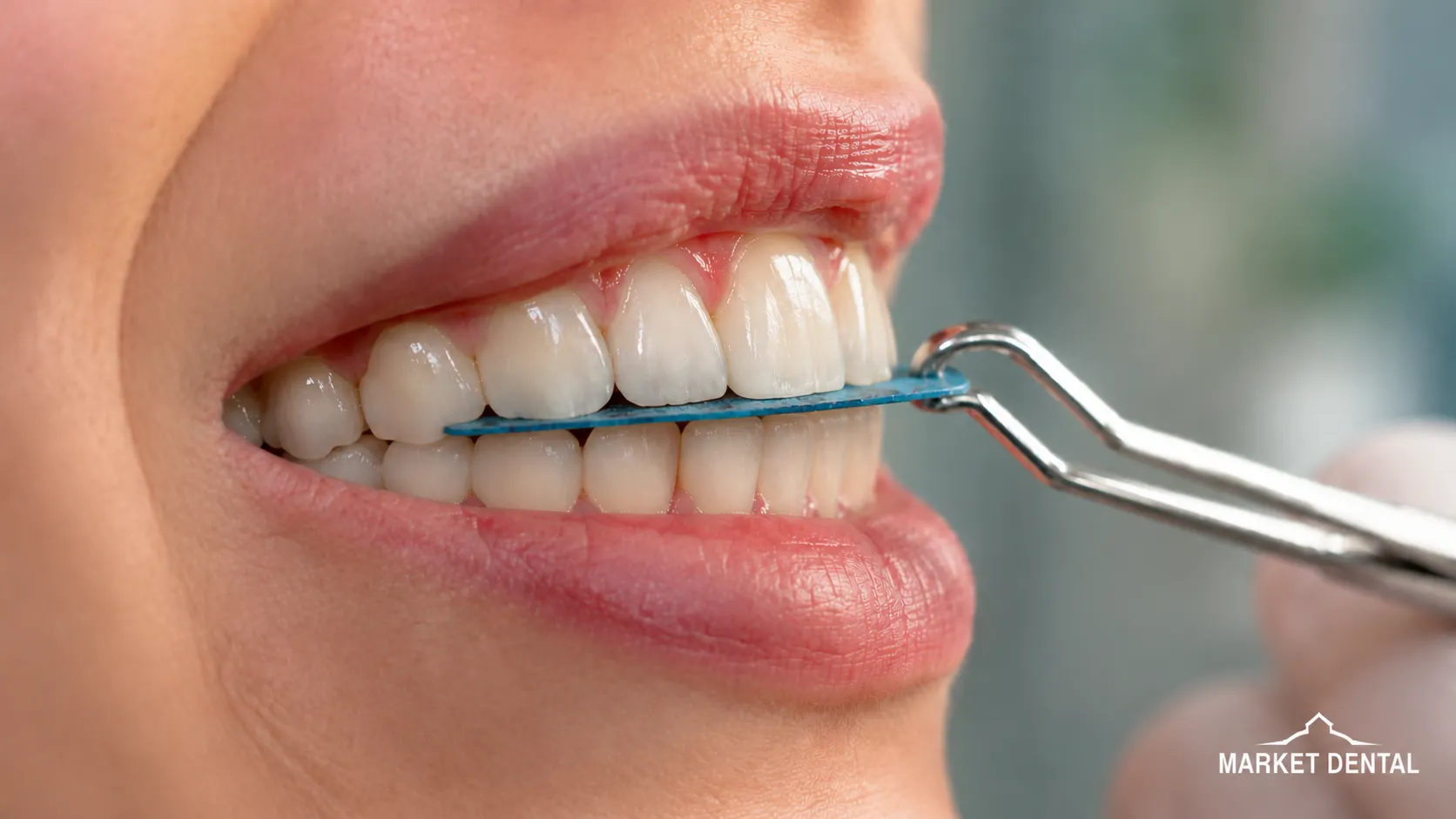
A cosmetic material still has to function when you speak, chew, and move your jaw.
Heavy contacts on the front teeth, clenching, grinding, nail biting, chewing ice, or using teeth to open packaging can increase stress on either composite or ceramic. Before a large cosmetic case, the dentist should look at how the upper and lower teeth meet.
A protective appliance may be discussed when grinding or clenching is a concern, but it is not automatically required for every patient.
Bonding Is Conservative, but “Completely Reversible” Is Too Simple
One reason bonding appeals to many people is that it can preserve more natural enamel. That is a meaningful advantage.
Still, the word reversible needs context.
The tooth surface is conditioned to help the adhesive bond to enamel. In some cases, minor reshaping or contouring is also performed before composite is placed. If the resin later needs to be removed, the dentist must distinguish restoration from natural enamel and polish the surface carefully.
So bonding is better described as more conservative and often easier to modify than porcelain veneers, rather than as a treatment that leaves every tooth completely untouched.
Shade Planning Can Change the Order of Treatment
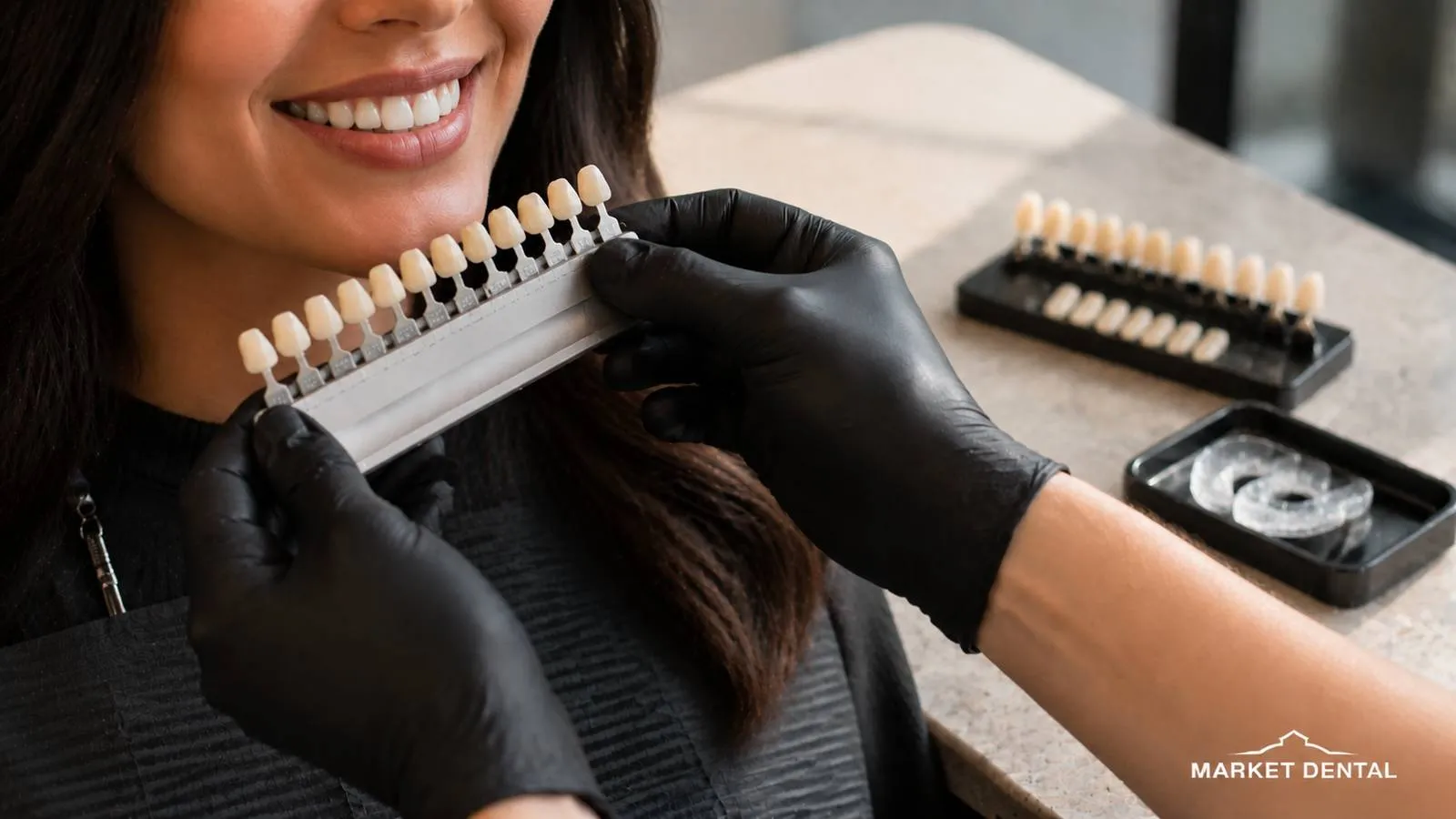
This is easy to miss when comparing dental bonding vs veneers.
Composite resin and porcelain do not whiten the way natural enamel does. Once a restoration has been matched to a specific shade, future whitening of the surrounding natural teeth can create a visible mismatch.
If a patient wants both a lighter natural tooth shade and cosmetic restorations, whitening may be planned first when clinically appropriate. The dentist can then select the restorative shade after the natural teeth have stabilized.
Market Dental Centre provides teeth whitening information for patients comparing whitening with other cosmetic options.
For someone whose main concern is isolated white enamel marks rather than overall tooth shape, the clinic's guide to white spots on teeth may also be relevant. Not every color concern requires bonding or a veneer.
When Neither Bonding nor Veneers Should Be the First Move
A cosmetic comparison is only useful after the tooth is healthy enough to support the treatment.
Active Decay or Gum Disease
Decay, unstable fillings, or inflamed gums can change what is appropriate. Those conditions should be assessed and treated before elective cosmetic work is planned.
A small area of decay may require a dental filling rather than cosmetic coverage of the tooth.
Significant Tooth Misalignment
Veneers can alter the appearance of selected mildly rotated or spaced teeth, but they do not move teeth through bone. When position or bite is the main problem, orthodontic treatment may preserve more tooth structure and address the cause rather than camouflage it.
Color Is the Only Concern
If healthy teeth are well positioned and the main goal is a lighter shade, professional whitening may be more conservative than covering multiple tooth surfaces.
Too Much Tooth Structure Is Missing
A heavily restored, fractured, or structurally weakened tooth may need a different restorative approach. A veneer is not automatically the right restoration simply because the tooth is visible when you smile.
The Change Is So Small That No Treatment Is Also Reasonable
Cosmetic treatment is elective. A minor asymmetry or small edge difference does not have to be corrected unless it matters to the patient and the benefits justify the treatment involved.
A general dental examination can establish whether the teeth and gums are healthy before a cosmetic plan is finalized.
Three Different Situations, Three Different Conversations

These examples are hypothetical. They show how the decision can change when the clinical problem changes.
A Small Chipped Edge
Someone chips a corner of one upper front tooth. The remaining tooth is healthy, the bite is favorable, and the goal is simply to restore the missing edge.
In that situation, localized bonding may be considered because the requested change is small. Covering the full front surface with a veneer could represent more treatment than the defect requires.
Several Front Teeth With Shape and Color Concerns
Another person is unhappy with the combined shade, width, and edge shape of several upper front teeth. Whitening alone would not address the shape differences.
Here, the conversation could include broader composite treatment or porcelain veneers. The decision would depend on enamel, bite, existing restorations, desired degree of change, maintenance expectations, and how much tooth preparation the person is comfortable accepting.
Cosmetic Treatment in a Heavy Grinder
A third person wants spaces closed but also clenches heavily and has visible wear on the front teeth.
The cosmetic issue may be straightforward; the functional issue is not. Bite forces and grinding should be considered before selecting material or adding length to the teeth. Otherwise, either composite or ceramic may be placed under stresses that increase the chance of chipping or fracture.
Dental Bonding vs Veneers Cost in Toronto: What Actually Changes the Fee?
People comparing local bonding and veneer fees often find broad online price ranges. Those numbers can be difficult to apply to an individual case.
Market Dental Centre does not currently publish verified bonding or veneer fee ranges that should be reproduced here. Instead of presenting an unsupported per-tooth price, it is more useful to explain what changes the estimate.
Common factors include:
- how many teeth are being treated
- whether the change is localized or covers most of the visible surface
- direct composite versus laboratory-made ceramic
- the amount of shaping and preparation required
- existing fillings or restorations
- whether decay or gum concerns need treatment first
- bite complexity
- laboratory involvement
- number of appointments
- repair or replacement needs over time
In Toronto, bonding will generally carry a lower initial fee than porcelain veneers because direct composite treatment avoids the same level of laboratory fabrication. Composite veneer fees can vary based on technique and scope.
The long-term comparison is less predictable. Bonding may need repolishing, repair, or replacement sooner. Porcelain generally offers better stain resistance and longer service, but a damaged veneer can be more involved to replace. Neither option comes with a fixed 5-, 10-, or 15-year replacement date.
For a patient comparing dental bonding vs veneers, the useful estimate is the one tied to the actual number of teeth and treatment plan.
Dental Insurance in Ontario: Cosmetic and Restorative Purposes Are Not the Same
Private dental insurance varies by contract.
A procedure performed only to change appearance may be treated differently from bonding used to restore a damaged tooth. Even then, coverage depends on the plan's procedure codes, exclusions, deductibles, annual maximums, and other terms.
Do not assume:
- bonding is automatically covered
- veneers are automatically excluded in every circumstance
- trauma guarantees reimbursement
- a predetermination guarantees final payment
A predetermination can help estimate benefits before planned treatment, but the insurer makes the final coverage decision.
Market Dental Centre's dental insurance information explains how patients can review plan-specific coverage questions. The clinic may also submit claims on a patient's behalf in some circumstances, but claim submission is not a promise that an insurer will reimburse the treatment.
Caring for Bonded Teeth and Veneers
Daily care is similar to caring for natural teeth, with a few material-specific considerations.
- Brush twice daily with fluoride toothpaste.
- Clean between the teeth every day.
- Avoid using front teeth to open packages or bite very hard non-food objects.
- Mention grinding or clenching if you notice it.
- Attend dental examinations and cleanings at the interval recommended for your oral health.
- Ask about polishing if composite starts to lose surface luster or pick up stain.
With porcelain, the ceramic surface may resist staining well, but the tooth, gumline, and restoration margins still need routine care.
Comparing Dental Bonding vs Veneers in Downtown Toronto
The most useful cosmetic consultation is not a sales presentation for the more involved option. It should clarify how much treatment is actually needed.
Market Dental Centre provides dental bonding, porcelain veneers, teeth whitening, and general cosmetic dentistry at 149 Lower Jarvis Street in Downtown Toronto, Ontario, near St. Lawrence Market. The location may be practical for people who live nearby, work in the downtown core, or study in central Toronto.
During a cosmetic assessment, a general dentist can review the condition of the teeth and gums, discuss the change you want to make, consider the bite, and explain the preparation and maintenance associated with appropriate options.
You can review Market Dental Centre's cosmetic dentistry services before deciding what you want to ask at the appointment.
Key Takeaways
- Dental bonding vs veneers is not simply a lower-cost versus higher-cost decision.
- Bonding usually changes a smaller area of the tooth and often preserves more natural enamel.
- Composite veneers use resin across more of the visible tooth surface and behave differently from a small bonded repair.
- Porcelain veneers generally resist surface staining better and may provide longer service than composite, but they usually involve a greater long-term restorative commitment.
- Composite is often easier to repair locally if an edge chips.
- Whitening should be considered before definitive shade matching when both whitening and restorations are planned.
- Bite, grinding, oral health, and existing restorations can change which option is appropriate.
- Insurance coverage depends on the individual plan and the clinical purpose of treatment.
Not Sure How Much Cosmetic Treatment Your Teeth Actually Need?
You do not have to choose dental bonding vs veneers before you arrive.
Bring the specific concern instead: the chipped corner, the gap, the uneven edge, the color difference, or the group of teeth you would like to change. From there, the dentist can explain what a smaller bonded repair would involve, when a veneer may be reasonable, and whether another option would preserve more natural tooth structure.
Market Dental Centre is at 149 Lower Jarvis Street, Toronto, Ontario M5E 1Z6, near St. Lawrence Market.
Call (416) 363-4115 or contact Market Dental Centre to discuss a cosmetic assessment in Downtown Toronto.

.webp)


