








When comparing professional whitening prices, many patients wonder whether the Teeth Whitening Cost Toronto clinics charge is truly justified and whether it guarantees a lasting, brighter smile. A radiant smile is one of your most valuable assets, instantly boosting confidence and leaving a memorable first impression. However, the sheer number of options, from cheap drugstore strips to advanced in-chair dental lasers, makes deciding difficult. You aren't just paying for a bleaching gel; you're investing in safety, speed, predictability, and professional oversight. This guide breaks down average cosmetic fees, compares treatments, explains how longevity works, and shows why the right clinical approach matters.
Average Teeth Whitening Cost Toronto
Understanding the exact Teeth Whitening Cost Toronto patients pay requires evaluating your specific clinical needs. Based on current local dental fee structures, cosmetic treatments vary widely depending on the chosen method. Professional oversight ensures you are getting concentrated, effective products safely applied to your teeth.
- In-Office Power Whitening: Typically ranges from $300 to $800 per session. This premium option uses high-concentration hydrogen peroxide gels and often incorporates LED or laser light to accelerate the stain-lifting process.
- Custom Take-Home Whitening Trays: Generally costs between $200 and $450. Your dentist takes a precise impression of your teeth to fabricate custom-fit plastic trays, providing professional-grade gel for you to apply safely at home.
- Combination Packages: Many GTA clinics offer dual-system packages, an in-office boost followed by take-home maintenance trays, spanning from $500 to $1,200.
Factors That Affect the Price of Treatment
Why does one patient pay $300 while another pays $800? The Teeth Whitening Cost Toronto patients see on their invoice is influenced by several variables that shape your personalized treatment plan.
Type of Whitening Treatment
The system you select is the largest cost driver. A one-hour chairside laser treatment involves expensive clinic equipment, dedicated staff time, and premium desensitizing agents, so it naturally costs more than sending you home with custom trays and syringes.
Severity of Tooth Discoloration
Teeth stained deeply by years of smoking, tetracycline medications, or daily espresso consumption require more intensive care. Severe discoloration might require multiple in-office passes or extended take-home gel supplies, directly impacting your total bill.
Number of Treatment Sessions
While minor yellowing can be resolved in a single 45-minute visit, deeper intrinsic stains may require a phased approach. Booking two or three separate clinical sessions will increase your overall investment.
Whitening Technology (Laser / LED)
Systems like Philips Zoom or LaserSmile use proprietary light-activation technologies to speed up the chemical reaction of the peroxide. Clinics investing in these advanced cosmetic systems generally pass a portion of that technology overhead into the treatment fee.
Dentist Experience
A sought-after cosmetic dentist with years of specialized aesthetic training often charges at the higher end of the fee guide. You are paying for their ability to predict shade outcomes and manage gum sensitivity.
Custom Whitening Trays
If your treatment includes take-home maintenance, the laboratory cost to fabricate perfectly fitting trays is added. Unlike generic boil-and-bite drugstore trays, custom trays prevent the strong bleaching gel from leaking and burning your gums.
Pre-Treatment Dental Cleaning
Whitening gel cannot penetrate tartar or heavy plaque. If you haven't had a professional hygiene visit recently, a thorough dental scaling and polishing (usually billed separately) is required before any cosmetic bleaching can begin.
Additional Cosmetic Procedures
Whitening only changes the color of natural enamel. If you have existing tooth-colored fillings, veneers, or crowns, they will not lighten. You may need to factor in the cost of replacing old dental work to match your newly brightened smile.
Professional Whitening vs. At-Home Whitening Kits
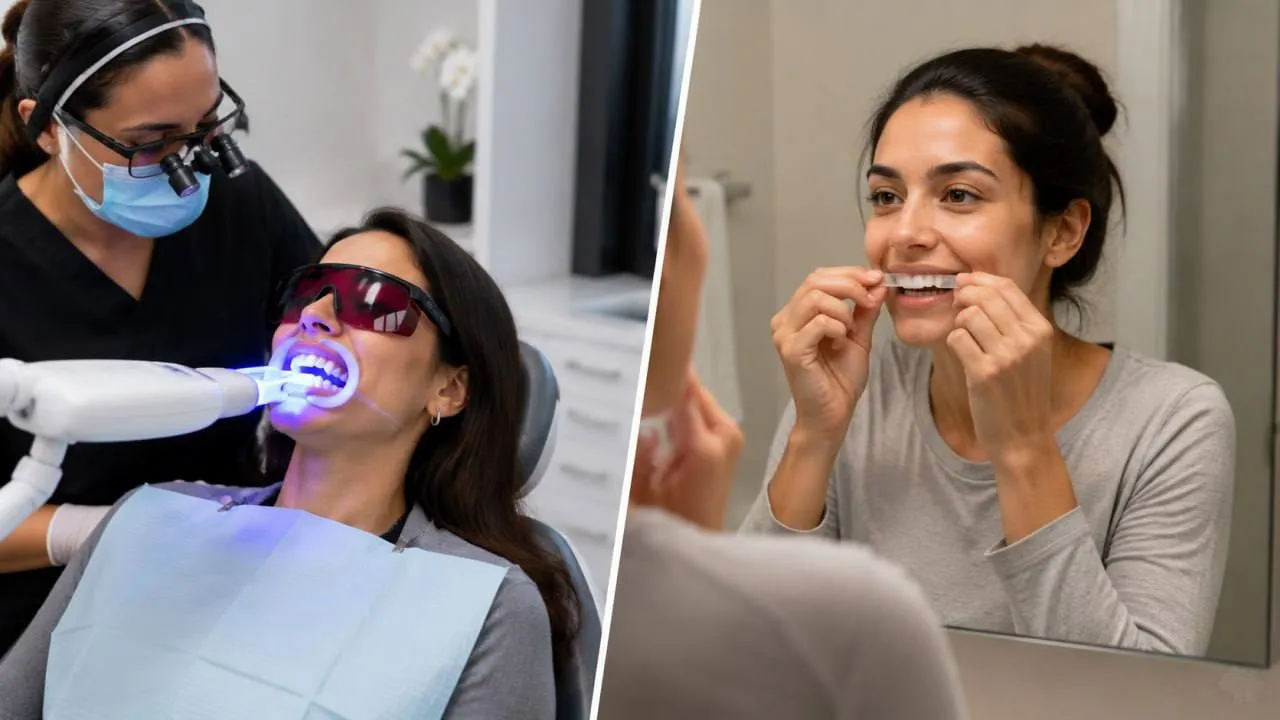
It is tempting to grab a $40 box of whitening strips from the pharmacy, but cost is only one part of the equation. Professional treatments offer distinct medical and aesthetic advantages over commercial kits.
Is Professional Teeth Whitening Worth the Cost?
When evaluating the smile brightening rates, most patients conclude that professional treatment justifies the Teeth Whitening Cost Toronto clinics quote. The primary benefit is predictability, because a dentist can tell you beforehand whether your specific type of stain will actually respond to bleach.
Time savings are also significant. An in-office treatment achieves in 60 minutes what takes a month of messy, daily strip applications. Most importantly, clinical isolation barriers ensure that high-strength peroxide only touches your teeth, reducing the risk of painful soft tissue chemical burns.
How Long Do Whitening Results Last?

Your teeth will not stay glowing white forever, as enamel naturally absorbs pigments over time. On average, a professional whitening treatment lasts anywhere from 12 to 24 months.
However, lifestyle choices heavily dictate this timeline. Daily consumption of coffee, black tea, red wine, or tobacco will restain your teeth faster. Diligent oral hygiene, regular professional cleanings, and using your custom trays for a quick overnight touch-up every few months will stretch your investment and get the most value from the Teeth Whitening Cost Toronto patients pay upfront.
Does Teeth Whitening Damage Enamel?
A common myth, often fueled by risky social media trends involving lemon juice or charcoal, is that bleaching ruins teeth. When supervised by a dentist, peroxide-based whitening is safe and does not thin, etch, or destroy your enamel.
The bleaching gel simply opens the microscopic pores of the enamel to oxidize internal stains. While this process temporarily dehydrates the tooth, causing mild, transient sensitivity to cold, the tooth quickly remineralizes through your saliva and fluoride treatments, returning to its normal strength within 48 hours.
Who Is a Good Candidate for Professional Teeth Whitening?
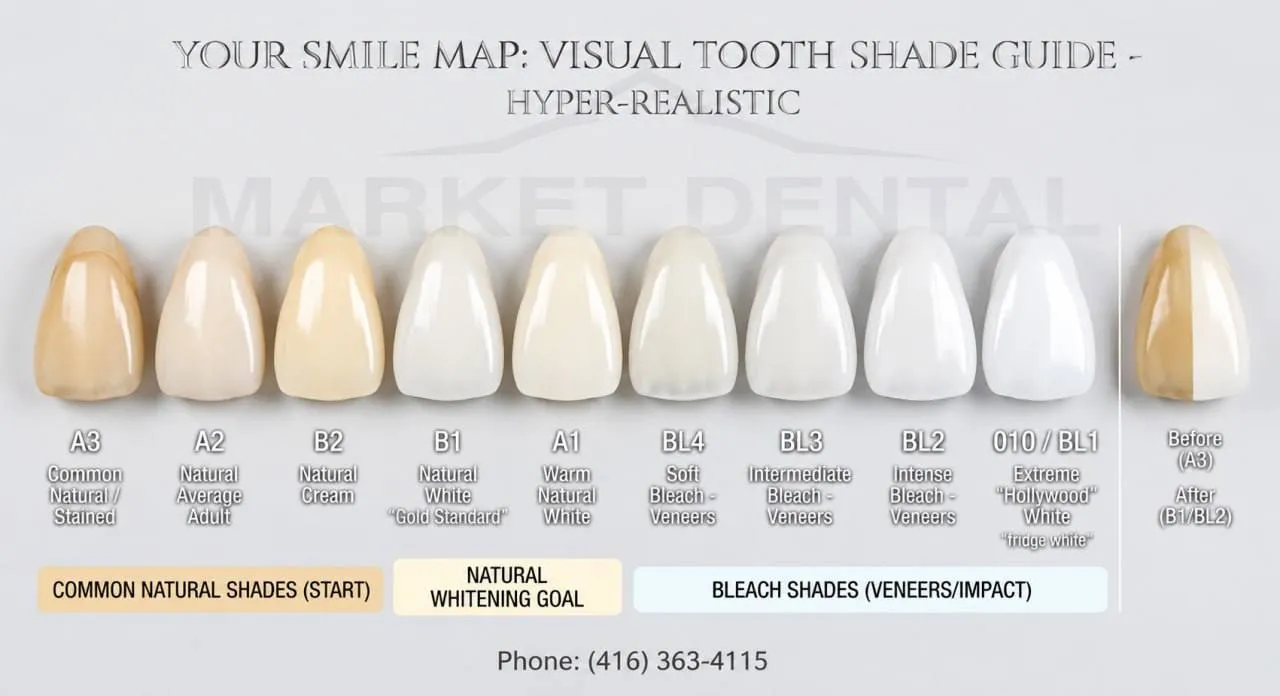
Whitening is highly effective for adults with healthy, unrestored teeth that have yellowed due to age, food, or drinks. However, it is not a universal fix for every patient.
You might be an unsuitable candidate if you have untreated cavities, severe gum disease, or exposed tooth roots, as the bleach can cause sharp pain upon entering these compromised areas. Additionally, if you have dental crowns, prominent white fillings, or veneers on your front teeth, they will not lighten, which can leave you with a mismatched smile until those restorations are updated.
What Happens During a Professional Whitening Appointment?
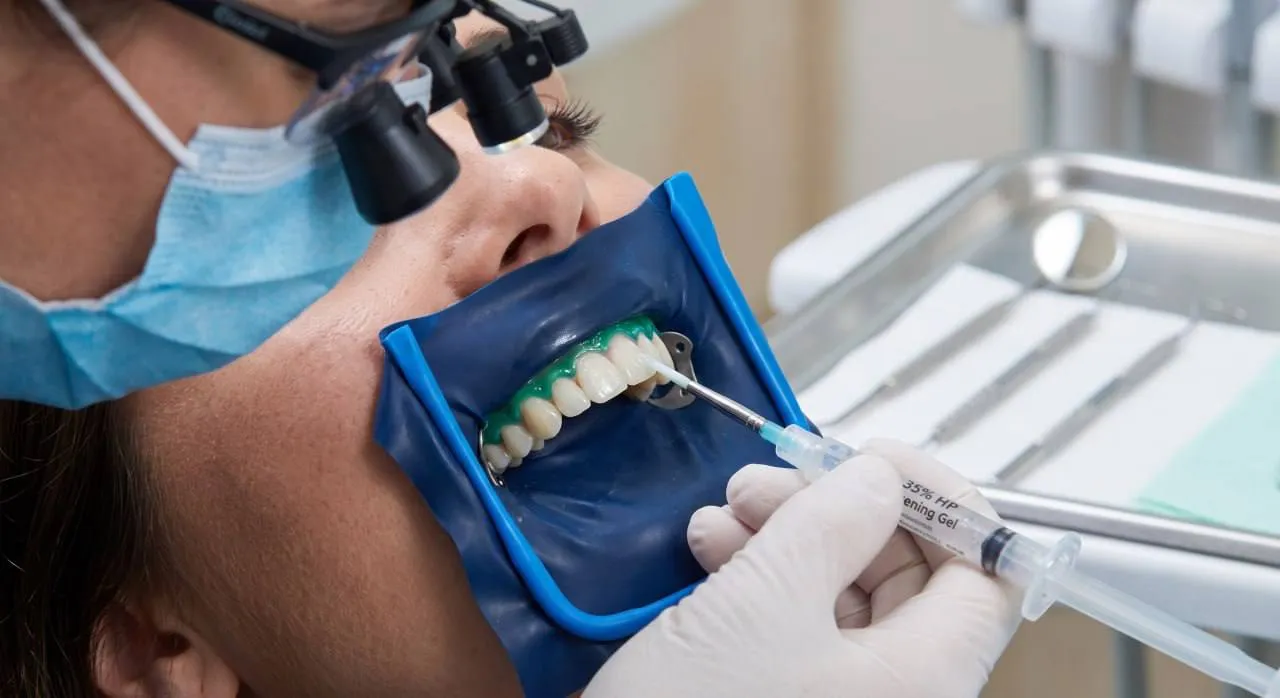
Knowing exactly what to expect in the dental chair can ease any anxiety before your cosmetic session.
- Consultation and shade assessment: Your dentist evaluates your enamel and uses a clinical shade guide to record your baseline color and set a realistic target.
- Oral examination: A quick check ensures no cavities or gum inflammation will complicate the procedure.
- Soft tissue protection: A rubber dam or liquid light-cured resin is painted precisely over your gums to block the bleach.
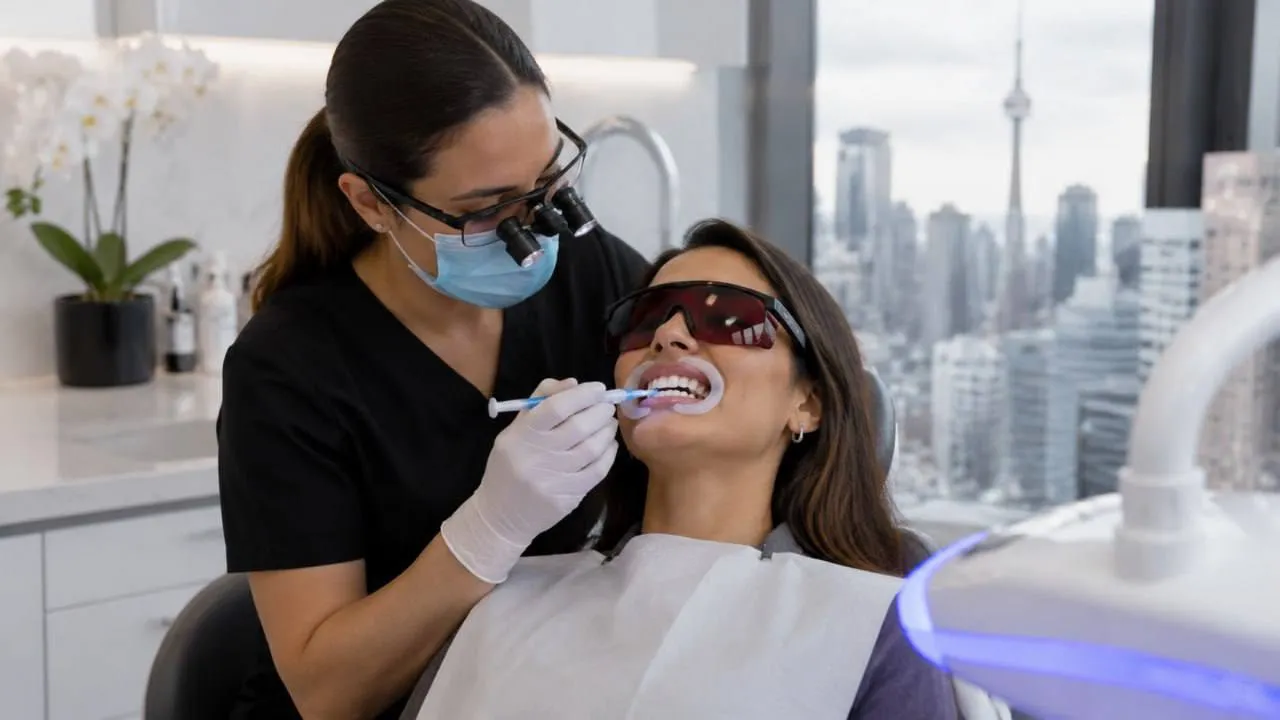
- Gel application: The clinical-strength hydrogen peroxide gel is carefully painted onto the front surfaces of your visible teeth.
- Light activation: If applicable, an LED or laser is aligned over your mouth in 15-minute intervals to accelerate the oxidation process.
- Final evaluation: The gel is rinsed away, protective barriers are removed, and your new shade is revealed.
How to Maintain Your Whitening Results
Protecting your newly brightened smile requires a few simple, daily habits.
- Wait 48 hours: Avoid highly pigmented foods like tomato sauce or soy sauce for the first two days while your enamel pores close.
- Use a straw: When drinking iced coffee or dark sodas, a straw prevents the liquid from washing directly over your front teeth.
- Professional cleanings: See your dental hygienist every 6 months to polish away stubborn surface debris before it penetrates deeper.
- Periodic touch-ups: Use your take-home trays for one or two nights every six months to refresh the color.
The Hidden Financial Dangers of Viral Whitening Trends
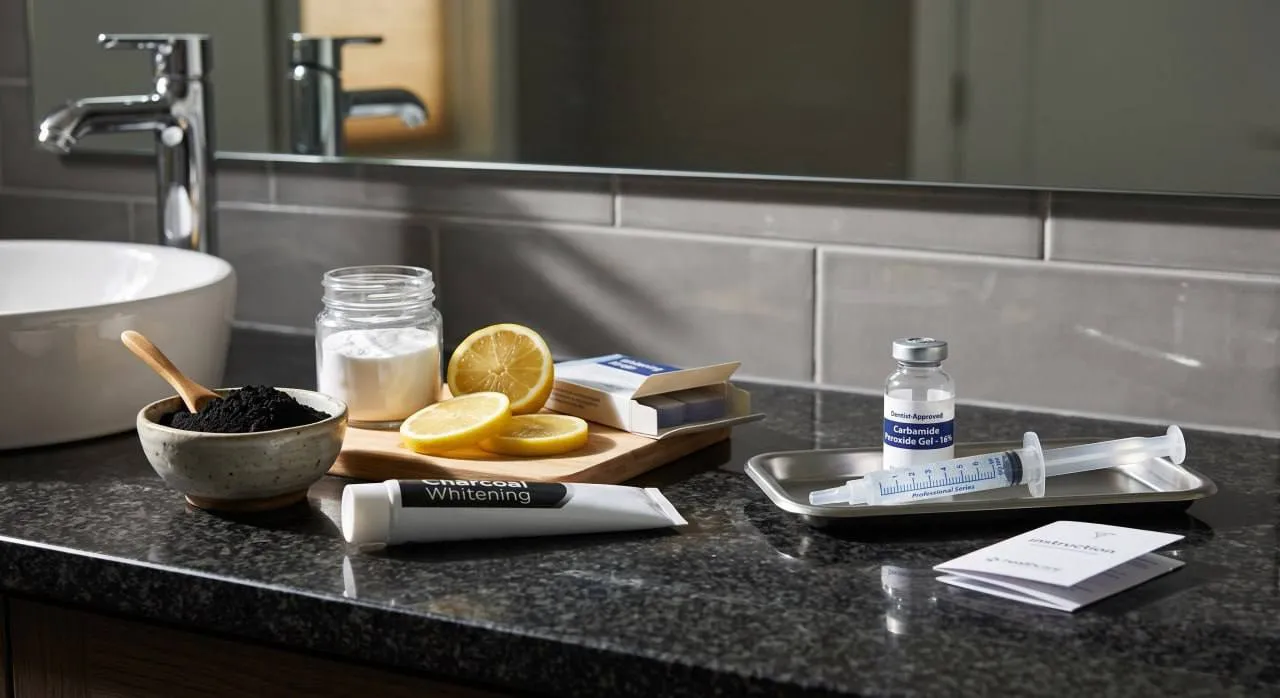
When exploring cosmetic dental options, many patients are tempted by viral social media hacks promising a bright smile for just a few dollars. Unfortunately, these unregulated trends often cause irreversible damage. Attempting to bypass professional cosmetic fees usually results in dental trauma, leading to restorative bills that dwarf the original cost of a clinical bleaching treatment.
Understanding the biological impact of these DIY methods is important. Saving a hundred dollars today could cost you thousands in restorative dentistry tomorrow. Here is the clinical reality behind the most popular internet whitening trends:
- Charcoal toothpaste: Activated charcoal contains no bleaching agents. Instead, it acts like abrasive sandpaper, physically scrubbing away surface stains. Over time, this abrasion wears away your enamel, exposing the naturally yellow dentin underneath. Fixing this damage requires expensive porcelain veneers.
- Purple color-correcting serums: Based on color wheel theory, purple neutralizes yellow. These serums temporarily paint a microscopic purple film over your teeth to create an optical illusion of brightness. They do not change the actual color of your tooth, so your money buys a fleeting makeup effect rather than a true cosmetic treatment.
- Lemon juice and baking soda: This DIY paste is extremely acidic. The acid softens and dissolves your enamel, while the baking soda scratches it away. This leads to temperature sensitivity, faster tooth decay, and the eventual need for costly dental crowns or composite bonding.
Real-World Whitening Scenarios: Finding Your Best Fit
To help you understand how different lifestyles and clinical needs affect your overall investment, let's look at three real-world patient scenarios. These examples show how Toronto patients navigate their cosmetic choices based on specific goals, timelines, and budgets.
Scenario 1: The Wedding Prep (Fast Results Required)
The patient: Sarah, a 28-year-old bride whose wedding is just five days away. She has healthy teeth but noticeable coffee stains.
The solution: Professional in-office LED whitening.
The outcome: Sarah needs immediate, reliable results. She opts for a 60-minute chairside session. The dentist uses a high-concentration peroxide gel activated by an LED lamp, lifting her shade by 6 levels in one visit.
Estimated investment: $500 to $700. The higher upfront cost is justified by the speed, safety, and dramatic transformation her timeline requires.
Scenario 2: The Daily Espresso Drinker (Ongoing Maintenance)
The patient: Marcus, a 45-year-old professional who drinks three shots of espresso daily. He wants a brighter smile but knows his diet will constantly introduce new stains.
The solution: Custom take-home whitening trays.
The outcome: An in-office treatment would fade quickly with his daily coffee habit. Instead, his dentist fabricates custom trays. Marcus whitens for 14 nights to reach his desired shade, then uses a refill syringe for one night every month to fight new espresso stains.
Estimated investment: $300 to $400 for the initial custom kit, plus about $40 annually for maintenance syringes. This is the most cost-effective long-term strategy for heavy stainers.
Scenario 3: The Mixed-Restoration Smile (Complex Aesthetic Needs)
The patient: Elena, a 55-year-old with a noticeable, decade-old porcelain crown on her front tooth. Her surrounding natural teeth have yellowed with age.
The solution: A phased cosmetic approach (take-home whitening followed by crown replacement).
The outcome: The dentist explains that bleach will not lighten her existing crown. Elena uses custom trays for two weeks to brighten her natural teeth. Once the new shade stabilizes after 14 days, the dentist replaces the old crown to match her newly whitened smile.
Estimated investment: $350 for whitening, plus $1,200 or more for a new custom porcelain crown.
Patient Scenario Summary Table
Preparing Your Budget: A One-Year Financial Timeline
If you are planning to invest in your smile, it helps to view the process as a one-year aesthetic journey rather than a single transaction. Structuring your budget over 12 months keeps your smile radiant without unexpected financial surprises.
Month 1: The Foundation and Treatment
Your journey begins with a professional dental cleaning to remove tartar, usually costing around $150 to $200 (often covered by insurance). Next is your active whitening treatment. Depending on your choice between custom trays or an in-office session, budget an out-of-pocket expense of $300 to $700.
Month 6: The Hygienic Refresh
Six months later, your enamel may have accumulated minor surface stains from everyday eating and drinking. Attending your standard 6-month hygiene recall (covered by most benefit plans) polishes away these surface pigments, refreshing your smile's brightness without additional bleach.
Month 12: The Annual Touch-Up
By the one-year mark, you may notice a slight fade in your overall shade. If you purchased custom trays initially, you simply buy a single refill syringe of professional gel from your dental clinic. This touch-up costs roughly $30 to $50 and requires only one or two nights of wear to restore your original post-treatment brilliance.
Does Dental Insurance Cover Teeth Whitening?
As a rule, cosmetic dentistry is classified as elective care. Therefore, standard private insurance plans, employer benefits, and the Canadian Dental Care Plan (CDCP) do not provide coverage for either in-office or take-home whitening treatments.
You should expect to cover the entire Teeth Whitening Cost Toronto clinics charge out of pocket. However, many reputable Toronto clinics offer flexible third-party financing plans, allowing you to spread the payments over several manageable months.
Key Takeaways Before You Book
Choosing the right whitening option comes down to matching the method to your timeline, your stains, and your budget. The Teeth Whitening Cost Toronto clinics charge generally runs from $200 to $450 for custom take-home trays and $300 to $800 for in-office power whitening, with combination packages reaching $1,200. Professional treatment wins on predictability, speed, and safety, and it protects your gums in a way drugstore strips cannot. Because whitening is elective, expect to pay out of pocket, though financing can spread the cost. Above all, avoid viral DIY trends, since a hundred dollars saved today can turn into thousands in restorative work tomorrow.
Why Choose Market Dental Centre?
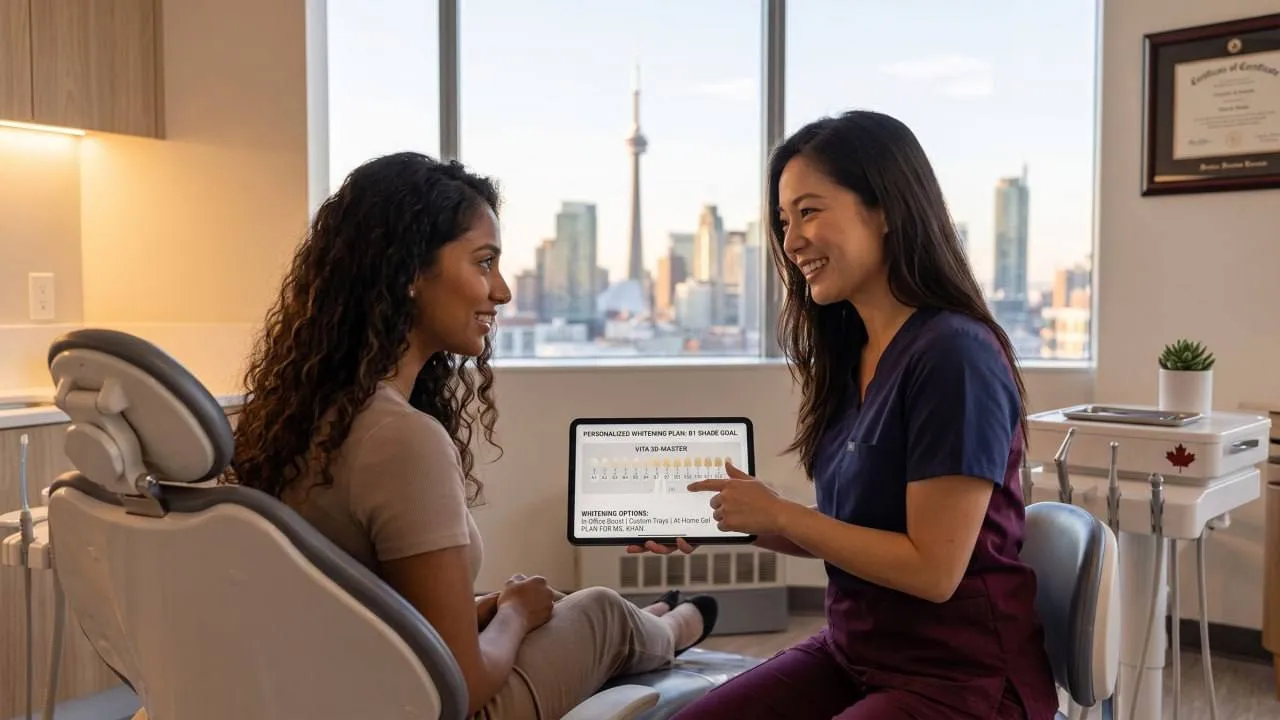
When it comes to enhancing your smile safely, the expertise of your provider matters just as much as the technology they use. At Market Dental Centre, we combine artistry with careful clinical safety.
- Experienced cosmetic dentists: Our team brings years of aesthetic training for predictable, natural shade matching.
- Modern whitening technology: We use advanced, low-sensitivity bleaching agents and light accelerators.
- Personalized treatment planning: We never push a one-size-fits-all approach; we tailor gel concentrations to your enamel tolerance.
- Comfortable patient experience: Enjoy noise-canceling headphones, comfortable chairs, and a calm environment during your treatment.
- Transparent consultations: We provide honest, upfront pricing so you know exactly what your aesthetic journey involves.
Book Your Teeth Whitening Consultation Today
Take the first step toward the bright smile you deserve. Get a personalized shade assessment and a clear, upfront quote before anything begins.
- Call us today
- Book online
- Visit our clinic: 149 Lower Jarvis St, Toronto, ON
We offer flexible financing options and personalized cosmetic planning for every smile and budget.

.webp)


