









Invisalign vs metal braces for adults is not really a question of which appliance looks better. The more useful question is whether each option can manage the tooth movements your case needs and whether you can realistically live with the routine it requires. Adults often reach this decision after teeth have shifted following earlier orthodontic treatment, crowding has made cleaning harder, or appearance at work and social events has become more noticeable. Clear aligners and fixed braces can both move teeth, but they ask different things of the patient. Starting with clinical fit, then daily habits, makes the comparison much more useful than choosing by appearance alone.
Invisalign vs Metal Braces for Adults: Start With Clinical Fit
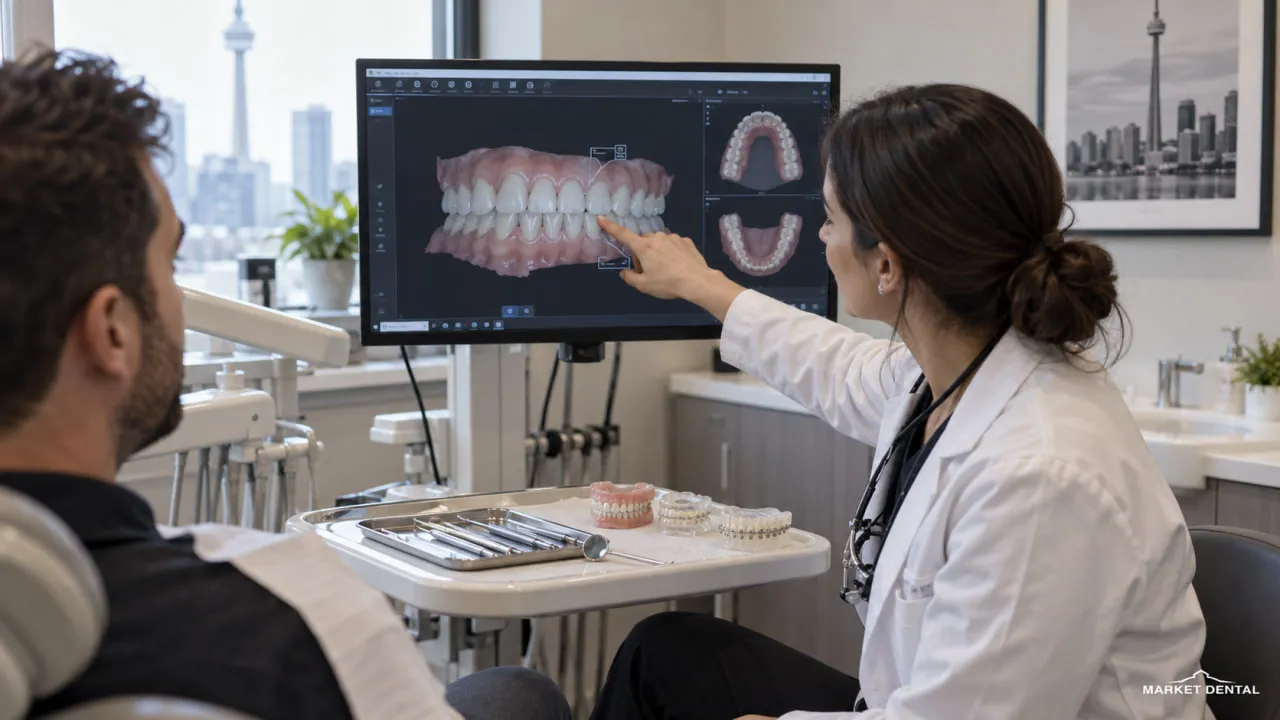
Neither option is automatically better. The first decision is whether clear aligners, fixed braces, or another plan can carry out the movements your teeth and bite require.
The American Association of Orthodontists also emphasizes that there is no single appliance that is inherently best for every patient. Diagnosis comes first. AAO comparison of braces and clear aligners
Clear Aligners Can Treat More Than Minor Cosmetic Crowding
Clear aligners may be used for selected cases involving crowding, spacing, orthodontic relapse, and certain bite problems. Their suitability depends on the amount and direction of movement required, the condition of the teeth and gums, and how consistently the trays are worn.
Some movements are more difficult to accomplish predictably with removable aligners than others. Attachments, elastics, refinements, or a different appliance may be needed depending on the treatment plan.
Market Dental Centre currently offers Invisalign clear aligners for suitable patients.
Fixed Braces Give the Clinician Continuous Mechanical Control
Metal braces stay attached to the teeth, so treatment does not depend on remembering to put an appliance back in after meals. That can be useful when continuous fixed mechanics are preferred or when a patient knows consistent aligner wear would be difficult.
Fixed appliances still require cooperation. Cleaning, food choices, appointments, and elastics when prescribed all affect how treatment progresses.
Severe Jaw Problems May Need More Than Either Appliance
A severe skeletal bite problem is different from a tooth-position problem. In some cases, specialist assessment or multidisciplinary treatment may be appropriate, and orthodontic appliances alone may not address the underlying jaw relationship.
Market Dental Centre's overview of malocclusions and misaligned teeth explains several bite patterns that can be discussed during an assessment.
The Biggest Lifestyle Difference Is Who Controls the Appliance
For many adults comparing Invisalign vs metal braces for adults, the practical difference is simple: clear aligners require repeated daily decisions, while fixed braces remain in place.
Invisalign Depends on Consistent Wear
Patients are commonly instructed to wear clear aligners for roughly 20 to 22 hours a day, according to their individual treatment plan. Trays come out for meals, oral hygiene, and other situations specified by the dentist.
Leaving aligners out longer or more often than instructed can interfere with planned movement. If you know that removing and replacing trays several times a day will be difficult, that matters when choosing an appliance.
Braces Remove the Wear-Time Decision
Braces work while they are attached, so there is no daily decision about whether to wear them.
The trade-off is a different routine. Cleaning around brackets and wires takes more care, and certain foods can damage fixed appliances. Appointments and any prescribed elastics still require participation.
What Changes During a Normal Workday?

The better daily-life choice depends on which inconvenience you would rather manage: taking aligners in and out, or living with a fixed appliance.
Meetings, Presentations, and Social Visibility
Clear aligners are less noticeable than metal brackets, although they are not invisible. Tooth-colored attachments may be visible, especially at close range.
Some people notice temporary speech changes after starting aligners or changing trays. Others notice very little. Metal braces are more visible, but appearance alone should come after clinical suitability.
Lunch, Coffee, and Restaurants
Clear aligners are removed for meals, which means fewer food restrictions while eating. The extra step is managing the trays: store them safely, follow your cleaning instructions, and put them back in on schedule.
With braces, there is nothing to remove before lunch. Hard, sticky, or chewy foods may need to be limited because they can damage brackets or wires, and cleaning after meals usually takes more attention.
For someone moving between meetings, restaurants, and coffee stops in Downtown Toronto or the Financial District, the question is which routine is easier to maintain every day.
Travel and Irregular Schedules
Neither appliance eliminates follow-up care. Appointment timing depends on the case, appliance, stage of treatment, and how the teeth are responding.
Aligners can be convenient for travel because patients may receive several sets at once, but that does not guarantee fewer visits. The useful question is whether you can keep up with wear, cleaning, and scheduled reviews when your routine changes.
Healthy Teeth and Gums Come Before Either Appliance
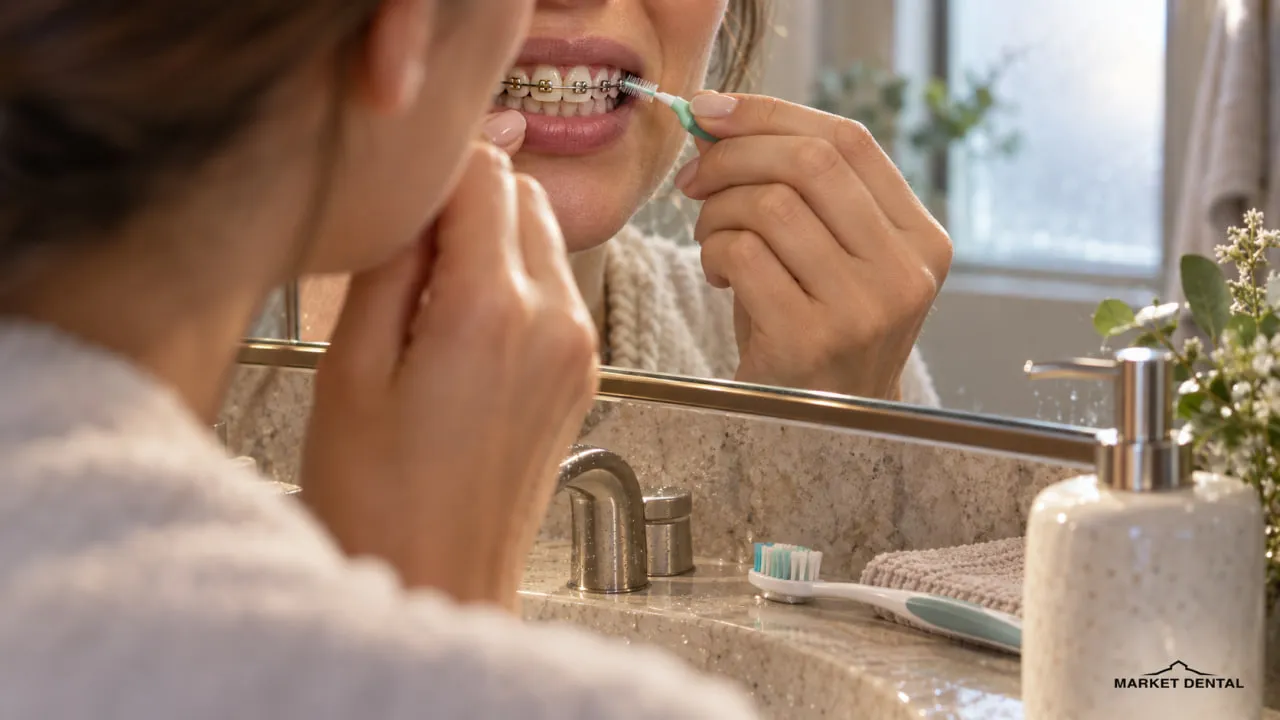
Adult orthodontic treatment should begin with an assessment of the teeth, gums, supporting tissues, and bite. Active dental or periodontal problems may need attention before tooth movement begins.
Removable aligners make normal brushing and flossing more accessible because the trays come out. Fixed braces require more deliberate cleaning around brackets and wires. Neither appliance removes the need for consistent oral hygiene.
If bleeding or inflammation is already a concern, reviewing gum health and periodontal care before orthodontic treatment can help clarify what needs attention first.
Both Systems Can Cause Soreness, but the Experience Is Different
Both aligners and braces can cause pressure or tenderness as teeth move.
With aligners, soreness may occur after changing to a new tray, and edges or attachments can sometimes irritate the mouth. With braces, pressure can follow adjustments, while brackets or wires may rub against the cheeks or lips.
Some research has found less discomfort with aligners at certain early points in treatment, but that does not mean Invisalign is pain-free or that braces are always more painful. Individual experience varies.
Treatment Time Depends More on the Case Than the Appliance Label
There is no reliable universal timeline for Invisalign vs metal braces for adults. One system is not automatically faster.
Treatment length depends on the movements required, case complexity, biological response, aligner wear when applicable, adjustments or refinements, and whether appointments stay on schedule.
A minor relapse after earlier treatment may require less movement than a complex bite correction, but the appliance name alone cannot tell you how long treatment will take.
Side-by-Side: How the Daily Trade-Offs Compare
Use this table as a decision aid, not as a substitute for an orthodontic assessment.
For Invisalign vs metal braces for adults, this table highlights the trade-offs, but the clinical plan still decides which options are reasonable.
If Your Teeth Shifted After Earlier Braces, You Are Not Starting From Zero

Teeth can move after orthodontic treatment, especially when retention is interrupted or an old retainer no longer fits. That does not mean earlier treatment was wasted.
The next step depends on how much movement has occurred, the bite, gum health, current tooth position, and the condition of any existing restorations.
Some adults may be candidates for limited clear-aligner retreatment. Others may need fixed appliances or another plan. A new retainer alone may be appropriate only when the teeth are already in a position worth maintaining.
Retention follows both clear aligners and braces. Whatever moves the teeth, a retainer is part of protecting the new position afterward.
What Does Adult Orthodontic Treatment Cost in Ontario?
Cost cannot be predicted from the appliance name alone. Fees can vary with case complexity, treatment length, diagnostic records, refinements or adjustments, retention, and the individual practice's fees.
The Ontario Dental Association's Suggested Fee Guide may be used as a reference, but dentists set their own fees. A treatment estimate should therefore be based on an examination and individual plan rather than a generic Toronto price range.
For more detail about clear-aligner planning, treatment stages, and pricing factors, see Market Dental Centre's Invisalign in Toronto guide.
Does Private Insurance Cover Adult Orthodontics?
Sometimes. Adult orthodontic coverage is plan-specific.
A private plan may exclude adult orthodontics, apply an age limit, include a lifetime orthodontic maximum, use co-insurance, or pay benefits in stages over treatment. Invisalign and fixed braces should not be assumed to receive identical reimbursement under every plan.
A predetermination can help estimate expected benefits, but it does not guarantee final payment.
Does the CDCP Cover Invisalign or Braces?
No, not currently. As of September 2026, orthodontic services are not available under the Canadian Dental Care Plan.
That means Invisalign and traditional braces are not currently CDCP-covered orthodontic services. Market Dental Centre's CDCP fee policy applies to eligible CDCP-covered services, not to orthodontic treatment that the program does not currently cover.
What to Ask at an Adult Orthodontic Assessment in Downtown Toronto
For Invisalign vs metal braces for adults, the best consultation questions focus on movement, habits, oral health, and retention rather than appearance alone.
Ask:
- What tooth movements does my case require?
- Are clear aligners suitable for all of those movements?
- Would fixed appliances offer an advantage for any part of the plan?
- What daily wear schedule would I need to follow?
- Are there dental or gum problems that need treatment first?
- How will retention work afterward?
- What is included in the estimate?
- What does my insurance plan actually cover?
Market Dental Centre is located at 149 Lower Jarvis Street in Downtown Toronto, Ontario, near St. Lawrence Market. The clinic provides Invisalign and clear-aligner care for suitable patients across Toronto.
If the required treatment falls outside what can be managed with clear aligners in this setting, the dentist can discuss other options or whether a referral is appropriate.
Key Takeaways
- Clinical suitability comes before appearance when comparing Invisalign vs metal braces for adults.
- Clear aligners require consistent daily wear; fixed braces remove that wear-time decision.
- Both systems still require oral hygiene, follow-up appointments, and patient cooperation.
- Healthy teeth and gums should be assessed before orthodontic tooth movement.
- Neither option is universally faster or more comfortable.
- Teeth can shift after earlier orthodontic treatment, and retention is needed after either approach.
- Private orthodontic benefits vary by plan, and the CDCP does not currently provide orthodontic coverage.
Start With the Movement Your Teeth Need, Not the Appliance You Prefer
The appliance choice comes after the assessment. For Invisalign vs metal braces for adults, a dentist first needs to look at your alignment, bite, gum health, existing dental work, and goals.
That assessment can clarify whether clear aligners are appropriate or whether another orthodontic approach or referral should be considered.
Market Dental Centre is located at 149 Lower Jarvis Street in Downtown Toronto, Ontario, near St. Lawrence Market.
Call (416) 363-4115 or request an appointment to discuss clear-aligner treatment and the appropriate next step for your case.

.webp)


