









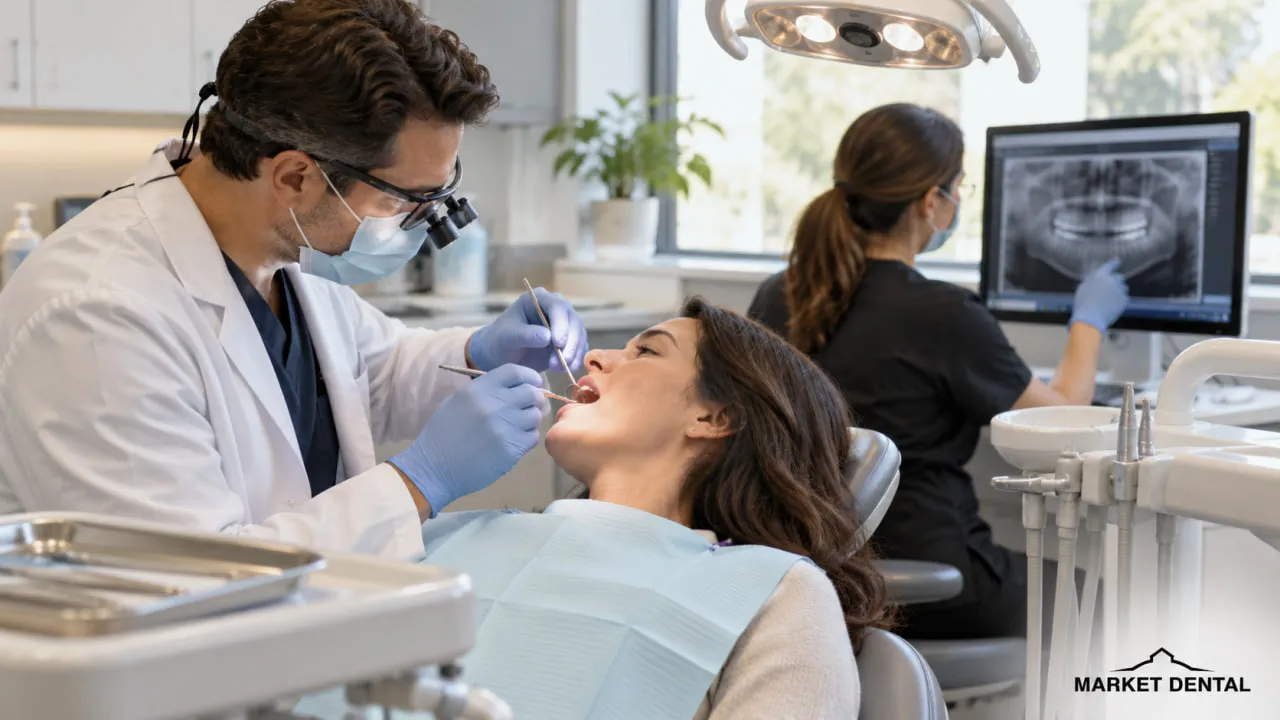
Hearing that you need one of several oral surgery procedures does not automatically mean a hospital stay or a major operation. Many treatments involving the gums, bone, or soft tissue of the mouth fall under what dentists call minor oral surgery, and some may be done in a dental office with local anesthesia. Still, "minor" is not the same as trivial. Some cases are straightforward. Others call for a specialist, a sedation plan, or a different setting. Knowing what the term actually covers can make your next conversation with a dentist more useful, especially about who will treat you and what healing could involve.
What Is Minor Oral Surgery?
Minor oral surgery is a broad clinical description, not a promise that a procedure will be simple or risk-free. It usually refers to localized surgical treatment on the teeth, gums, bone, or other tissues inside the mouth, often performed in an outpatient dental setting.
The wider field of oral surgery runs from tooth removal to jaw reconstruction. "Minor" sits at the smaller end: the work is confined to a limited area and generally does not involve the jaw joints, facial bones, or major reconstruction.
Appointment length, incision size, and going home the same day are poor yardsticks on their own. A short procedure can still be the wrong fit for an office if health history raises the risk.
In practice, oral surgery procedures are sorted less by a label and more by a set of questions. How complex is the anatomy? What does the medical history show? Is sedation needed? Is the diagnosis clear? Is the procedure within the treating dentist's training and experience?
When Can Oral Surgery Be Done in a Dental Office?

Many localized oral surgical procedures are performed in outpatient dental settings. A dental operatory can support a range of soft-tissue and tooth-related procedures when the case is appropriate for that environment.
Not every operation inside the mouth belongs there, though. Several factors can shift the setting:
- Extent of surgery. One small site is different from several areas or significant bone removal.
- Medical conditions. Bleeding disorders, blood thinners, poorly controlled diabetes, some heart conditions, and certain bone medications may change the plan.
- Airway and sedation needs. Deeper sedation and general anesthesia require additional monitoring, trained staff, and an appropriate facility.
- Specialist expertise. Unusual anatomy or a procedure outside the dentist's scope may point toward referral.
- Emergencies. A rapidly spreading infection, or swelling that affects breathing or swallowing, may need hospital care.
Hospital-based care may be appropriate for extensive jaw surgery, significant facial injuries, or patients whose medical needs require hospital-level support. If you are unsure why a setting was chosen, ask how your anatomy, health history, and the procedure itself affected that decision.
Who Performs Minor Oral Surgery: A General Dentist or a Specialist?
Both can, depending on the case.
General dentists may perform selected surgical procedures within their training, experience, and clinical judgment. Oral and maxillofacial surgeons are certified dental specialists with additional surgical training. Periodontists specialize in the gums and supporting bone and may perform procedures such as crown lengthening.
Referral may be appropriate when:
- the anatomy is complex, such as a tooth or lesion close to a nerve or sinus;
- the procedure is extensive;
- medical history increases surgical risk;
- deep sedation or general anesthesia is being considered;
- the diagnosis is uncertain;
- the treating dentist considers specialist involvement the better choice.
A referral is a matching decision. It means the dentist believes another provider or setting is more appropriate for the procedure being considered.
Common Oral Surgery Procedures Beyond Routine Extractions
The procedures below are educational examples. Whether a particular clinic offers any of them, and which provider performs them, varies.
Frenectomy: Releasing a Restrictive Frenum
A frenum is a small fold of tissue connecting two areas of the mouth, such as the upper lip to the gum or the underside of the tongue to the floor of the mouth. A frenectomy removes or releases part of that tissue.
It may be considered when a restrictive frenum contributes to a clinically identified problem, such as limited tongue movement or a frenum pulling on the gum. The outcome depends on that diagnosis. A frenectomy does not automatically improve speech, resolve infant feeding difficulties, close a gap between front teeth, or prevent gum recession because those problems often have more than one cause.
Alveoloplasty: Smoothing or Reshaping the Jaw Ridge

After a tooth is removed, the bone that held it, called the alveolar ridge, can be left with sharp edges or uneven contours. Alveoloplasty smooths or reshapes those areas. It may be done at the time of extraction, later if an irregularity causes sore spots, or as part of preparing the mouth for certain prosthetic treatment.
That last reason often comes up with dentures, which rest on the ridge. Even so, alveoloplasty is not required before every denture. Many ridges are already suitable. It also differs from bone grafting: alveoloplasty reshapes existing bone rather than adding material.
Oral Biopsy: Testing a Tissue Change
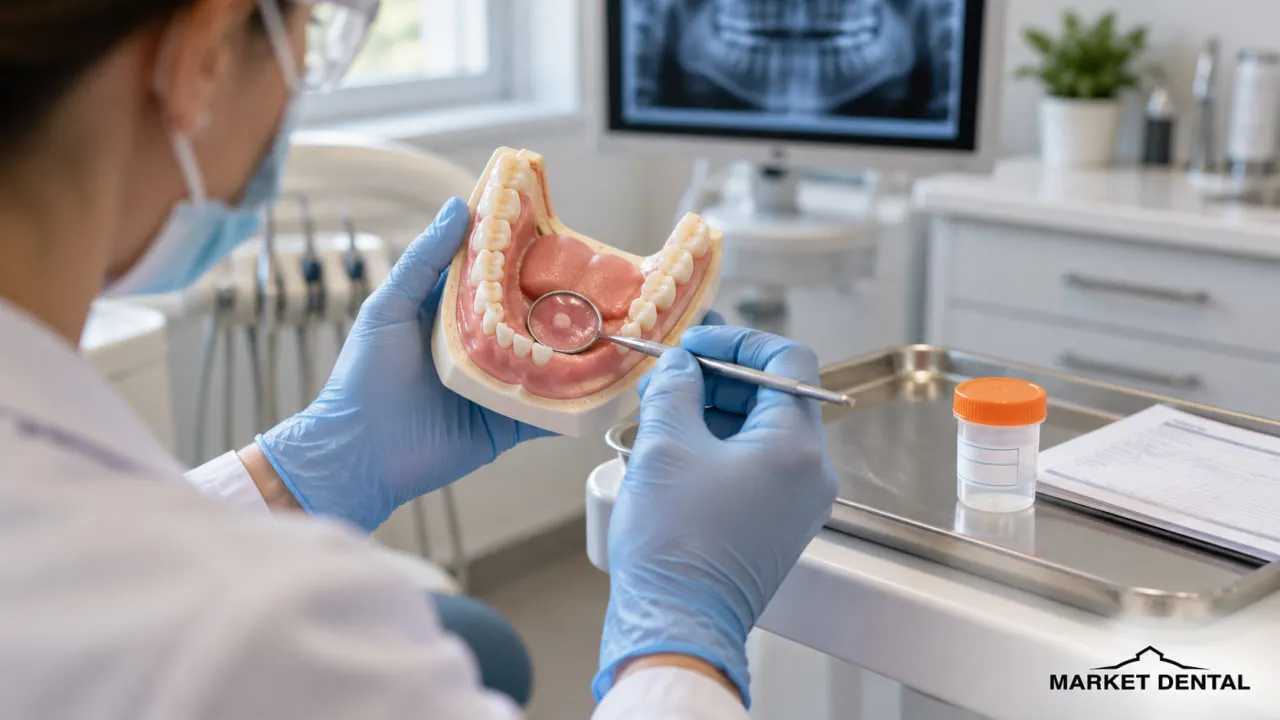
A biopsy removes a small piece of tissue, or sometimes an entire small lesion, so a pathology laboratory can examine it. A dentist may suggest one for a sore, patch, or lump that has not healed as expected, a tissue change with features worth a closer look, or an area that cannot be diagnosed confidently by examination alone.
In an incisional biopsy, only part of a lesion is sampled. In an excisional biopsy, the entire lesion may be removed when it is small and appropriate to remove, so the procedure can serve as both diagnosis and treatment.
A biopsy does not mean cancer is present. It may be recommended for many reasons, including to identify a persistent or unexplained tissue change. Many biopsied lesions are benign. Ask how and when results are usually shared.
Crown Lengthening: Exposing More Tooth Structure
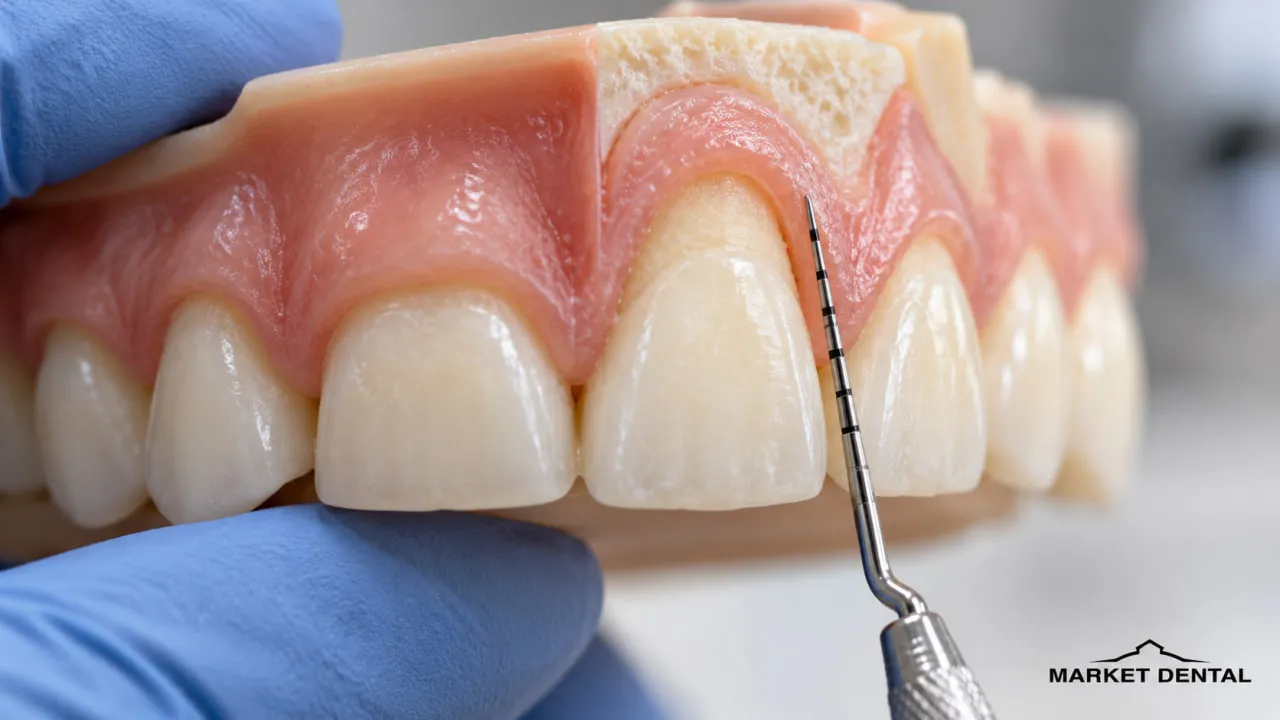
Crown lengthening exposes more of a tooth by adjusting the gum tissue and, in some cases, the bone beneath it.
The reason is often restorative: when a tooth is broken or decayed near or below the gum line, there may not be enough tooth above the gum to hold a crown or filling securely. In other cases the reason is esthetic, and gum position may be adjusted where clinically appropriate for teeth that look short.
Because bone may be reshaped, crown lengthening ranges from limited to more involved, and some cases are referred to a periodontist.
Where Do Surgical Extractions and Wisdom Teeth Fit?
A simple extraction removes a fully visible tooth that can be loosened and lifted out. A surgical extraction is used when that is not possible, and it may involve opening the gum, removing a small amount of bone, sectioning the tooth, and placing sutures.
Impacted or partially erupted wisdom teeth are a common reason for surgical extraction. Their position relative to nerves and the sinus often shapes whether a case stays in general practice or is referred. The page on wisdom teeth removal covers that procedure in more detail.
Does Minor Oral Surgery Require Sedation?
Not necessarily. Local anesthesia and sedation do different jobs.
Local anesthesia numbs the surgical area and is often the only anesthesia needed for minor oral surgery. Patients may still feel pressure, movement, or vibration. Sharp pain is not expected, and patients should say so if they feel it so more anesthetic can be considered.
Sedation is aimed at anxiety or awareness, not pain at the surgical site, and is usually combined with local anesthesia rather than replacing it. Whether it fits depends on the procedure, health history, anxiety level, expected treatment length, the provider's authorization, and the clinical setting.
In Ontario, dentists need current authorization from the Royal College of Dental Surgeons of Ontario to administer sedation. Facilities where oral moderate, parenteral conscious, deep sedation, or general anesthesia are administered also require the applicable facility permit. Facilities providing only minimal sedation do not require that facility permit.
Available options therefore vary by dentist and office. For a fuller comparison, see this guide to dental anxiety and sedation options.
Recovery Depends on the Oral Surgery Procedure

There is no single recovery timeline for minor oral surgery. A small soft-tissue biopsy, a frenectomy, crown lengthening, alveoloplasty, and a surgical extraction involve different tissues and different amounts of surgical work. Healing is also shaped by the size of the site, whether bone was involved, your overall health, and how closely aftercare is followed.
Across procedures, patients tend to ask the same practical questions:
- Swelling and tenderness: Some is common and usually eases gradually.
- Bleeding: Light oozing can occur at first; your instructions should say what counts as too much.
- Eating: Soft foods and chewing away from the site are commonly advised for a while.
- Brushing: Keep the rest of the mouth clean, but handle the surgical site gently at first.
- Activity: Strenuous exercise may be limited briefly.
- Smoking and vaping: Both can interfere with healing and are generally discouraged.
Procedure-specific instructions take priority over general advice. For broader home-care guidance, see the clinic's page on post-surgical dental care.
Will You Need Stitches?
Some procedures require sutures and others do not. Absorbable sutures break down on their own, while non-absorbable sutures are removed at a follow-up visit.
How long absorbable sutures last depends on the material and the site, so your dentist should explain which type was used and whether you need to return.
Which Symptoms Should Be Reported After Oral Surgery?
Most healing is uneventful. Contact the dental office if you notice:
- bleeding that does not settle when you follow your instructions;
- swelling that gets worse after it should be improving;
- fever or feeling significantly unwell;
- pain that is increasing rather than easing;
- new or worsening numbness that was not expected;
- any concern listed in your procedure-specific instructions.
Difficulty breathing or swallowing needs emergency medical assessment right away.
Does Insurance Cover Oral Surgery Procedures in Ontario?
There is no blanket answer. Coverage for oral surgery procedures depends on the exact procedure and the reason for it, its complexity, your plan's terms, deductibles, co-insurance, annual maximums, and any preauthorization rules.
The Ontario Dental Association's Suggested Fee Guide is a reference point. Dentists are not required to follow it, and many insurers base coverage on Guide fees, sometimes from an older year, so the amount reimbursed may not match the amount billed.
A predetermination can help estimate expected benefits before treatment, but it does not guarantee payment. Similarly, Market Dental Centre offers direct billing and claim support, but billing your plan directly does not decide what it covers. You can review the clinic's dental insurance information before your visit.
The clinic also accepts the Canadian Dental Care Plan (CDCP). The current CDCP Dental Benefits Guide, effective April 1, 2026, includes oral surgery as a benefit category, but coverage is procedure-specific. Some surgical procedures require preauthorization, program criteria and limits apply, and implants and ridge augmentation are exclusions.
A frenectomy, biopsy, crown lengthening, or alveoloplasty is not automatically covered and needs to be checked against current program rules.
Planning Oral Surgery in Downtown Toronto
Market Dental Centre is a general dental practice at 149 Lower Jarvis Street in Downtown Toronto, near St. Lawrence Market. The clinic's page on oral surgery outlines areas such as wisdom teeth and implants, and notes that some patients are referred to an oral surgeon.
A dental assessment can determine what type of treatment is needed and whether it can appropriately be managed through the general dental practice or requires referral.
Bring any referral letter or treatment plan you already have. If you work in the Financial District or elsewhere in Toronto, you can also ask about the expected recovery before setting a treatment date.
Key Takeaways
- "Minor" describes a localized scope of surgery, not an unimportant or risk-free one.
- Many localized procedures may be done in an outpatient dental setting, but not all.
- The right setting depends on complexity, anatomy, health history, and sedation needs.
- General dentists may perform selected surgical procedures; referral to a specialist is sometimes recommended.
- Recovery differs substantially between procedures.
- Local anesthesia is often enough; sedation is not automatically required.
- Private insurance and CDCP coverage are procedure-specific, and predetermination is not a guarantee.
Have Questions About an Oral Surgery Procedure in Downtown Toronto?
If a dentist has told you that surgery may be needed, the useful next step is understanding the plan before you set a date:
- what procedure is being recommended, and why;
- who should perform it, and whether referral may be appropriate;
- what anesthesia or comfort support may be considered;
- what recovery may involve for your case;
- what fees, insurance, or CDCP information should be reviewed.
Market Dental Centre is at 149 Lower Jarvis Street in Downtown Toronto, near St. Lawrence Market.
Call (416) 363-4115 or request an appointment online.

.webp)


