









Dental implant insurance Canada coverage is rarely a simple yes or no. Some private plans reimburse part of an eligible implant treatment, while others exclude the implant post, limit payment to a cheaper alternative, or cover only certain restorative components. The Canadian Dental Care Plan does not cover implants or implant-related procedures. This guide explains how private coverage usually works, what to ask Sun Life, Manulife, Canada Life or another insurer, typical Toronto cost ranges, and practical ways to plan for the amount left to pay. Final coverage always depends on your own contract and the treatment your dentist recommends.
How Dental Implant Insurance Canada Coverage Usually Works

Dental implants replace a missing tooth root and support a crown, bridge or denture. They can be a suitable long-term option for selected patients, but they involve surgery, restorative work and several stages of care. A clinical examination and appropriate imaging are needed before a dentist can confirm candidacy, treatment sequence or cost.
Private dental insurance may treat the different parts of implant care differently. Your plan might consider the surgical implant post, abutment, crown, extraction, bone graft or diagnostic imaging under separate benefit categories. A policy that excludes the implant fixture may still provide a benefit toward an eligible crown or another service, but this should never be assumed without written confirmation.
Major Services Coverage
When a policy includes dental implant insurance canada, dental implants are commonly handled under Major Services or prosthodontic benefits. Some plans reimburse eligible major services at 50%, while others use a different percentage or exclude implants altogether. The percentage is applied to the insurer's eligible fee, not necessarily the dentist's full charge.
For example, a plan may state that eligible Major Services are covered at 50%. If the insurer recognizes $1,500 of a $2,000 procedure and other limits do not apply, the preliminary calculation may be 50% of $1,500, not 50% of $2,000. Deductibles, annual maximums, frequency limits and alternate-benefit rules can reduce the amount further.
Annual Maximums
Many dental plans place one annual maximum across basic and major dental services. The content brief uses $1,000 to $2,500 as a common planning range, although real plans may be lower or higher. A single implant and crown can exceed the entire annual maximum, so even a policy that includes implants may reimburse only a modest portion of the total treatment.
Review how much of your annual maximum has already been used for examinations, cleanings, fillings or other care. Also confirm whether your plan year follows the calendar year or a different renewal date.
In the context of dental implant insurance Downtown Toronto, annual maximums are one of the most important limiting factors, often reducing reimbursement even when implants are technically covered.
Pre-Determination or Treatment Estimate

Before starting major treatment, ask the dental office to prepare an itemized treatment plan and submit an estimate to your insurer. Sun Life refers to this process as a pre-determination, while other insurers may call it a treatment estimate or estimate of reimbursement. Official insurer forms commonly request the treatment codes, fees and supporting X-rays for implant-related claims.
A pre-determination is valuable because it shows which services appear eligible, the estimated reimbursement and the limitations the insurer is applying. It is still an estimate rather than a final payment guarantee. Coverage can change if the plan terminates, the annual maximum is used, the treatment changes, or eligibility is different when the service is completed.
Least Expensive Alternative Treatment Clauses
Some policies contain a Least Expensive Alternative Treatment, alternate-benefit or equivalent-treatment clause. Under this type of rule, the plan may calculate reimbursement using a less expensive clinically acceptable option, such as a dental bridge or removable partial denture, even when the patient chooses an implant.
The insurer does not choose your treatment. You and your dentist can still decide that an implant is the appropriate option, but the plan may reimburse only the amount it would have paid for the alternative. Ask your insurer directly whether an alternate-benefit clause applies to the surgical implant, the crown, or the complete treatment plan.
This is a key limitation within dental implant insurance Canada, and it often explains why expected reimbursement is lower than patients initially assume.
Insurance Provider Breakdown: Sun Life, Manulife, Canada Life and Other Plans
There is no insurer-wide percentage that applies to every Sun Life, Manulife, Canada Life, Desjardins or Blue Cross member. Employers select different plan designs, and individual policies have their own schedules, exclusions, waiting periods and maximums. The most accurate source is your current benefit booklet or written pre-determination.
Do not choose or change an insurer based only on a general online comparison. A policy that appears generous may have a waiting period, low annual maximum or specific implant exclusion. Purchasing a new individual plan after an implant has already been recommended may not provide immediate coverage for that treatment.
Practical next step: ask your insurer these five questions:
- Is the implant fixture covered under my contract?
- Is the abutment or implant crown covered separately?
- Does a Least Expensive Alternative Treatment clause apply?
- What annual maximum and deductible remain available?
- Is pre-determination required before surgery begins?
Does the Canadian Dental Care Plan Cover Dental Implants?
No. The current federal CDCP Dental Benefits Guide lists implants, implant-supported crowns and dentures, bone grafts, fixed bridges and all implant-related procedures as exclusions. Because implants are listed as exclusions, they are not eligible for the CDCP exception process.
The CDCP may still help with other eligible oral health services, depending on the patient's coverage, clinical criteria and preauthorization requirements. Covered alternatives may include standard complete dentures or removable partial dentures. Certain crowns on natural teeth may also be considered when detailed eligibility and restorability criteria are met. Fixed bridges are excluded.
CDCP membership does not mean every covered service is free. Patients may have a co-payment based on adjusted family net income and may also be responsible for the difference between the provider's fee and the CDCP-established fee. Before treatment, ask the dental office to confirm that your CDCP coverage is active and to explain any expected patient portion.
For current rules, review the Government of Canada's CDCP Dental Benefits Guide rather than relying on an older summary.
Dental Implant Cost in Toronto
The price of implant treatment depends on the number of missing teeth, bone volume, implant location, restoration type, materials, imaging, sedation and any preparatory care. The ranges below come from the supplied content brief and are intended for general planning. They are not a quote from Market Dental Centre or a guarantee of what another Toronto clinic will charge.
A complete estimate should show what is included. Ask whether consultation, X-rays or CBCT imaging, extraction, grafting, sedation, temporary teeth, laboratory fees, the final restoration and follow-up care are separate.
For a more detailed discussion of treatment variables, see Market Dental Centre's dental implant cost guide for Toronto.
How to Maximize Insurance Benefits for Dental Implants
Submit a Detailed Pre-Determination
Ask the clinic for an itemized plan that separates each stage and component. Insurers may need procedure codes, tooth numbers, dates, clinical notes and X-rays. Review the insurer's response before consenting to treatment, and ask about any unclear exclusion or alternate benefit.
Check Both Your Plan and a Spouse's Plan
If you have access to two workplace plans, coordination of benefits may reduce your remaining cost. The first plan is billed according to coordination rules, and the unpaid eligible balance may then be submitted to the second plan. Combined reimbursement cannot exceed the original eligible expense.
Consider Timing Across Benefit Years Carefully
Implant care often occurs over several months because the site may need time to heal before the final restoration is placed. If clinically appropriate and permitted by your insurer, different completed stages may fall into separate benefit years.
Do not delay necessary treatment or choose dates solely to create an insurance advantage. The insurer pays according to the date each eligible service is completed, and a future annual maximum is not guaranteed until the new benefit period begins. Confirm the plan renewal date and obtain updated estimates when needed.
Use a Health Care Spending Account Correctly
A Health Care Spending Account, often called an HCSA or HSA, may reimburse eligible medical or dental expenses that remain after private insurance. Employer rules, available credits and claim deadlines apply. Many HCSAs are structured as Private Health Services Plans, so reimbursements are generally non-taxable outside Quebec when the applicable conditions are met.
A Personal Spending Account, Lifestyle Spending Account or wellness account is different. It may be taxable and may not include dental expenses. Check the plan document instead of treating HSA and PSA funds as interchangeable.
Keep Itemized Receipts
Keep the treatment plan, insurer statements, receipts and proof of payment. These records may be needed for coordination of benefits, HCSA claims or the federal Medical Expense Tax Credit.
A Realistic Example
Consider a hypothetical Toronto patient whose plan covers eligible Major Services at 50% with a $1,500 annual maximum. The insurer applies an alternate benefit based on a bridge and estimates a payment of $1,100. Even though the implant treatment costs more, the plan pays according to its contract, leaving the patient responsible for the rest.
The example shows why the phrase “50% coverage” does not necessarily mean the insurer pays half of the dentist's full implant fee. The eligible amount, annual maximum and policy clauses matter just as much as the advertised percentage.
Common Insurance Mistakes to Avoid
- Starting treatment before reviewing the estimate: the policy may exclude a service or request more records.
- Assuming the crown is covered because other crowns are covered: an implant-supported crown may be treated differently from a crown placed on a natural tooth.
- Relying on last year's booklet: employers can change plan designs and maximums.
- Ignoring the alternate-benefit clause: reimbursement may be based on a bridge or denture.
- Confusing pre-determination with guaranteed payment: the final claim depends on eligibility when the service is completed.
- Buying new insurance without checking waiting periods and exclusions: a new policy may not cover treatment already recommended.
Tax Credits, Spending Accounts and Financing Options
Medical Expense Tax Credit
Dental services paid to an authorized dental professional may qualify as medical expenses when they meet Canada Revenue Agency rules. Implanted devices used in dental care may also qualify. You can claim only eligible amounts that were not reimbursed by insurance, an HCSA or another source.
The Medical Expense Tax Credit is non-refundable and is subject to an income-based threshold. It does not reduce the clinic's invoice at the time of treatment, and it does not mean every patient receives the same tax benefit.
Third-Party Financing
Dental financing companies may allow approved applicants to divide treatment into monthly payments. Interest rates, administrative fees, credit checks and repayment terms vary. Compare the total cost of borrowing, not only the monthly payment.
Clinic Payment Arrangements
Some dental practices offer staged payments that follow the clinical phases of care. This is not the same as a discount or long-term financing. Availability depends on the clinic and treatment plan.
Dental Implants vs. Bridges and Dentures
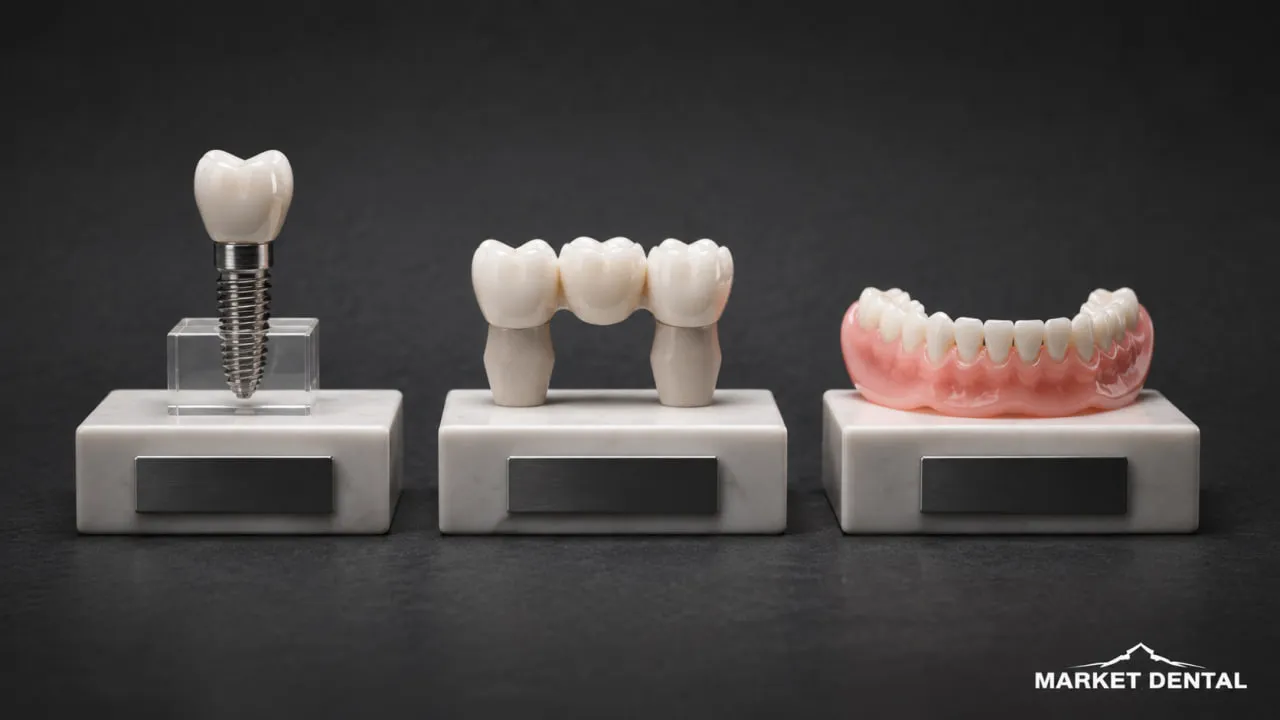
The most suitable replacement depends on oral health, the number and location of missing teeth, adjacent teeth, bone support, comfort, maintenance needs, budget and personal preferences. No option is automatically best for every patient.
Does OHIP Cover Dental Implants in Ontario?
OHIP does not cover routine dental implants. Ontario's Schedule of Benefits states that dental implants are not insured dental services. OHIP may cover certain medically necessary dental surgeries performed in hospitals, but that does not create routine implant coverage.
A separate provincial Oral and Maxillofacial Rehabilitation Program may fund defined implant services for eligible patients with specified oral or facial conditions. This is a specialized reconstructive program, not general coverage for replacing missing teeth.
Why Choose Market Dental Centre for Implant Dentistry?

Market Dental Centre offers dental implant services at 149 Lower Jarvis Street in Downtown Toronto, near St. Lawrence Market. The clinic provides implant assessment, surgical placement and restoration services, with treatment recommendations based on an individual examination.
Patients can review the clinic's dental implant service.
During a consultation, the dentist can assess your oral health, available bone, treatment alternatives and the records needed for insurance for dental implants review. The administrative team can prepare the information required for a pre-determination, but the insurer alone decides what the contract will reimburse.
Key Takeaways
- Private implant coverage depends on the exact contract, not only the insurer's name.
- Some policies cover a portion of eligible Major Services, while others exclude the implant post or apply an alternate benefit.
- A pre-determination helps estimate reimbursement but is not a final payment guarantee.
- The CDCP excludes implants, implant-supported restorations, bone grafts and fixed bridges.
- Toronto implant costs vary by treatment stage, restoration and additional procedures.
- HCSAs, coordination of benefits, tax credits and financing may help with eligible out-of-pocket costs.
- A dental examination is required before a reliable treatment plan or fee estimate can be provided.
Book a Dental Implant Consultation in Toronto
If you are considering dental implants, the first step is to schedule a consultation so the dentist can assess your oral health, review your options, and determine whether implants are the right solution for you. During this visit, you will also receive a personalized treatment plan that can be shared with your insurance provider for a pre-determination review.
At Market Dental Centre, the team can help you understand your tooth replacement options, prepare a detailed cost estimate, and guide you through the insurance process. While insurance coverage cannot be guaranteed in advance, having a clear clinical plan makes it easier to understand your expected out-of-pocket costs.
To book your appointment, you can use the clinic’s online appointment request or call 416-363-4115. The clinic is located at 149 Lower Jarvis Street, Toronto, Ontario.

.webp)


