








When researching false teeth prices and tooth replacement costs, understanding the exact Denture Cost in Toronto is your crucial first step. Missing teeth can severely impact your ability to eat, speak, and smile with confidence, making high-quality prosthetics a vital medical and aesthetic investment.
Today, patients have more restorative choices than ever, from traditional removable plates to advanced, bone-preserving implant solutions. But how much do these treatments cost, and which type fits your clinical needs and budget? This guide breaks down the full, partial, and implant-supported options available, and explains the clinical factors that drive prosthetic fees so you can confidently make the best decision for your oral health.
What Are Dentures?
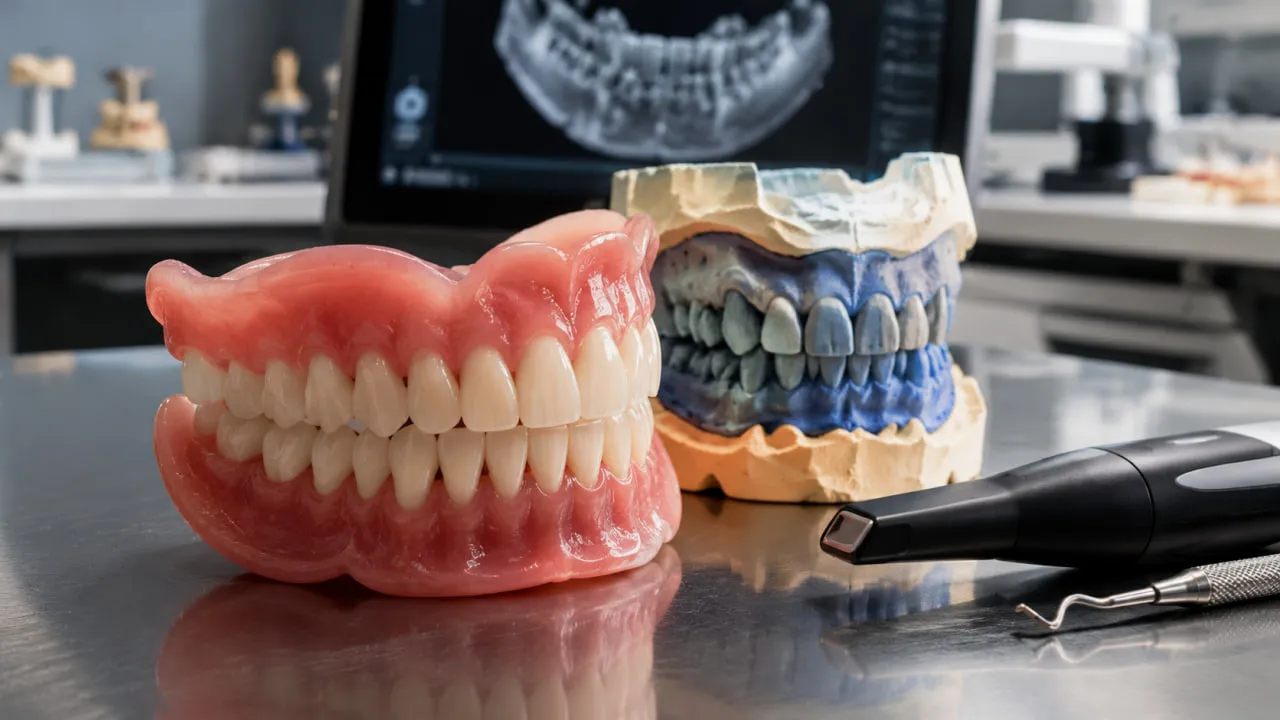
Dentures are custom-crafted oral prosthetic devices designed to replace missing teeth and the surrounding gum tissue. They act as a functional and aesthetic substitute for your natural dentition. By filling the gaps left by extracted or lost teeth, these prosthetics prevent remaining teeth from shifting, support your facial muscles, and restore your ability to chew and speak comfortably.
Who Needs Dentures?
Anyone who has lost several or all of their natural teeth due to severe tooth decay, advanced periodontal (gum) disease, or traumatic facial injury is a candidate. Whether you are missing a few molars or an entire dental arch, modern prosthetics offer a reliable, non-invasive pathway to regaining full oral functionality.
Types of Dentures
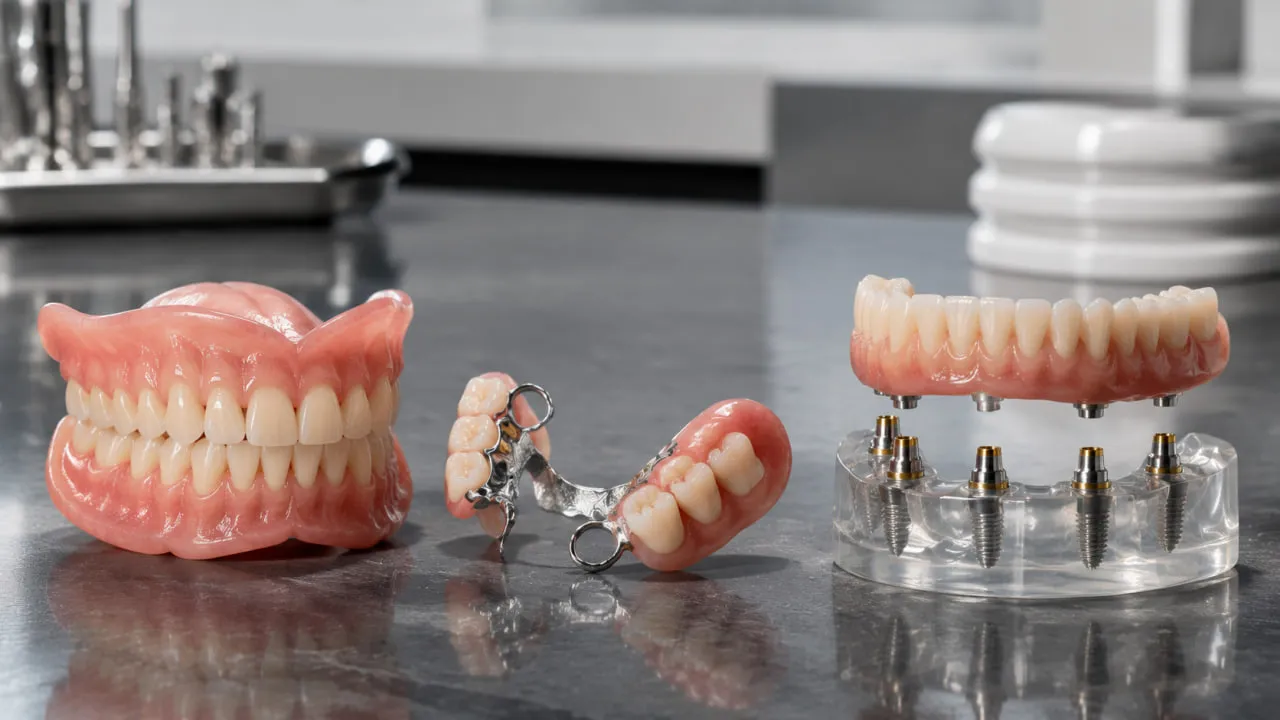
There is no one-size-fits-all approach to tooth replacement. Depending on the current state of your remaining teeth and underlying jawbone, your dentist will recommend one of three primary categories:
- Full (Complete) Dentures: Used when an entire arch of teeth is missing.
- Partial Dentures: Used when some healthy natural teeth remain in the jaw.
- Implant-Supported Dentures: Used when maximum stability is required, anchored securely to surgically placed titanium roots.
How Dentures Restore Oral Function
Losing teeth alters the shape of your face, often causing the cheeks and lips to sink inward, which creates an aged appearance. A well-fitted prosthetic replaces this lost structural support. More importantly, it restores the mechanical biting force necessary to chew fibrous, nutritious foods, directly improving your overall digestive health and quality of life.
Full Dentures
Full dentures, often called complete dentures, are the traditional solution for patients suffering from total tooth loss (edentulism) in either the upper maxillary or lower mandibular arch.
How They Work
These removable prosthetics consist of a flesh-colored acrylic base that mimics your natural gum tissue, supporting a full set of artificial acrylic or porcelain teeth. The upper denture features a large plate that covers the roof of your mouth, relying on saliva and suction to stay in place. The lower denture is shaped like a horseshoe to accommodate your tongue and rests directly on the bony ridge of your gums.
Pros
- Provides a complete, instant smile makeover.
- Non-invasive procedure requiring no surgical intervention.
- The most cost-effective method for replacing an entire arch of teeth.
- Easily adjustable and removable for daily cleaning.
Cons
- Lower dentures often slip or shift while talking or chewing.
- They do not prevent the natural shrinkage of the jawbone over time.
- The upper palate plate can temporarily alter your sense of taste.
- Often requires dental adhesives for a truly secure fit.
Best Candidates
Full dentures are ideal for patients who have already lost all their teeth or require full mouth extractions. They are also the best choice for individuals who lack the necessary bone density for surgical implants or are looking for the most budget-friendly full-mouth restoration.
Partial Dentures
When you still retain several healthy, structurally sound natural teeth, extracting them is rarely the best clinical option. Partial dentures are designed to fill in the gaps while preserving your remaining natural dentition.
How They Work
A partial denture consists of replacement teeth attached to a pink acrylic base, which is often reinforced by a lightweight, durable metal framework. This framework features specialized metal or tooth-colored clasps that grip securely onto your adjacent natural teeth. By anchoring to your existing teeth, the partial denture bridges the gap and prevents your natural teeth from drifting out of alignment.
Pros
- Preserves and protects your remaining healthy teeth.
- More stable and secure than complete tissue-borne dentures.
- More affordable than multiple individual dental bridges.
- Can often be modified to add more teeth if you experience future tooth loss.
Cons
- The metal holding clasps may occasionally be visible when smiling widely.
- Can trap plaque and food debris against your natural anchor teeth.
- Still removable and requires strict daily maintenance.
Best Candidates
Patients missing three or more teeth in a row, but whose remaining teeth and gums are healthy enough to support a prosthetic framework, make excellent candidates for partial dentures.
Implant-Supported Dentures

For patients frustrated by the slipping, sliding, and dietary restrictions of traditional removable plates, implant-supported dentures represent one of the most stable options in modern prosthodontics.
How They Work
Instead of resting solely on the gums and relying on suction, these dentures are anchored to titanium dental implants that have been surgically embedded into the jawbone. These implants act as artificial tooth roots. Once healed, the denture either snaps securely onto the implants or is permanently screwed into place by the dentist.
Overdentures
Also known as "snap-on" dentures, overdentures clip onto two to four locator attachments on the implants. They offer a rock-solid grip while chewing but can still be easily unclipped and removed by the patient at night for traditional brushing and cleaning.
Fixed Implant Dentures

Often referred to as the "All-on-4" method, this is a permanent hybrid prosthesis. The denture is tightly screwed into four to six implants and can only be removed by a dental professional. It functions, feels, and looks much like a natural set of permanent teeth.
Benefits
- Exceptional stability, with no slipping, clicking, or falling out.
- The titanium implants stimulate the jawbone, halting bone loss and facial collapse.
- Restores up to 90% of natural chewing force, allowing you to eat tough foods like steak.
- No bulky upper palate plate is required, fully restoring your sense of taste.
Limitations
- Requires a minor oral surgery and a healing period of several months.
- Substantially higher upfront financial investment compared to traditional options.
- May require preliminary bone grafting if your jawbone has already deteriorated.
Denture Cost in Toronto
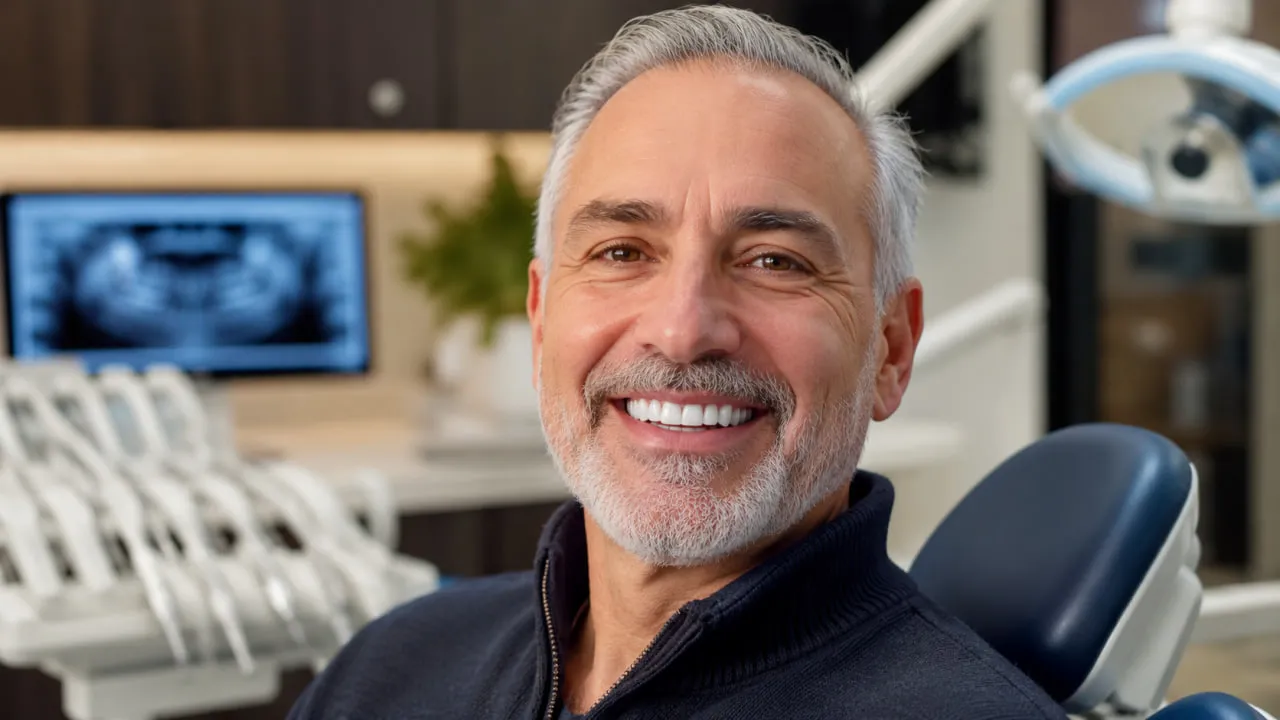
Estimating the exact Denture Cost in Toronto requires a personalized clinical evaluation. The final bill is dictated by the materials chosen, the complexity of your jaw structure, laboratory fabrication fees, and the experience level of the provider.
Based on the Ontario Dental Association (ODA) suggested fee guidance and local Toronto averages, you can expect the following generalized price ranges. Please note that these ranges do not include surgical extraction fees or specific external laboratory costs.
Estimated Denture Pricing Breakdown
| Denture Category | Average Estimated Cost (CAD) | Key Cost Variables |
|---|---|---|
| Standard Complete Denture (Per Arch) | $1,200 – $1,800 + Lab Fees | Acrylic quality, custom aesthetic detailing |
| Immediate/Provisional Denture (Per Arch) | $600 – $900 + Lab Fees | Short-term materials designed for post-surgery |
| Partial Denture (Cast Metal Framework) | $1,000 – $1,600 + Lab Fees | Number of teeth replaced, complexity of clasps |
| Implant Overdenture (Denture Only) | $1,800 – $5,250 | Advanced attachment mechanics, milling process |
| Surgical Implant Placement (Per Implant) | $2,000 – $2,500 | Bone grafting requirements, surgeon fees |
Once you add surgical implant placement to the denture itself, a complete implant-supported system generally ranges from about $5,000 to over $15,000, depending on how many implants your case requires. To determine your exact out-of-pocket price, a 3D CBCT X-ray is required to evaluate your bone density.
Full vs Partial vs Implant-Supported Dentures
| Feature | Full Dentures | Partial Dentures | Implant-Supported |
|---|---|---|---|
| Removability | Removable | Removable | Snap-on or Permanently Fixed |
| Chewing Power | Low to Moderate (20-30%) | Moderate (40-50%) | High (80-90+%) |
| Prevents Bone Loss | No | No | Yes |
| Comfort & Stability | Low (Prone to slipping) | Moderate (Anchored by clasps) | Exceptional (Anchored to bone) |
| Initial Cost | Most Affordable | Highly Affordable | Premium Investment |
Which Denture Option Is Right for You?
Selecting the right prosthetic requires balancing your clinical health, lifestyle expectations, and financial realities, and each path carries a different Denture Cost in Toronto.
- Choose partial dentures if: You still have several strong, healthy teeth remaining and want a budget-friendly way to fill the gaps without invasive surgery.
- Choose full traditional dentures if: You have lost all teeth in an arch, have a limited budget, or have medical conditions that prevent you from undergoing implant surgery.
- Choose implant-supported dentures if: You are tired of loose, painful acrylic plates, wish to eat a completely unrestricted diet, and want to preserve your jawbone structure long term.
A Real-World Example
Consider Robert, a 62-year-old who started with a traditional lower full denture after losing his teeth to gum disease. Within a year, the plate slipped constantly while eating, and the ridge of his jaw had begun to shrink. Rather than replace it with another removable plate, he had two implants placed to secure a snap-on overdenture. The upfront cost was higher, but he regained the ability to eat firm foods and stopped worrying about his denture moving mid-conversation. His path shows why many patients start with an affordable option and upgrade once they are ready.
Do Dentures Look Natural?
Modern prosthetics are a blend of advanced dental science and artistry. The days of uniform, artificial "chiclet" teeth are gone. Today, your dental team uses multiple techniques to ensure your new smile blends with natural teeth.
- Digital Smile Design: CAD/CAM software maps your facial symmetry to design teeth that match your natural facial proportions.
- Shade Matching: The acrylic gums are carefully tinted with small fibers to mimic real blood vessels, matching your natural tissue color.
- Tooth Shape Selection: Teeth are selected based on your age, gender, and facial structure, incorporating slight, natural imperfections to enhance realism.
- Modern Materials: High-quality composite resins and layered ceramics reflect light much the way natural tooth enamel does.
How Long Do Dentures Last?
A common misconception is that a set of false teeth will last a lifetime. While the acrylic materials are durable, your mouth is constantly changing. On average, traditional full and partial dentures must be replaced every 5 to 8 years.
As you age, the jawbone naturally shrinks and changes shape (resorption). Because the hard acrylic plate does not change, the fit will eventually become loose.
- Relining: Every 1 to 2 years, your dentist will add a new layer of acrylic to the tissue side of the denture to refit it to your changing gums.
- Repairs: Dropping your prosthetic in the sink can cause fractures that require professional lab repairs. Never use household superglue.
- Replacement Timeline: After 5 to 8 years, the acrylic teeth will have worn flat from chewing, requiring a completely new prosthetic to restore your bite height.
How to Care for Dentures
Proper daily maintenance extends the lifespan of your appliance and protects your oral tissues from painful fungal infections like stomatitis.
- Daily Cleaning: Remove and brush your appliance daily using a soft-bristled denture brush and a non-abrasive denture cleanser. Regular toothpaste is too abrasive and will scratch the acrylic.
- Overnight Storage: Always store removable plates soaked in water or a mild cleaning solution overnight. If acrylic dries out, it will warp and permanently lose its custom fit.
- Oral Hygiene: Even with no natural teeth, brush your gums, tongue, and the roof of your mouth with a soft brush every morning to stimulate circulation and remove plaque.
- Regular Dental Visits: See your dentist annually. They will check your appliance for micro-fractures, screen your mouth for oral cancer, and assess the need for a reline.
Are Dentures Covered by Insurance?
Navigating financial coverage is a critical step in managing your Denture Cost in Toronto. Dental insurance policies vary widely, but here is the general landscape for Canadian patients.
- Private Insurance: Most private or employer-sponsored dental plans classify removable dentures as "Major Restorative" services, typically covering 50% to 80% of the cost, subject to annual maximums.
- Canadian Dental Care Plan (CDCP): The CDCP provides coverage for standard complete and partial dentures based on your family's net income. However, it does not cover the surgical placement of dental implants.
- Direct Billing: To ease your financial burden, many modern clinics offer direct insurance billing and coordinate with third-party financing companies to provide manageable monthly payment plans.
Dentures vs Dental Implants
If you are replacing a single tooth or a small gap, you will likely weigh the choice between a partial plate and a standalone dental implant.
While partials are fast and affordable, standalone implants are surgically placed into the bone, functioning much like a natural tooth. Implants do not require removal for cleaning, never decay, and do not place stress on your neighboring teeth the way the metal clasps of a partial can. Though the initial investment is higher, implants can last a lifetime, often making them the stronger long-term clinical and financial choice.
Why Choose Market Dental Centre?
Choosing the right team to design your new smile is an important decision. At Market Dental Centre, we combine compassionate patient care with modern prosthodontic technology.
- Comprehensive Consultations: We listen to your goals, perform thorough 3D CBCT scans, and present all viable options without high-pressure sales tactics.
- Digital Imaging: We use mess-free intraoral digital scanners to create accurate virtual models of your mouth.
- Personalized Treatment Plans: Whether you need a simple acrylic partial or a complex All-on-4 implant restoration, we tailor the procedure to your unique biology.
- Experienced Dentists: Our clinicians are trained in advanced implant dentistry and complex full-mouth rehabilitation.
Key Takeaways
- The Denture Cost in Toronto ranges from affordable standard acrylic plates to premium, life-changing implant-supported restorations.
- Full dentures replace entire arches, while partials protect and anchor to your remaining healthy teeth.
- Implant-supported options require a larger upfront investment but eliminate slipping, restore total chewing power, and prevent facial bone loss.
- Standard dentures require daily cleaning, overnight soaking, and professional relining every 1 to 2 years to maintain a tight fit.
- Always consult with a professional to receive an accurate, transparent quote based on your specific oral anatomy and insurance coverage.
Book Your Denture Consultation Today
Whether your current denture feels loose, causes sore spots, or you are exploring your first set, the right plan starts with a proper assessment. Get a personalized quote based on your oral anatomy and budget before anything begins.
We offer direct insurance billing and flexible financing to make your Denture Cost in Toronto manageable.
Ready to take the next step toward a comfortable, confident smile?

.webp)


