
.jpg)





About the treatment
TMJ Treatment in Toronto
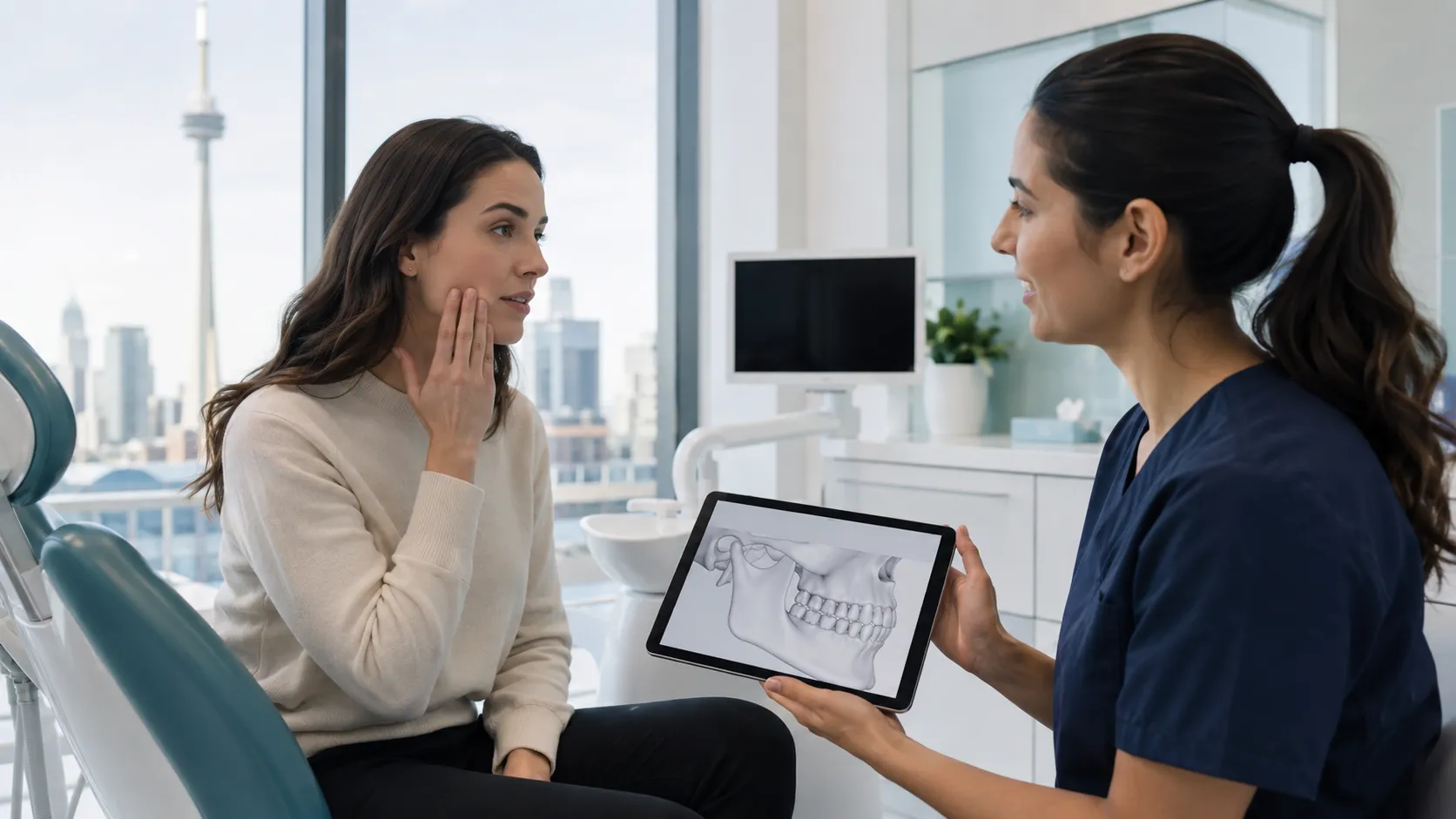
Jaw pain, clicking, headaches, locked jaw, or teeth grinding can affect more than just your smile. For many people, TMJ-related discomfort can make it harder to chew, speak, sleep, concentrate, or get through the day comfortably.
At Market Dental Centre, we assess jaw pain, bite problems, teeth grinding, and signs of TMJ/TMD to help identify what may be contributing to your symptoms. From there, we can recommend a personalized treatment plan designed to protect your teeth, reduce strain on your jaw, and support long-term oral health.
What Is TMJ?
The temporomandibular joints, often called TMJs, are the small joints on each side of your face that connect your jaw to your skull. These joints help you open and close your mouth when you talk, chew, yawn, and swallow.
When the jaw joints, muscles, bite, or surrounding tissues are not working comfortably together, it may lead to a condition known as TMD, or temporomandibular disorder. Many people still refer to this simply as “TMJ.”
TMJ-related problems can develop gradually and may be connected to teeth grinding, clenching, jaw tension, bite concerns, injury, stress, arthritis, or other oral health factors.
Common Signs of TMJ or TMD
You may benefit from a TMJ assessment if you experience:
- Jaw pain or tenderness
- Clicking, popping, or grinding sounds in the jaw
- Jaw locking or difficulty opening your mouth fully
- Morning headaches
- Neck, shoulder, or facial discomfort
- Tooth sensitivity or worn teeth
- Teeth grinding or clenching
- Pain while chewing
- Tired or tight jaw muscles
- Ear-related discomfort or ringing sensations
Not every clicking jaw needs treatment, but if the clicking is painful, frequent, or accompanied by locking, headaches, or tooth wear, it is worth having it checked by a dentist.
Teeth Grinding and Clenching
Teeth grinding and clenching, also called bruxism, can happen during the day or while you sleep. Many patients do not realize they are grinding their teeth until they notice symptoms such as jaw soreness, headaches, tooth sensitivity, chipped teeth, or visible wear on their teeth.
Bruxism may be related to stress, sleep habits, bite issues, missing teeth, or other dental concerns. Over time, repeated pressure from grinding or clenching can place strain on the jaw joints and muscles. It can also damage enamel, restorations, crowns, and natural teeth.
A custom night guard or occlusal splint may be recommended to help protect your teeth and reduce pressure on the jaw while you sleep.
Clicking or Locked Jaw
A clicking or popping jaw can happen when the jaw joint is not moving smoothly. In some cases, the jaw may feel stuck, tight, or difficult to open. This can make eating, speaking, and yawning uncomfortable.
Jaw locking or painful clicking may be related to inflammation, muscle tension, joint irritation, teeth grinding, bite imbalance, or previous injury. During your visit, our dental team will assess your symptoms and examine your jaw movement, teeth, bite, and signs of wear.
The goal is to understand the cause of your discomfort before recommending treatment.
How We Assess TMJ and Jaw Pain
Your appointment may include:
- A discussion about your symptoms, habits, and medical history
- An examination of your teeth, bite, jaw muscles, and jaw movement
- Checking for signs of grinding, clenching, cracks, chips, or worn enamel
- Digital dental images or X-rays when needed
- A 3D scan or impressions of your teeth if an appliance is recommended
- High-definition photos to document tooth wear or bite-related concerns
Every patient is different. Some cases are mild and can be managed conservatively, while others may require a more detailed treatment plan.
TMJ and Bruxism Treatment Options
Treatment depends on the cause and severity of your symptoms. Your dentist may recommend one or more of the following options:
Custom Night Guard or Occlusal Splint
A custom dental appliance can help protect your teeth from grinding and clenching. It is designed to fit your mouth more accurately than an over-the-counter guard and may help reduce stress on the jaw joints and muscles.
Bite and Jaw Evaluation
If your bite is contributing to jaw strain, we may assess how your teeth come together and whether your bite is placing extra pressure on certain areas.
Restoring Worn or Damaged Teeth
If grinding has caused chips, cracks, tooth wear, or sensitivity, restorative treatment may be recommended to repair and protect affected teeth.
Orthodontic or Specialist Referral
In some cases, orthodontic treatment or referral to another healthcare provider may be recommended, especially when symptoms are complex or connected to jaw development, airway concerns, injury, or chronic pain.
Lifestyle and Home Care Guidance
Some patients may benefit from reducing habits that strain the jaw, such as gum chewing, nail biting, daytime clenching, or taking very large bites of food. Your dentist may also suggest ways to rest the jaw and reduce pressure during daily activities.
When Should You See a Dentist?
You should book an appointment if jaw discomfort is affecting your daily life, if your jaw locks, if you wake up with headaches or jaw soreness, or if you notice signs of grinding such as worn, chipped, or sensitive teeth.
Early assessment can help prevent further tooth damage and may make treatment simpler.
TMJ Treatment at Market Dental Centre
At Market Dental Centre in Toronto, we take a careful and personalized approach to jaw pain, teeth grinding, and TMJ-related symptoms. Our goal is to help you understand what may be causing your discomfort and choose a treatment plan that fits your needs.
If you are experiencing jaw pain, clicking, headaches, or signs of teeth grinding, contact our dental team to schedule an assessment.
Frequently Asked Questions
Is TMJ the same as TMD?
TMJ refers to the jaw joint itself. TMD refers to a disorder or problem affecting the jaw joint, muscles, or surrounding structures. Many patients use “TMJ” when talking about jaw pain or jaw joint problems.
Can teeth grinding cause jaw pain?
Yes. Grinding and clenching can place pressure on the jaw joints, muscles, and teeth. This can lead to jaw soreness, headaches, tooth sensitivity, and worn teeth.
Can a night guard help with TMJ symptoms?
A custom night guard or occlusal splint may help protect your teeth from grinding and may reduce pressure on the jaw. Your dentist can assess whether this is appropriate for your situation.
Is jaw clicking always serious?
Not always. Some people have jaw clicking without pain or other symptoms. However, if clicking is painful, frequent, or connected to locking, headaches, or difficulty chewing, it should be assessed.
Do I need surgery for TMJ?
Most TMJ-related concerns are managed with conservative treatment first. Surgery is uncommon and usually considered only when other options have not helped or when there is a more complex joint problem.



Category
Treatments

You are in good hands
Gallery
TMJ & Teeth Grinding Treatment in Toronto
No items found.


1
Fees
General dentistry
We provide a wide range of general treatments
No items found.
2
Fees
Cosmetic treatments
We provide a wide range of cosmetic treatments
No items found.
3
Fees
Orthodontics
We provide a wide range of orthodontics treatments
No items found.